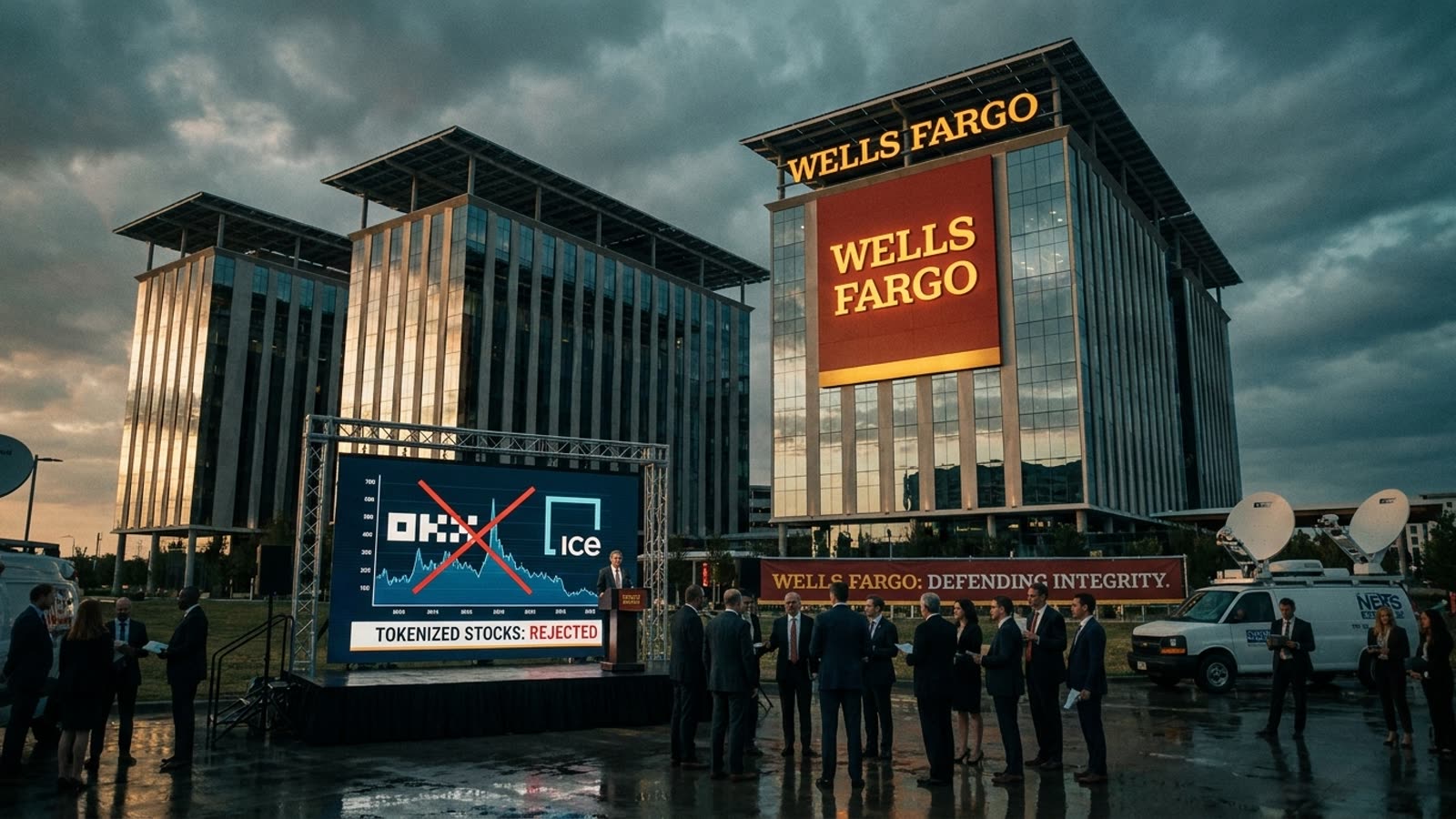
The collision between traditional finance and crypto infrastructure has been theorized for years, but it has largely played out in regulatory skirmishes and pilot programs that never quite threatened anyone's lunch. That changed Friday when Wells Fargo and five other major financial institutions filed formal objections to the SEC's consideration of a tokenized stock trading platform proposed by cryptocurrency exchange OKX and Intercontinental Exchange, the parent company of the New York Stock Exchange.
The objections, submitted under the SEC's innovation exemption framework, represent the most coordinated pushback yet from legacy finance against blockchain-native securities infrastructure. Twenty-two companies have now filed objections to the joint venture's application, but the Wells Fargo-led coalition carries particular weight — these are not crypto skeptics shouting from the sidelines but systemically important institutions with direct stakes in how equities are traded, cleared, and settled.
The stakes behind the paperwork
Tokenized stocks are not a new concept. Various platforms have offered synthetic exposure to equities via blockchain tokens for years, typically structured as derivatives or held through offshore custodians. What makes the OKX-ICE proposal different is its ambition: a regulated platform that would trade actual fractional equity ownership on blockchain rails, with the blessing of America's primary securities regulator.
For incumbent broker-dealers and clearinghouses, this represents an existential question dressed up as a technical one. The current equity settlement system — with its T+1 cycle, DTCC intermediation, and layered fee structures — generates substantial revenue for the institutions that operate it. Blockchain settlement, in theory, could compress that process to minutes and disintermediate several well-compensated middlemen.
The objecting institutions have framed their concerns around investor protection, market integrity, and operational risk. These are legitimate considerations; tokenized securities do introduce novel custody and cybersecurity challenges. But the subtext is unmistakable: the firms that built their businesses on the existing plumbing are not eager to see it replaced.
ICE's awkward position
Perhaps the most intriguing dimension of this battle is ICE's involvement. The company owns the New York Stock Exchange and has spent decades as the quintessential establishment player. Its partnership with OKX — a crypto exchange with roots in Hong Kong and a complicated regulatory history — raised eyebrows when announced earlier this year.
ICE appears to be hedging, positioning itself to profit from blockchain infrastructure if it succeeds while maintaining its dominant role in traditional markets. The objections from Wells Fargo and others suggest that ICE's legacy peers are not amused by this both-ways bet. The coalition's filings pointedly question whether adequate separation exists between OKX's crypto operations and the proposed equity platform.
Our take
The Wells Fargo coalition is fighting a rearguard action, and they probably know it. Tokenized securities offer genuine efficiency gains — faster settlement, broader access, lower costs — that regulators and retail investors will eventually demand. But "eventually" can be a long time in financial regulation, and incumbents are skilled at extending it. The OKX-ICE proposal may well be denied or delayed into irrelevance. What matters more is that the battle lines are now explicit. Traditional finance is no longer dismissing blockchain infrastructure as a curiosity; it is treating it as a threat worth mobilizing against. That is, paradoxically, the clearest validation crypto-native finance has received from Wall Street yet.