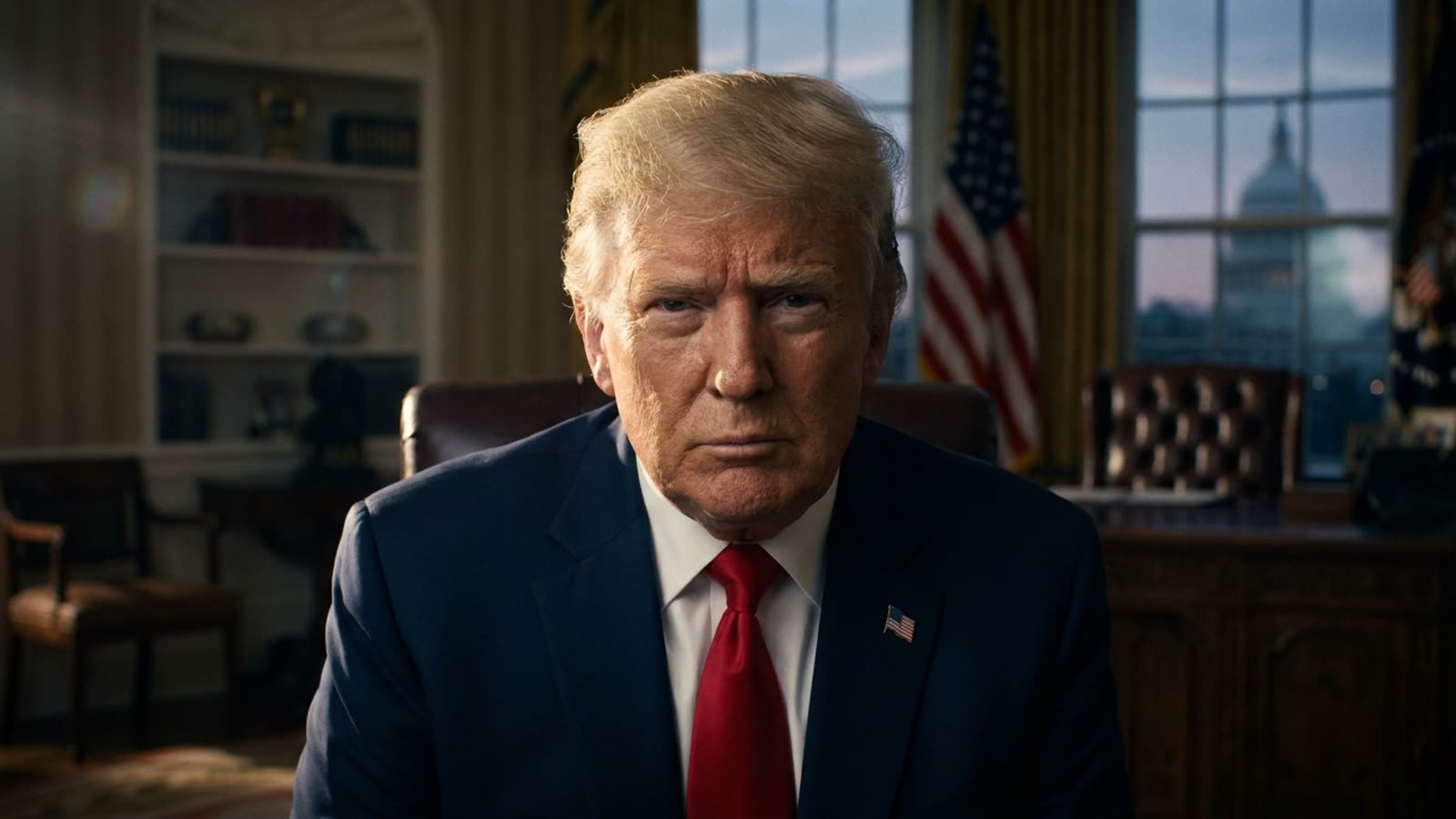
Donald Trump has never been one for subtlety, and his recent musings about which of his lieutenants might succeed him are no exception. The president has taken to referring to Vice President JD Vance and Secretary of State Marco Rubio as "the kids," a diminutive that manages to be both affectionate and belittling—classic Trump. But behind the paternal condescension lies a genuine question that is already consuming Republican politics: who inherits the MAGA movement when its founder leaves the stage?
The answer matters enormously, not just for the GOP but for American democracy. Trump's brand of populist nationalism has proven durable enough to survive two impeachments, a criminal conviction, and an insurrection. Whether it outlasts the man himself depends largely on who carries the torch—and whether they can command the same fervent loyalty from a base that has shown little interest in traditional Republican politicians.
The Vance gambit
Vance holds the constitutional advantage. As vice president, he is the presumptive heir, the man a heartbeat away who has already proven he can win a national election on a Trump ticket. His recent moves suggest he understands the value of this position: high-profile visits to swing states, carefully calibrated policy speeches that echo Trump's themes while occasionally gesturing toward his own intellectual roots in the populist right. Vance is betting that proximity to power, combined with his relative youth at 41, makes him the natural successor.
But Vance's path is not without obstacles. His pre-conversion criticism of Trump—calling him "America's Hitler" in private messages that later leaked—remains a vulnerability that rivals will exploit. More fundamentally, Vance lacks the showman's instinct that makes Trump magnetic to his supporters. He is a policy wonk playing a demagogue, and the seams sometimes show.
Rubio's rehabilitation
Rubio's trajectory is perhaps more remarkable. The man Trump once mocked as "Little Marco" has engineered a complete rehabilitation, leveraging his position at State to build a profile as a serious foreign policy voice in an administration not known for seriousness. His recent shuttle diplomacy in the Middle East and tough rhetoric on China have earned him coverage that transcends the usual MAGA media ecosystem.
The Florida senator is also playing a longer game. At 55, he is old enough to seem experienced but young enough to run credibly in 2028 and even 2032. His appeal to Hispanic voters—still a Republican growth demographic despite the party's nativist turn—gives him a general election argument that Vance cannot easily match.
The wildcard factor
Of course, any discussion of Trump's succession must acknowledge the possibility that Trump himself upends it. He has shown no inclination to play kingmaker in ways that constrain his own options, and his "kids" comment could as easily be a way of keeping both men dependent on his favor as a genuine endorsement of either. The Republican base, meanwhile, has demonstrated that its loyalty is to Trump personally, not to any ideological program or institutional structure. Whether that loyalty transfers to an anointed successor—or whether it simply dissipates—remains the central uncertainty of post-Trump Republican politics.
Our take
The spectacle of two ambitious men auditioning for a job that won't be open for three years tells you everything about the state of the Republican Party. There is no policy debate here, no contest of ideas—just a competition to see who can most convincingly perform Trumpism without being Trump. Vance and Rubio are both talented politicians, but they are competing in a game whose rules were written by someone else, for an audience that may not show up once the main attraction leaves the building. The smart money says the 2028 Republican primary will be far messier than this early jockeying suggests.