For two decades, American air power operated with near-impunity over Iraq, Afghanistan, and Syria. The Iran conflict has shattered that assumption.
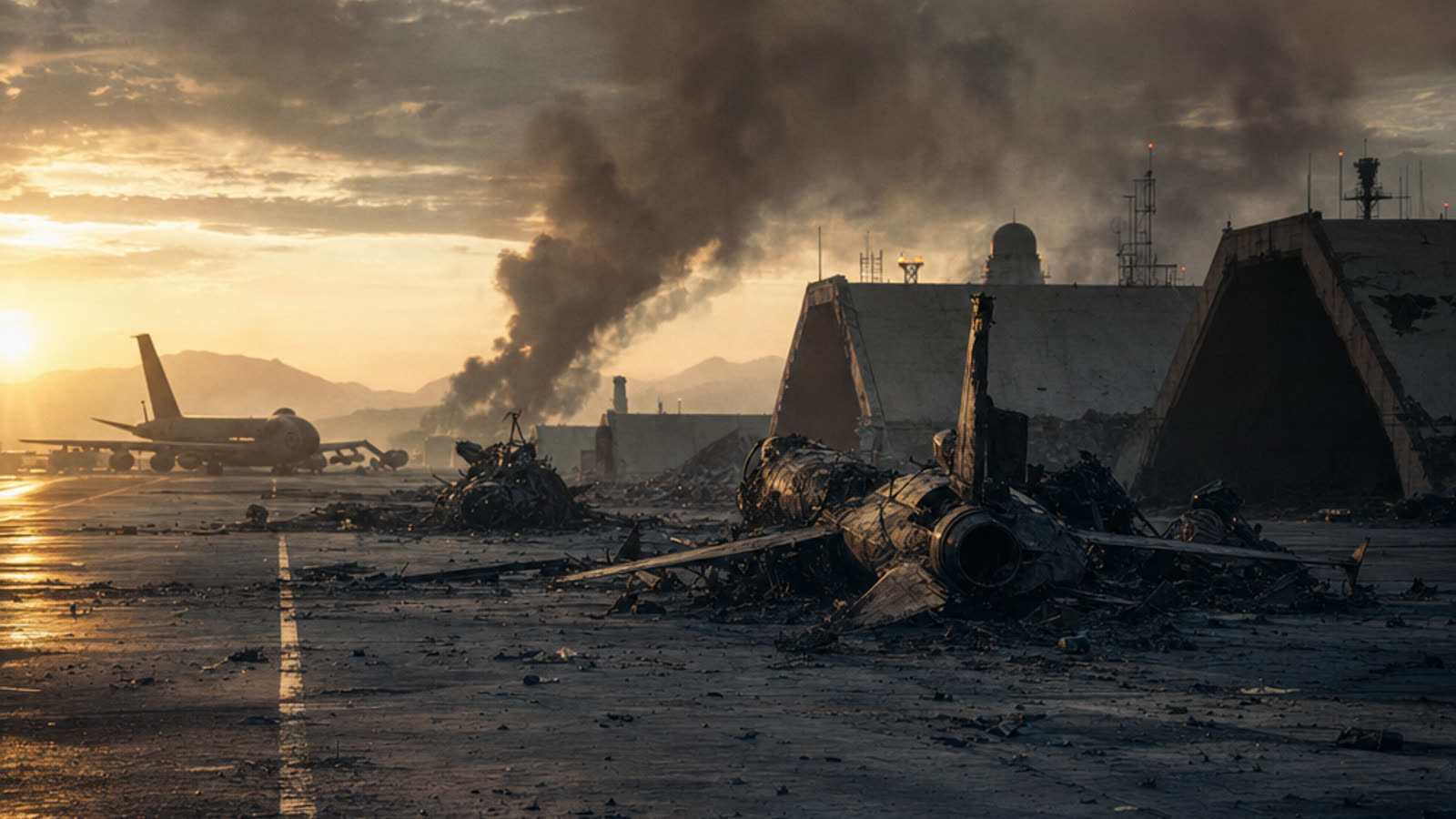
A congressional report released this week reveals that the United States has lost or sustained significant damage to 81 military aircraft since operations began, with replacement and repair costs reaching $3.3 billion. The figures represent the most significant attrition of American air assets since Vietnam, and they arrive at a moment when the defense budget is already stretched thin and the industrial base is struggling to keep pace with demand.
The numbers behind the losses
The report, compiled by the Government Accountability Office at the request of the Senate Armed Services Committee, breaks down the losses across aircraft types. Fighter jets account for the largest share of the dollar figure, with F-35s proving particularly costly to replace given production backlogs. But the attrition has touched nearly every category: attack helicopters, surveillance drones, tankers caught in the wrong airspace at the wrong moment.
What distinguishes this conflict from recent American military engagements is the adversary's capability. Iran's integrated air defense network, built over decades with Russian and Chinese assistance, has proven far more lethal than anything U.S. pilots faced over Mosul or Kandahar. Surface-to-air missiles, electronic warfare systems, and drone swarms have all claimed American aircraft. The era of uncontested skies is over.
The industrial capacity problem
The losses expose a vulnerability that defense analysts have warned about for years: America's defense industrial base cannot rapidly replace sophisticated aircraft. An F-35 takes years to build. The supply chains are global, fragile, and already operating at capacity to meet existing orders from allies. Every aircraft lost over Iranian airspace is one that cannot be quickly replaced, and the math is starting to matter.
The report notes that current production rates would require more than four years to replace the lost aircraft, assuming no further attrition—an assumption no serious planner would make. This is not a crisis that can be solved by writing larger checks; the constraints are physical, not merely budgetary.
The political dimension
The timing of the report's release is not accidental. With midterm elections approaching and the administration facing questions about the conflict's trajectory, congressional critics now have hard numbers to cite. The $3.3 billion figure will appear in campaign advertisements within days. Hawks will argue it proves the need for greater defense spending; doves will ask what the expenditure has purchased.
The Pentagon has been notably reluctant to discuss attrition publicly, preferring to emphasize operational successes. This report forces a conversation the military would rather defer.
Our take
The United States built its post-Cold War military strategy on the assumption of air dominance. That assumption was always going to be tested eventually, and Iran—with its decades of preparation for exactly this scenario—has proven a more capable adversary than the forever-war enemies that preceded it. The $3.3 billion is significant, but the real cost is strategic: America is learning, expensively, that the next era of conflict will not resemble the last one. The question now is whether the defense establishment can adapt faster than the losses accumulate.