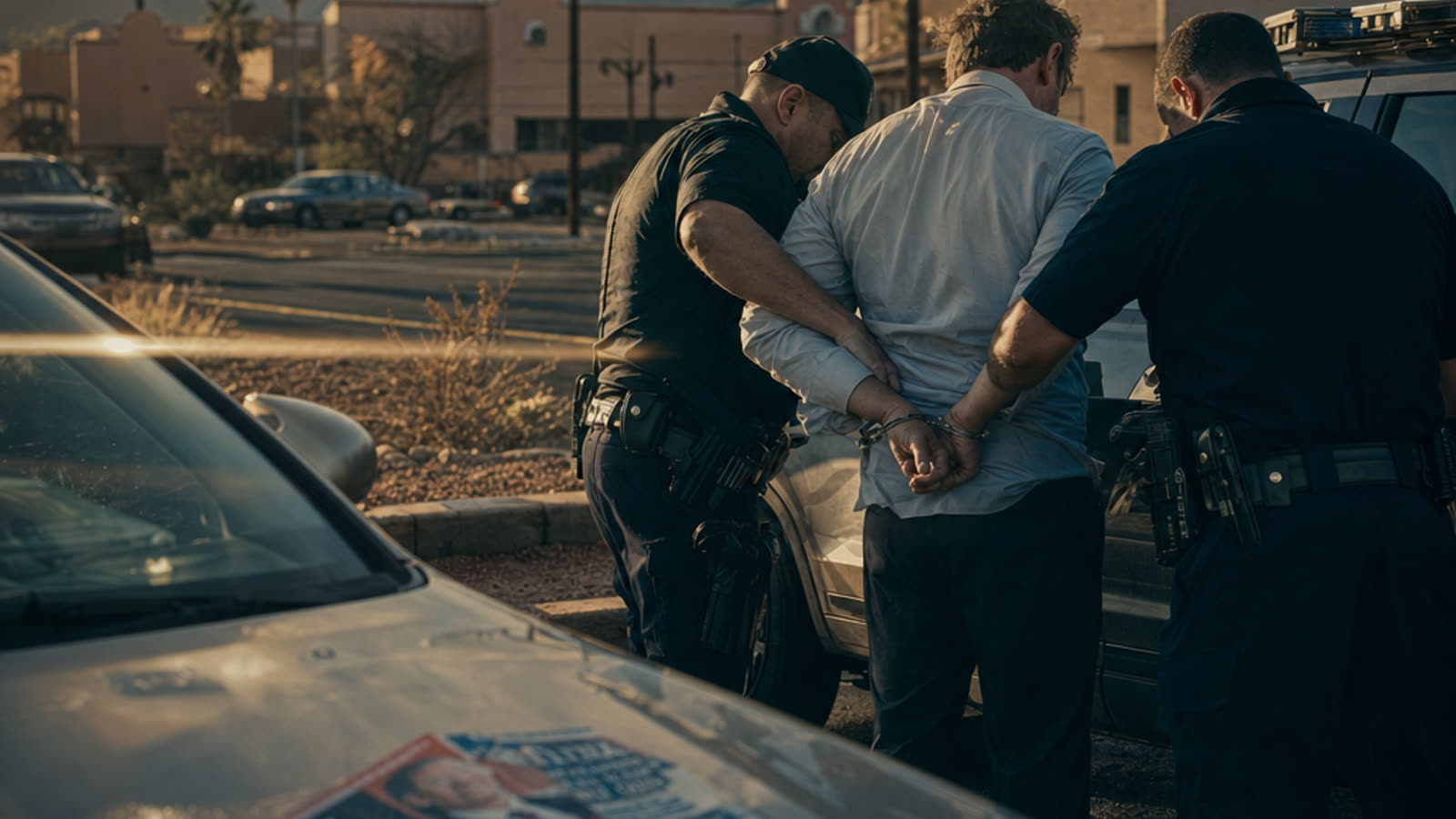
The final weeks of a midterm campaign are supposed to be about turnout models and ad buys, not damage control over seven-year-old police reports. Yet here we are in Arizona's competitive Sixth Congressional District, where a candidate's 2019 domestic violence arrest has become the race's defining issue—and the national party's response has been a masterclass in strategic ambiguity.
The arrest, which occurred in Maricopa County and resulted in charges that were later reduced in a plea arrangement, had been known to local political operatives for years. What changed is the document's virality: screenshots of the booking record began circulating on social media last week, and by Monday evening, the candidate's opponent had cut an ad featuring the mugshot. The incumbent's campaign has declined to comment beyond a terse statement noting the legal matter was "resolved years ago."
The calculation behind the silence
National party committees face an uncomfortable arithmetic. Arizona's Sixth is rated a toss-up by every major forecaster, and the seat could determine which party controls the House come January. Pulling support from a flawed candidate risks handing the district to the opposition; standing by them risks association with domestic violence in a cycle where suburban women remain a decisive demographic.
So far, the party has chosen a third path: saying nothing at all. No endorsement withdrawal, no statement of support, no acknowledgment that the story exists. This is not cowardice so much as cold math—the calculation that a quiet candidate can survive what a defended candidate cannot.
Why this story has legs
Domestic violence allegations have ended political careers before, but not uniformly. The difference often comes down to contemporaneous documentation. In this case, there is a police report, a booking photo, and court records showing the plea. The candidate cannot claim the accusation is fabricated; they can only argue it is old and resolved. Whether voters find that persuasive will depend on factors no pollster can model: the tone of local news coverage, the opponent's willingness to press the issue, and whether any new details emerge.
Early voting in Arizona begins October 9. The candidate has roughly twenty-four hours to decide whether to address the matter directly or continue hoping it fades. History suggests the latter strategy rarely works once a mugshot enters the discourse.
Our take
The party's silence is rational but not admirable. There is a difference between refusing to adjudicate every allegation against every candidate and refusing to acknowledge documented arrests for violent crimes. Arizona voters deserve to know where their potential representative's party stands—not because the party's opinion is dispositive, but because the evasion itself reveals a political culture that treats domestic violence as a messaging problem rather than a disqualifying fact. The seat may be worth winning. The cost of winning it this way is harder to calculate.