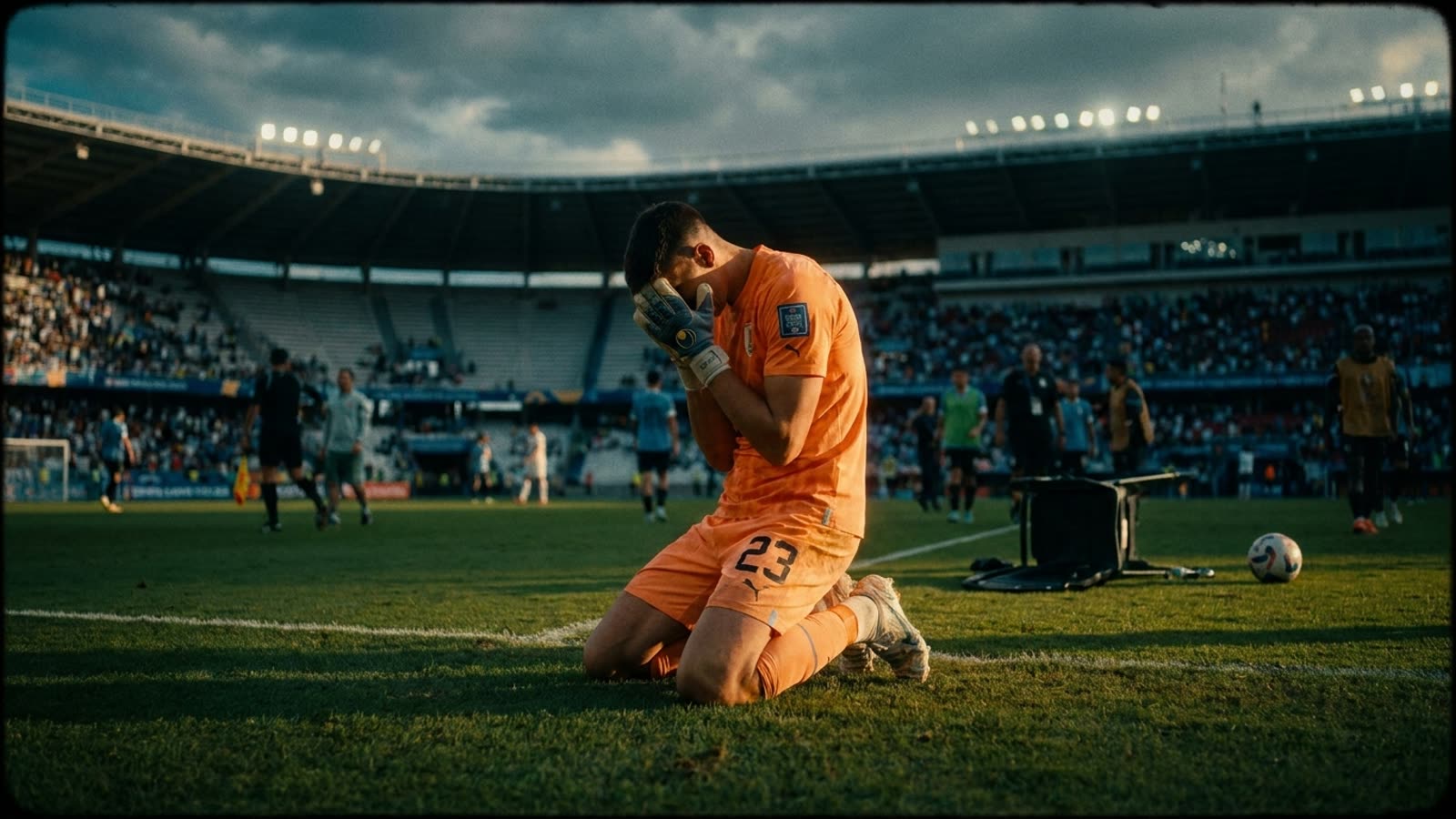
The ball was going nowhere. Sergio Rochet had time, space, and every reason to simply clear it into the stands and reset. Instead, Uruguay's goalkeeper attempted a casual pass under minimal pressure, watched it intercepted, and then watched his nation's World Cup end in the most agonizing way imaginable.
Uruguay's 1-0 loss to Spain wasn't decided by tactical genius or individual brilliance from La Roja. It was decided by a moment of inexplicable carelessness from a player whose entire job description begins with "do not give the ball away in your own box." The smallest of margins in the group table meant Rochet's error didn't just cost three points — it cost Uruguay's place in the knockout rounds entirely.
A golden generation's twilight
This was supposed to be different. Uruguay arrived at the 2026 World Cup with a squad that blended experienced warriors like Luis Suárez and Edinson Cavani's successors with a new wave of talent that had shown genuine promise in qualifying. The narrative was set: a proud footballing nation, two-time world champions, ready to remind everyone why they punch so far above their weight.
Instead, they leave having never quite found their rhythm. The group stage performances were characterized by defensive solidity undermined by a lack of cutting edge in attack, and now, ultimately, by a single catastrophic lapse. For a country of 3.5 million people that has historically produced footballers of extraordinary quality, the manner of exit stings more than the exit itself.
The Rochet question
Goalkeeper errors are uniquely unforgivable in football's collective memory. Rochet, who plays his club football in Europe and had been a reliable presence for the national team, will carry this moment for the rest of his career. The replays will circulate endlessly. The memes are already written.
But the broader question for Uruguay's football federation is whether this was an aberration or a symptom. Rochet's mistake happened in a context where Uruguay needed to win and couldn't generate enough attacking threat to make a defensive slip irrelevant. A team that creates more chances doesn't live or die by a single goalkeeper error. Uruguay, across the group stage, simply didn't create enough.
Spain advances, but questions linger
For Spain, the victory was functional rather than inspiring — a theme that has characterized their tournament so far. They took what was offered, punished the error clinically, and managed the game professionally. It's the kind of performance that wins group stages but rarely wins tournaments. La Roja's own fans will be hoping for considerably more when the knockouts begin.
Our take
Uruguay's exit is football at its most brutally simple: one mistake, tournament over. There's no tactical post-mortem that softens this, no broader narrative that provides comfort. Rochet will face the cameras, say the right things about taking responsibility, and then live with this for years. The Celeste faithful will debate whether this generation was ever good enough, or whether they simply ran out of luck at the worst possible moment. The truth, as always in football, is probably somewhere in between — but the image that endures will be a goalkeeper, alone with the ball, making the wrong choice.