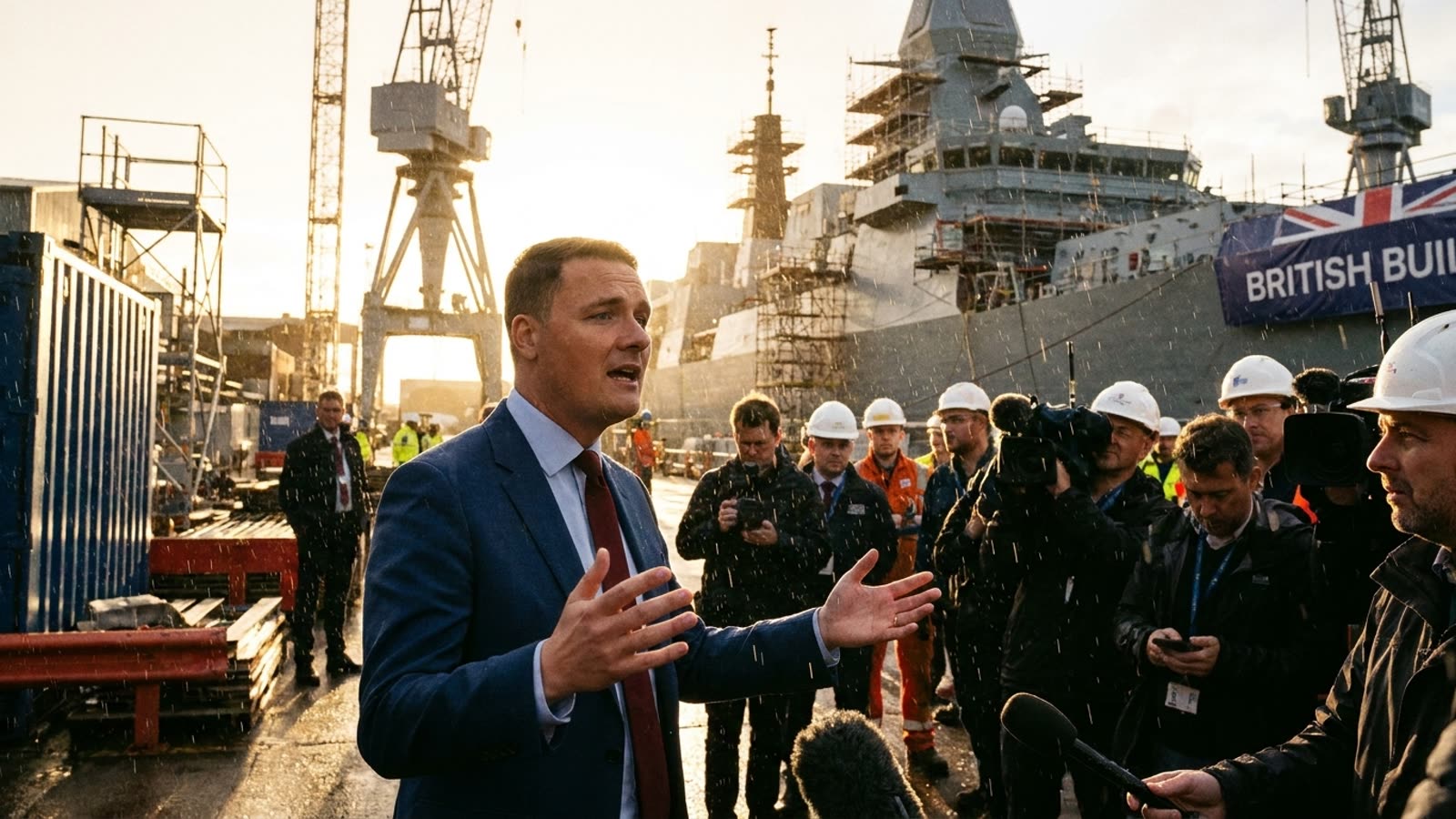
For years, British defence procurement operated on a simple premise: buy the best kit at the best price, regardless of where the supplier is headquartered. That era is now definitively over. Under rules announced by Health Secretary Wes Streeting—speaking in his capacity as a senior cabinet voice while Defence Secretary John Healey was abroad—foreign companies winning large UK defence contracts will be required to reinvest an equivalent value back into the British economy.
The policy represents the most significant intervention in defence industrial strategy since the consolidation of British Aerospace in the 1990s. It also signals that the Burnham government, despite its cautious first budget, is willing to deploy state power in ways that would have been unthinkable under New Labour or the Cameron-era Conservatives.
The mechanics of mandatory reinvestment
The details matter. "Large" contracts are understood to mean those exceeding £100 million, which captures most significant platform purchases—frigates, fighter aircraft, armoured vehicles—while exempting routine maintenance and smaller procurements. The reinvestment requirement is flexible: it can take the form of direct manufacturing in the UK, research and development partnerships with British universities, supply chain commitments to domestic firms, or capital investment in UK facilities.
This is not offset policy as traditionally understood. Offsets—where a foreign contractor agrees to buy British goods or services as a condition of sale—have been common in defence for decades but were often gamed through creative accounting. The new framework requires genuine economic activity, verified by a beefed-up Defence Procurement Agency with powers to audit compliance.
Why now, and why Streeting?
The timing reflects three converging pressures. First, the geopolitical chaos of the past two years—the Iran-Israel war, the ongoing Ukraine conflict, and Washington's increasingly erratic behaviour under Trump's second term—has concentrated minds on defence industrial resilience. Second, the UK faces a genuine skills crisis in advanced manufacturing; requiring foreign contractors to train British workers and build British facilities addresses this directly. Third, there is domestic political logic: Labour needs to demonstrate it can be tough on defence while delivering for working-class constituencies where manufacturing jobs have evaporated.
Streeting's involvement is telling. The Health Secretary is widely seen as a potential future leadership contender, and defence industrial policy is an unusual portfolio for him. His presence at the announcement suggests Burnham wants to spread credit—and risk—across his cabinet, while also testing whether Streeting can handle briefs beyond his comfort zone.
The transatlantic question
The elephant in the room is the United States. American defence giants—Lockheed Martin, Raytheon, General Dynamics—are major suppliers to the UK military. Washington has historically resisted any policy that looks like protectionism in allied defence markets, arguing that interoperability requires open procurement. The Trump administration, however, has been so focused on bilateral trade grievances that it may not notice or care about this particular shift. And if it does notice, the current state of US-UK relations—strained over Trump's Russia diplomacy and his threats to NATO—means London has less reason to defer.
Our take
This is industrial policy for people who claim not to believe in industrial policy. The Burnham government cannot nationalise, cannot subsidise at scale, and cannot run deficits without spooking the bond markets. But it can use the leverage of state purchasing power to reshape private behaviour. Defence procurement is the ideal vehicle: the contracts are enormous, the buyers are captive, and the national security framing inoculates against accusations of socialism. Whether the policy actually delivers skilled jobs and technological spillovers—rather than just compliance paperwork and creative accounting—will depend entirely on execution. The intent, though, is unmistakable. Britain is done pretending that markets alone will preserve its industrial base.