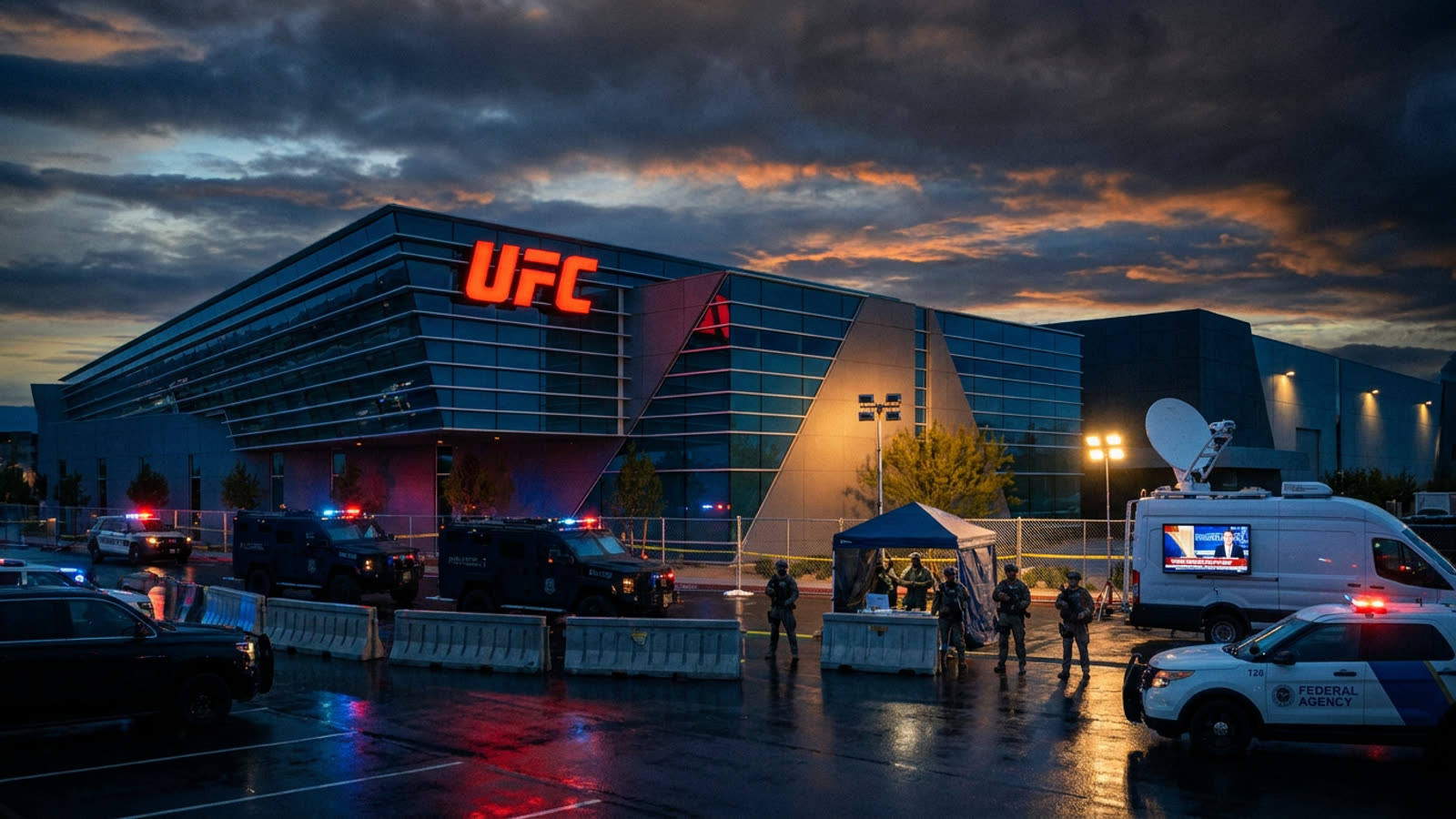
The Department of Justice's unsealing of an eight-defendant indictment Thursday reveals what investigators describe as a sophisticated plot to attack a UFC event hosted at the White House—a prosecution that crystallizes the peculiar risks created when combat sports become instruments of political theater.
The alleged conspiracy, thwarted before execution according to federal officials, targeted an event that itself represented an extraordinary departure from presidential tradition: professional cage fighting on the grounds of the executive mansion. That such a spectacle could be conceived, approved, and nearly attacked within the same political moment tells us something important about where American public life has arrived.
The prosecution's contours
Court documents describe months of surveillance, encrypted communications, and logistical planning by defendants spanning multiple states. The charges include conspiracy to commit an act of domestic terrorism, weapons violations, and material support offenses. If the government's allegations hold, this represents one of the most serious credible threats against a major sporting event on American soil in recent memory.
The UFC, for its part, has cultivated proximity to political power more aggressively than any major sports organization. Dana White's prominent role at political conventions and the promotion's willingness to stage events in unconventional venues created the conditions for a White House octagon. That same willingness to blur traditional boundaries between sport and spectacle may have also created an irresistible target.
Security economics meet political entertainment
Staging professional sports at the White House raises security questions that simply do not exist at conventional venues. The Secret Service's protective mission sits uneasily alongside the crowd management requirements of a pay-per-view event. Private security contractors, venue protocols, and federal protection details must coordinate in configurations never previously attempted.
The costs—both financial and operational—of securing such hybrid events remain largely opaque. What is clear is that the threat environment has now been demonstrated to be real rather than theoretical. Future decisions about presidential sporting spectacles will be made in the shadow of this indictment.
Our take
There is nothing inherently wrong with a president enjoying combat sports, nor with athletes visiting the White House. But transforming the executive mansion into a fight venue serves neither the dignity of the office nor the integrity of the sport. The alleged plot—whatever its ultimate disposition in court—illustrates that merging political symbolism with mass entertainment creates compound risks that benefit no one except those seeking maximum disruption. The UFC has proven it can sell out any arena on earth. It does not need the White House, and the White House does not need the liability.