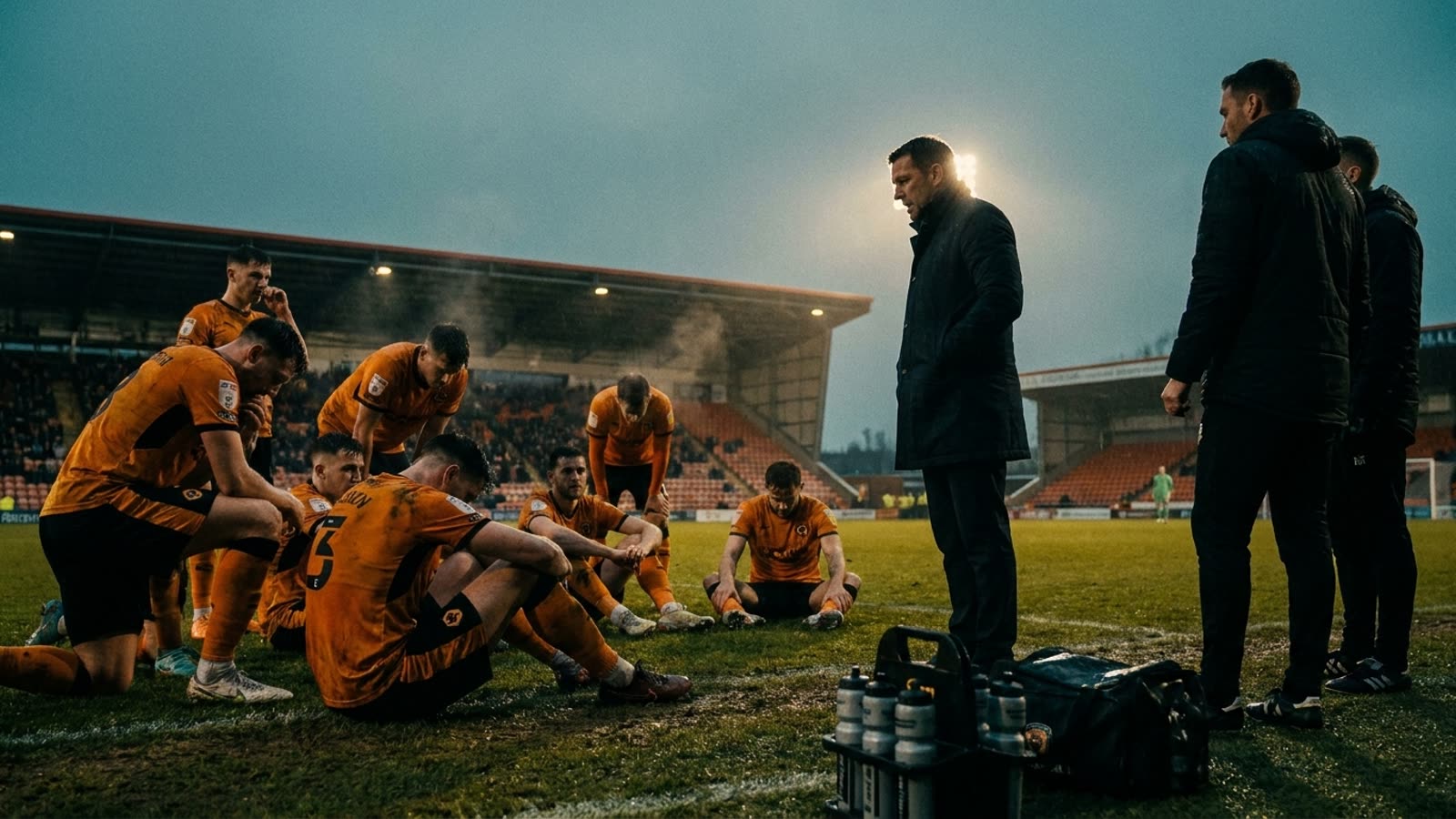
Every football match contains a hidden intermission that feels longer than it is: the half-time break. Fifteen minutes. 900 seconds. In that narrow window, a manager must diagnose what went wrong in the first 45 minutes, propose corrections, manage egos, calm panic, and project authority—all while players are physically depleted, mentally scattered, and desperate for water. The half-time team talk is one of sport's most mythologized rituals, immortalized in films and documentaries, yet its actual impact on match outcomes is surprisingly modest. What happens in those dressing rooms is less tactical revolution than psychological theatre.
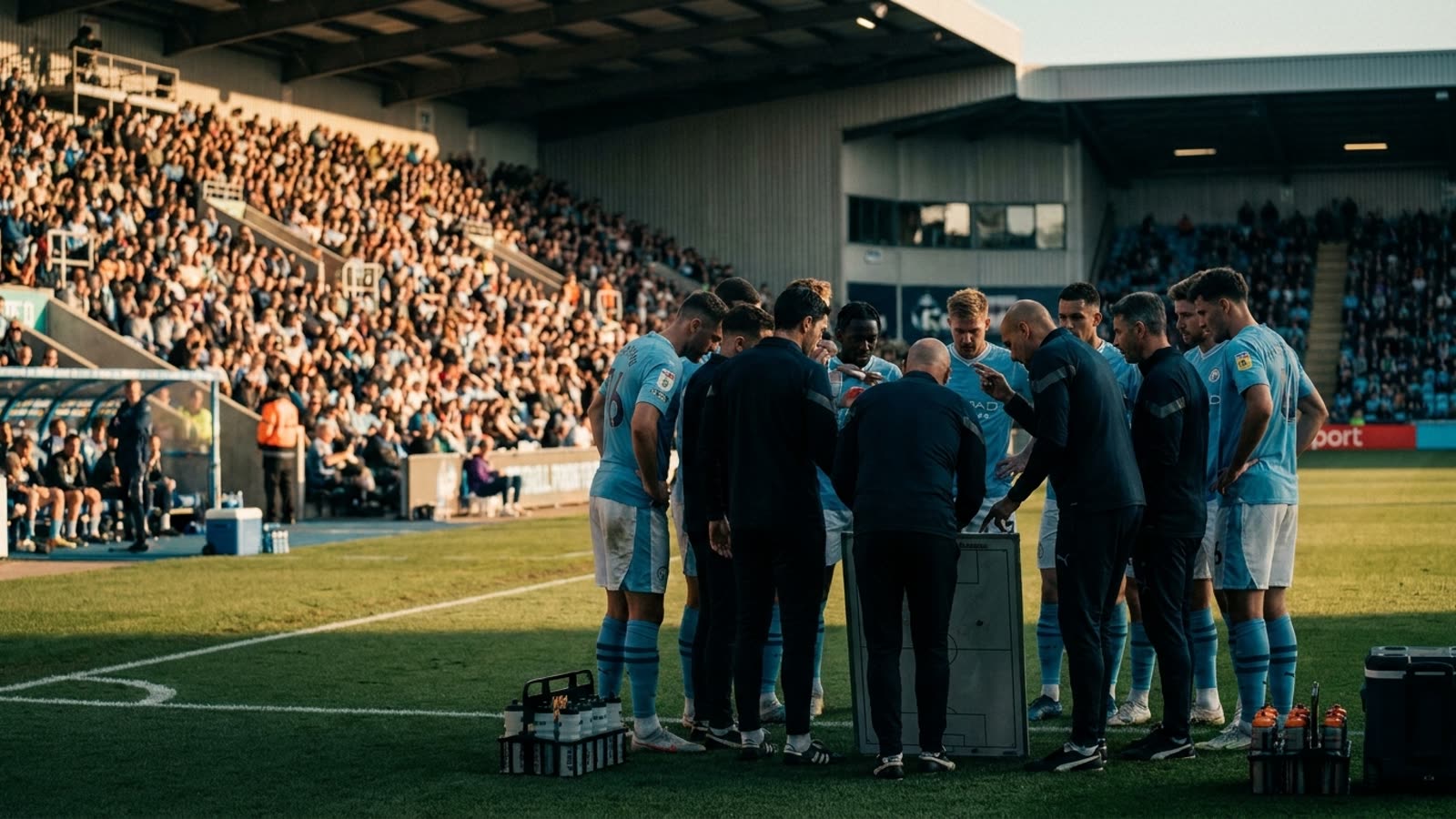
The format is nearly universal across professional football: players return to the changing room, hydrate, receive brief medical attention if needed, and sit or stand while the manager speaks. Some managers use a whiteboard or tablet to sketch formations; others rely purely on voice and gesture. The talk typically has three phases: a diagnostic summary of the first half, specific tactical adjustments (often targeting one or two players), and a motivational close designed to reset emotional state. Sir Alex Ferguson was famous for the "hairdryer treatment"—a furious, face-to-face tirade reserved for underperforming stars. Pep Guardiola prefers calm, hyper-detailed positional corrections. Jürgen Klopp mixes data with emotional appeals, often invoking the crowd or the club's history. The styles vary, but the constraint is the same: not enough time to teach anything genuinely new.
The limits of tactical rewiring
Football is a game of ingrained patterns. Players spend thousands of hours drilling movements, reading each other's positioning, automating decisions under pressure. A fifteen-minute speech cannot overwrite that muscle memory. Academic studies of half-time interventions—analyzing match data before and after the break—show that significant tactical shifts are rare and often ineffective when attempted. If a team switches from a 4-3-3 to a 3-5-2 at half-time without having practiced the system extensively, the second half typically produces more chaos than improvement. The most successful adjustments are narrow: "Press their left-back higher," "Drop deeper when they have the ball," "Switch the wide forwards." Broad systemic changes tend to backfire because players lack the shared understanding required to execute them under match intensity.
This is why elite managers often make their most important interventions before half-time, using the fourth official or a quick word during a stoppage. By the time the whistle blows for the break, the plan is already forming. The dressing-room talk then becomes less about introducing new information and more about reinforcing a message, resetting confidence, or singling out one player whose performance is dragging the team down. The content matters less than the tone. A study of Bundesliga teams found that the primary predictor of improved second-half performance was not the complexity of the manager's instructions but whether players felt the talk had clarified their individual responsibilities and restored collective focus.
The psychology of the pause
What half-time does provide is a rare moment of cognitive reset in a game that otherwise flows without interruption. Players experience the first half as a blur of decisions made in fractions of a second, many of them suboptimal under fatigue or pressure. The break allows the brain's prefrontal cortex—responsible for planning and self-regulation—to re-engage. Simply sitting down, breathing, and hearing a coherent narrative about the match can reduce anxiety and restore a sense of control. This is especially important when a team is losing or has conceded a late first-half goal, which research shows has a disproportionately negative psychological effect (the "recency bias" means players remember the most recent event more vividly than earlier ones).
Managers exploit this by reframing the narrative. A team that is down 1-0 but has dominated possession will hear, "We're playing well, just need to be sharper in the final third." A team that is winning but being outplayed will hear, "They're going to come at us harder—stay compact, don't get stretched." The goal is not to lie but to provide a coherent story that players can believe in for the next 45 minutes. The best managers are also skilled at reading which players need encouragement and which need confrontation. A veteran captain might respond well to a public challenge; a young winger might shut down if criticized in front of teammates. The talk is as much about managing personalities as it is about managing tactics.
Our take
The half-time team talk endures not because it transforms matches but because it satisfies a fundamental human need for structure and meaning in chaos. Football is a low-scoring, high-variance sport where luck and individual errors often decide outcomes. Managers and players crave the illusion of control, and the dressing-room speech provides it—a moment where the game can be paused, analyzed, and theoretically corrected, even if the evidence suggests the corrections rarely work as planned. The ritual's real function is theatrical: it reinforces the manager's authority, gives players a psychological anchor, and creates a narrative that makes the randomness of the game feel more manageable. Fifteen minutes is not enough to change a team, but it is just enough to change how a team feels about itself. In a sport decided by inches and seconds, that might be all that matters.