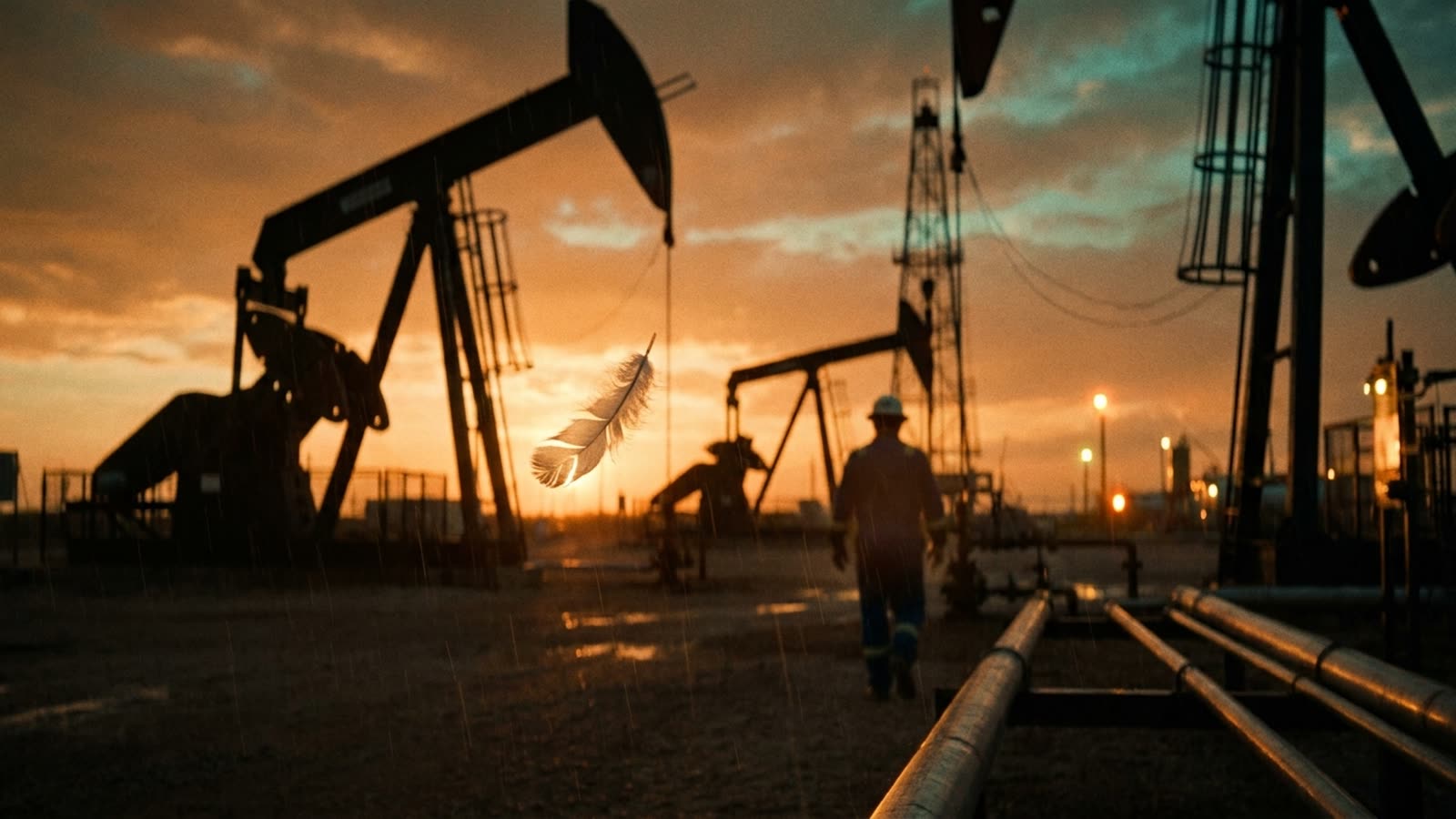
President Trump's declaration that oil prices will "drop like a rock" following his Iran nuclear agreement makes for excellent television and terrible commodity analysis. Brent crude has indeed tumbled to three-month lows, shedding roughly 8% since the deal's announcement, but the descent from here faces friction that no diplomatic breakthrough can eliminate.
The mathematics are straightforward enough on paper. Iran sits atop the world's fourth-largest proven oil reserves, and full sanctions relief could theoretically return 1.5 to 2 million barrels per day to global markets within 12 to 18 months. That's a meaningful supply injection into a market that has been running tight. But theoretical barrels and actual barrels are different substances entirely.
The infrastructure problem nobody mentions
Iran's oil infrastructure has endured nearly a decade of underinvestment, sanctions-induced parts shortages, and technical brain drain. The fields at Ahwaz, Marun, and Gachsaran—once the crown jewels of Persian petroleum—require billions in capital expenditure and years of rehabilitation before approaching their former glory. Western oil services companies, once bitten by the whiplash of Obama-era engagement followed by Trump 1.0 withdrawal, will approach re-entry with contractual caution that borders on paranoia.
Meanwhile, OPEC+ has demonstrated remarkable discipline over the past three years, a cohesion that surprised analysts who expected the cartel's usual fractiousness. Saudi Arabia and Russia have shown they can coordinate production cuts even amid geopolitical tensions. They will not passively watch Iranian barrels flood the market and crater their fiscal breakeven prices.
What the futures curve actually says
The forward curve tells a more measured story than presidential pronouncements. December 2026 Brent futures have dropped to around $68, down from $74 before the deal, but remain well above the sub-$50 territory Trump's rhetoric implies. Options markets are pricing modest downside risk, not a collapse. The smart money believes in a new trading range, not a new paradigm.
Consumer relief at the pump will be real but restrained. American drivers might see gasoline prices drift 15 to 25 cents lower per gallon over the coming months—meaningful for household budgets, but hardly the transformative price revolution the administration is advertising.
Our take
Trump deserves credit for achieving what three predecessors could not: a durable framework for Iranian reintegration into global energy markets. But his instinct to oversell the immediate benefits follows a familiar pattern. Oil markets are complex adaptive systems that resist political narratives. The rock will fall, but it will fall like a feather—slowly, with updrafts, and never quite reaching the ground the president promised.