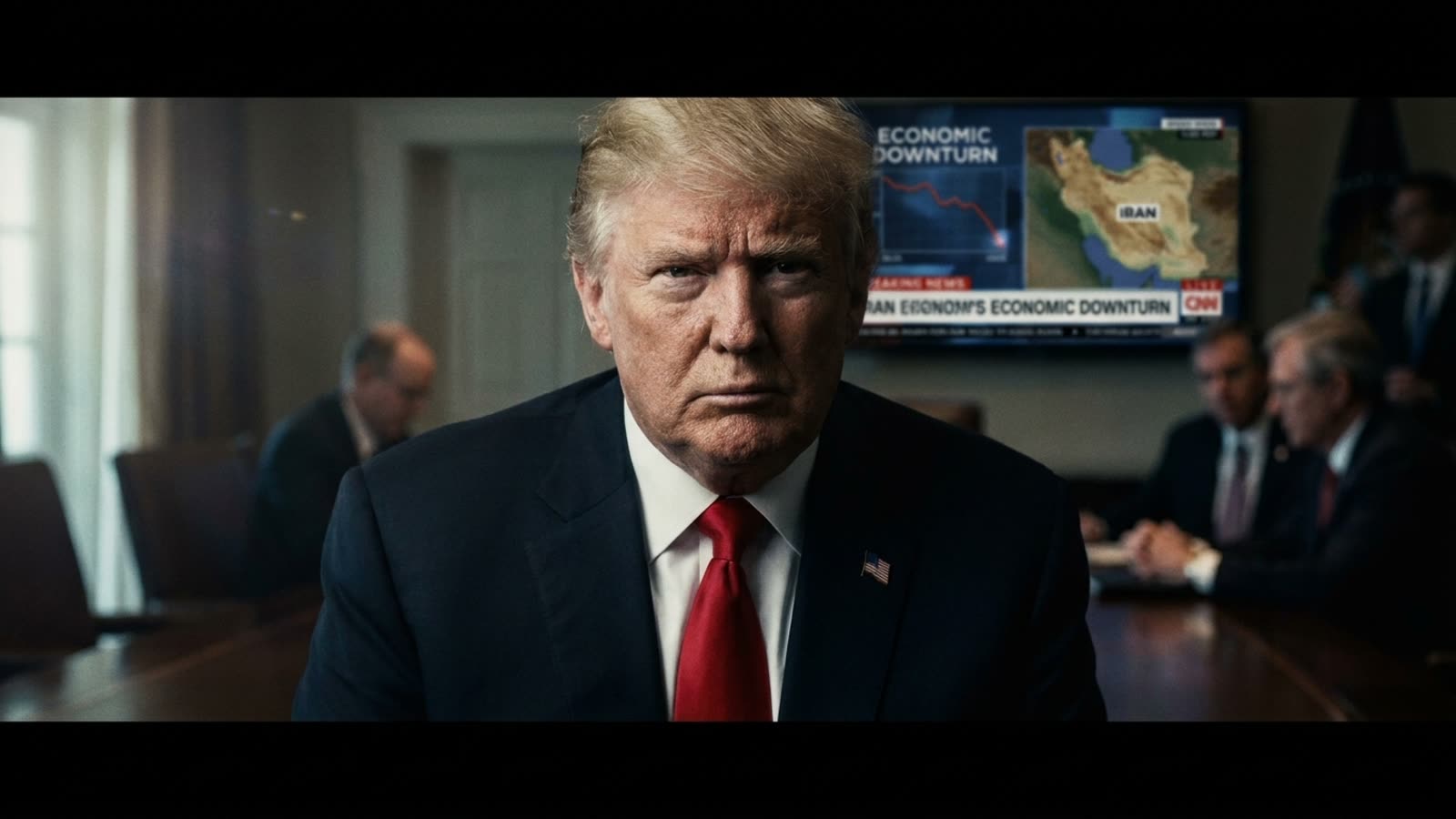
For three decades, Donald Trump's political identity has rested on a single, unshakeable premise: he knows how to make money, and by extension, he knows how to make America rich. That premise is now collapsing under the weight of war-driven inflation and a public increasingly skeptical that the Iran conflict was worth the cost.
A new Financial Times poll shows that more than half of American voters disapprove of Trump's handling of the economy—a stunning reversal for a president who entered his second term with economic approval ratings that consistently outpaced his overall popularity. The survey suggests the Iran war has not merely dented Trump's foreign policy standing; it has corroded the foundation of his political appeal.
The inflation problem nobody wanted to discuss
When the Trump administration launched military operations against Iran earlier this year, the immediate economic consequences were predictable to anyone who remembered the oil shocks of the 1970s. Energy prices spiked. Supply chains, already fragile from years of tariff wars and pandemic aftershocks, seized up further. The Federal Reserve, which had been cautiously cutting rates, found itself paralyzed between fighting inflation and supporting growth.
The White House initially dismissed inflation concerns as temporary—the inevitable but brief cost of confronting a genuine national security threat. That argument held for approximately six weeks. By late April, grocery prices had risen enough that even voters who supported the war in principle began questioning its execution. The FT poll captures this shift: respondents who approve of the Iran intervention itself still give Trump poor marks on economic management, suggesting the two issues have become psychologically decoupled.
Republican midterm anxiety goes public
The poll's most consequential finding may be its implications for November. Republican strategists have spent months reassuring nervous candidates that Trump's coattails remain strong, that the president's base will turn out regardless of inflation or foreign entanglements. The new data complicates that narrative considerably.
Voters in swing districts—the suburban precincts that determine House control—show the steepest decline in economic confidence. These are precisely the voters Republicans cannot afford to lose, and precisely the voters most sensitive to rising costs. Several Republican Senate candidates in competitive races have already begun distancing themselves from the administration's economic messaging, a tactical shift that would have been unthinkable three months ago.
The rally-round-the-flag effect that wasn't
Perhaps most striking is what the poll reveals about the limits of wartime politics in the modern era. Previous presidents—both Bushes, notably—enjoyed sustained approval bumps during military operations. Trump received one too, but it proved remarkably shallow and short-lived. Within weeks, his numbers returned to their pre-war baseline, then continued falling.
The explanation likely lies in the fragmented media environment and the deeply polarized electorate. There is no Walter Cronkite to confer legitimacy, no shared national narrative about the conflict's meaning. Instead, Americans experienced the Iran war through their preferred information silos, and those silos offered radically different interpretations of whether the operation was succeeding or failing, necessary or reckless.
Our take
Trump has survived political obituaries before—so many that writing another feels almost foolish. But this poll captures something genuinely new: the severing of Trump from his core brand attribute. He can recover from being seen as chaotic, divisive, or norm-breaking; his supporters have long viewed those qualities as features rather than bugs. Being seen as bad for their wallets is different. The Iran war may ultimately be remembered less for its geopolitical consequences than for the moment it revealed that even Trump's economic mystique has limits.