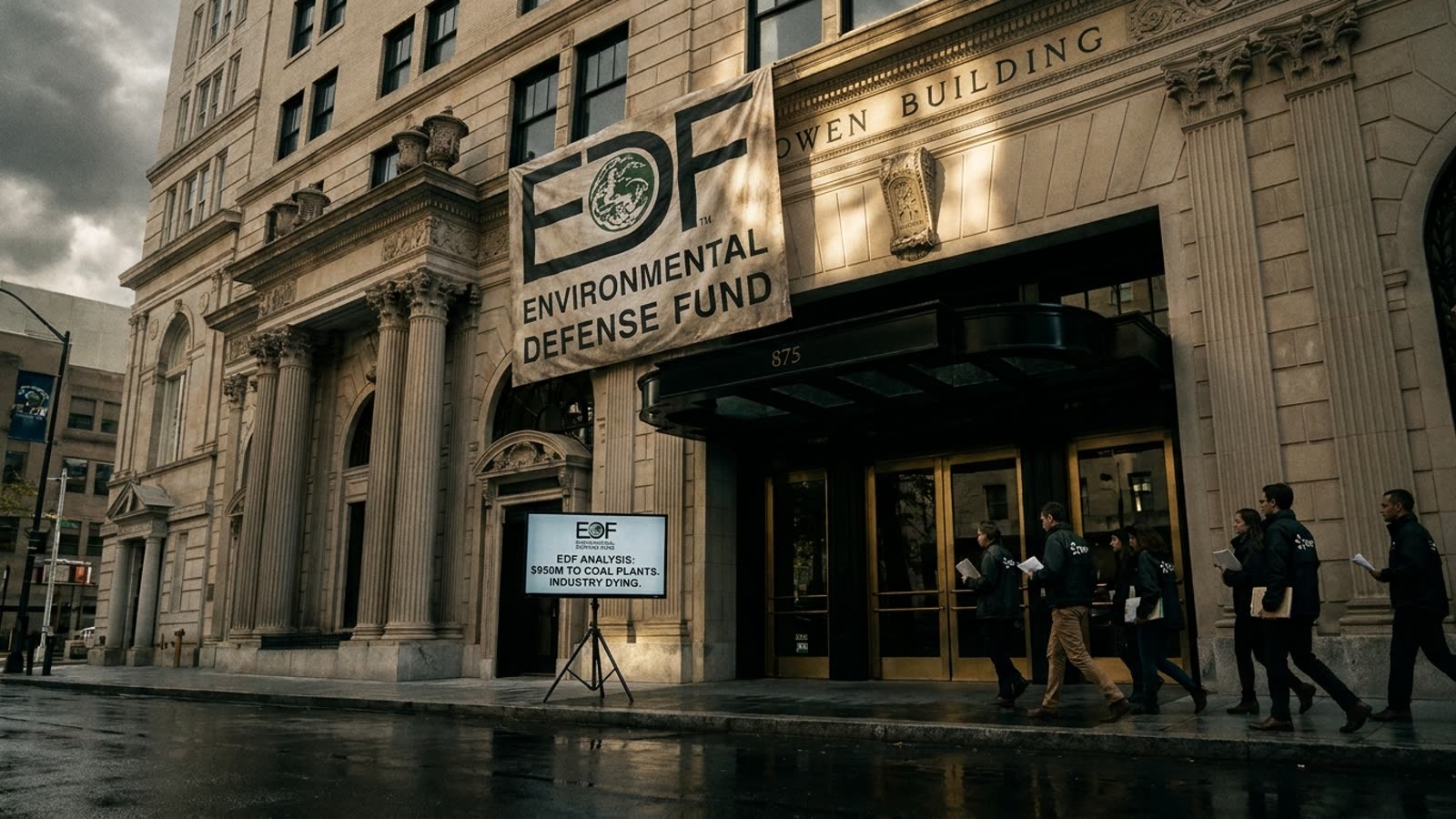
The American coal industry has received what amounts to a federally funded hospice care package: generous, well-intentioned by its architects, and ultimately incapable of reversing the patient's terminal diagnosis.
A comprehensive analysis released by the Environmental Defense Fund quantifies what energy economists have long suspected — the Trump administration's coal revival strategy has moved from rhetorical to fiscal, with nearly $950 million in direct taxpayer support flowing to approximately half of the nation's remaining coal-fired power plants. The assistance comes bundled with regulatory relief that effectively grants these facilities exemptions from Clean Air Act compliance requirements that their natural gas and renewable competitors must still meet.
The arithmetic of decline
The intervention arrives at a peculiar moment in coal's long retreat. American coal consumption has fallen by more than half since its 2007 peak, driven not by environmental regulation but by the shale gas revolution and the plummeting cost of wind and solar generation. The plants receiving federal support are, by and large, the least competitive units in regional power markets — facilities that would otherwise face retirement decisions within the next several years based purely on economic fundamentals.
The $950 million figure encompasses direct subsidies, favorable treatment in grid reliability programs, and the economic value of deferred pollution control investments. The Clean Air Act exemptions alone represent a substantial implicit subsidy, allowing older plants to continue operating without the scrubbers and emissions controls that would otherwise be required.
Political geography meets energy economics
The distribution of support maps neatly onto electoral considerations. Coal-dependent communities in Appalachia, the Ohio Valley, and parts of the Mountain West have received the bulk of assistance — regions that proved decisive in recent elections and remain politically contested. The administration has framed the intervention as essential to grid reliability and energy independence, though independent grid operators have consistently maintained that coal retirements pose no systemic risk to electricity supply.
What the subsidies cannot address is the fundamental cost disadvantage. New natural gas plants produce electricity at roughly half the cost of existing coal facilities, while utility-scale solar has become the cheapest form of new generation in most American markets. The federal support effectively pays coal plants to exist rather than compete.
Our take
There is something almost poignant about the scale of intervention required to keep coal marginally viable — a tacit admission that market forces have rendered the industry obsolete regardless of regulatory environment. The $950 million buys time, perhaps a few years of continued operation for plants that would otherwise close. It does not buy a future. The communities dependent on these facilities deserve honest transition planning and economic diversification support, not expensive theater that postpones the inevitable while adding to the atmospheric carbon burden. The coal industry's decline is not a policy choice to be reversed; it is an economic reality to be managed.