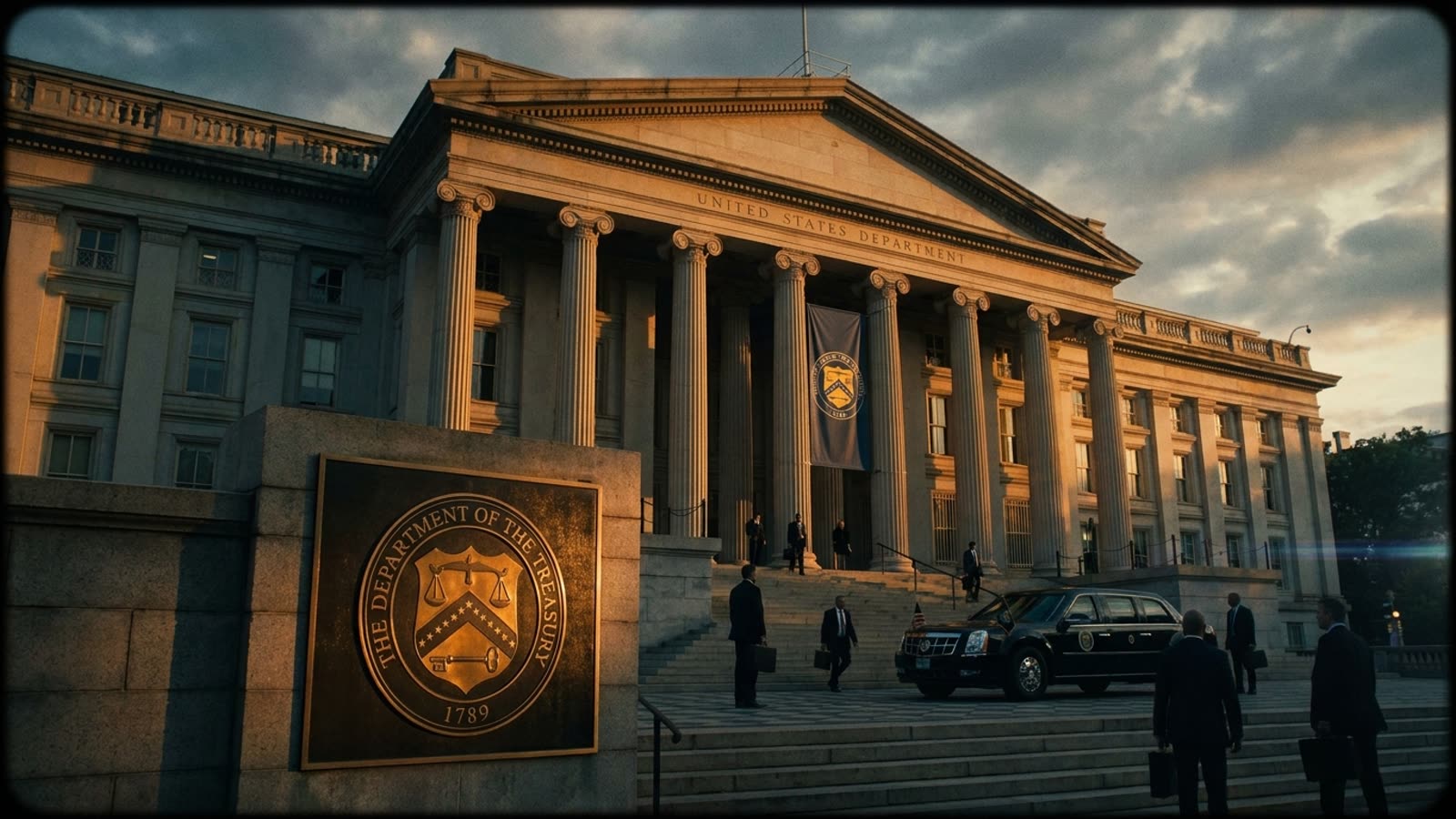
The United States government is the world's most prolific borrower, and it conducts this borrowing in a manner so routinized that it barely registers as news. Multiple times each week, the Treasury Department announces it needs money, and within days, that money appears. The process is called a Treasury auction, and understanding it reveals more about how modern finance actually works than any stock ticker or cryptocurrency chart ever could.
The mechanism is deceptively simple. Treasury announces the size and matyours of securities it wishes to sell—bills maturing in weeks, notes in years, bonds in decades. Authorized dealers and large institutional investors submit bids specifying how much they want and at what yield. The Treasury accepts bids starting from the lowest yield (the cheapest borrowing cost) until the entire offering is placed. Winners pay; Treasury gets its cash; the securities begin trading in the secondary market before the ink is metaphorically dry.
The primary dealers' quiet monopoly
At the center of this system sit the primary dealers, a group of roughly two dozen financial institutions designated by the Federal Reserve Bank of New York. These firms are obligated to bid at every auction—a requirement that ensures the government never faces an empty room when it comes to borrow. In exchange, they enjoy privileged access to the Fed's trading operations and the reputational heft of being essential to American sovereign finance.
This arrangement creates a curious dynamic. The primary dealers function as a buffer between government need and market appetite. When demand is strong, they can flip newly purchased Treasuries to eager buyers at a profit. When demand falters, they absorb securities onto their own balance sheets, sometimes at a loss, trusting that liquidity will eventually return. The system works because these institutions are large enough to bear temporary pain and interconnected enough that failure would be unthinkable.
When the machine stutters
Treasury auctions almost always succeed, which is precisely why the rare failures command attention. A poorly received auction—one where dealers must absorb more than expected at higher yields than anticipated—sends tremors through global markets. It suggests that the world's appetite for American debt has limits, that the cost of financing everything from aircraft carriers to Social Security checks might rise, and that the assumptions underpinning trillions in financial contracts deserve scrutiny.
The auction process also reveals the Federal Reserve's delicate position. The Fed cannot directly purchase securities at auction—that would constitute the monetary financing of government debt, a line central banks in developed economies do not cross. Yet the Fed's policies shape the environment in which auctions occur. When the Fed buys Treasuries in the secondary market, it effectively absorbs supply and supports prices. When it sells, it competes with Treasury for buyer attention. The dance is intricate and consequential.
Our take
Treasury auctions deserve more attention than they receive. They are not merely technical operations but regular referendums on American creditworthiness, conducted by sophisticated investors with real money at stake. The bids submitted each week encode judgments about inflation, growth, political stability, and the dollar's future. That this system functions so smoothly most of the time is a testament to institutional design; that it occasionally wobbles is a reminder that even the mightiest borrower depends on the continued confidence of its lenders.