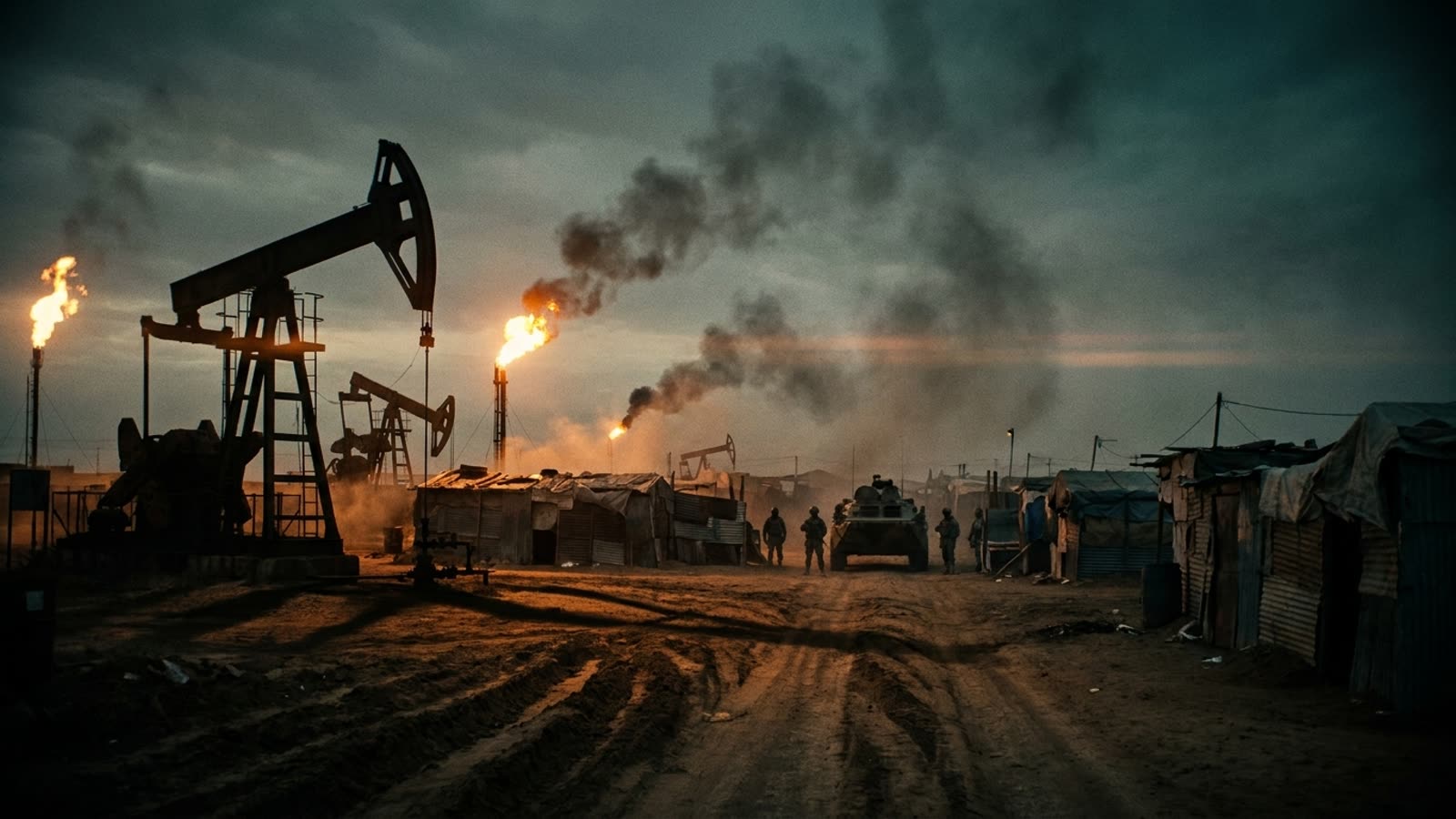
Venezuela sits atop the world's largest proven oil reserves, yet its economy collapsed so thoroughly that millions fled the country. The Democratic Republic of Congo holds vast deposits of cobalt, copper, and diamonds, yet remains among the poorest nations on Earth. Meanwhile, resource-poor Singapore and Switzerland built some of the world's highest living standards from essentially nothing but human capital and institutions. This is the resource curse, and it remains one of the most robust and tragic patterns in development economics.
The term entered academic vocabulary in the early 1990s, though the phenomenon had been observed for decades. The core finding is grimly consistent: countries heavily dependent on natural resource exports tend to experience slower economic growth, more authoritarian governance, and higher rates of civil conflict than comparable nations without such endowments. The mechanism is not mysterious, but it is maddeningly persistent.
The political economy of unearned wealth
The curse operates through several reinforcing channels. First, resource revenues flow directly to governments rather than being earned through a productive private sector, severing the normal fiscal contract between citizens and the state. When a government can fund itself by selling oil or minerals, it has little incentive to build tax systems, which in turn means citizens have little leverage to demand accountability. The result is what political scientists call a "rentier state"—one that lives off rents from natural assets rather than the productivity of its people.
Second, resource wealth creates enormous incentives for corruption and rent-seeking. Control of the state means control of resource revenues, making politics a winner-take-all contest. This crowds out productive entrepreneurship as the talented and ambitious focus their energies on capturing a share of the resource pie rather than creating new value. Nigeria's oil sector exemplifies this dynamic: despite decades of petroleum exports, the country has failed to develop significant non-oil industries, and corruption remains endemic.
Third, resource booms often trigger what economists call Dutch disease, named after the Netherlands' experience after discovering North Sea natural gas in the 1960s. Large resource exports drive up the exchange rate, making other tradable sectors—manufacturing, agriculture—uncompetitive. The economy becomes dangerously concentrated, and when commodity prices inevitably fall, there is no diversified base to cushion the blow.
The rare escapes
Yet the curse is not inevitable. Norway and Botswana stand as prominent counter-examples, having converted resource wealth into broad prosperity. Both cases share key features: strong institutions that predated the resource boom, transparent management of revenues, and explicit policies to save and invest resource income rather than consume it immediately. Norway's sovereign wealth fund, now worth over a trillion dollars, was designed specifically to prevent oil money from distorting the domestic economy. Botswana established similar mechanisms for its diamond revenues and maintained competitive democratic institutions.
The contrast with Venezuela is instructive. Both nations had similar income levels and oil reserves in the 1970s. Venezuela used its oil wealth to fund consumption and political patronage; Norway saved and invested. Fifty years later, the outcomes could hardly be more different. The divergence was not about geology but about governance.
Our take
The resource curse is ultimately a story about institutions, not commodities. Oil does not doom a nation any more than its absence guarantees success—but it does create a particularly demanding test of political and economic systems. For countries discovering new reserves today, the lesson is clear: the hard part is not extracting the resources but building the governance structures to manage the wealth they generate. That requires transparency, diversification, and above all the political will to resist the temptation to spend windfalls on immediate consumption. Few governments pass this test, which is why the paradox of poverty amid plenty remains so depressingly common.