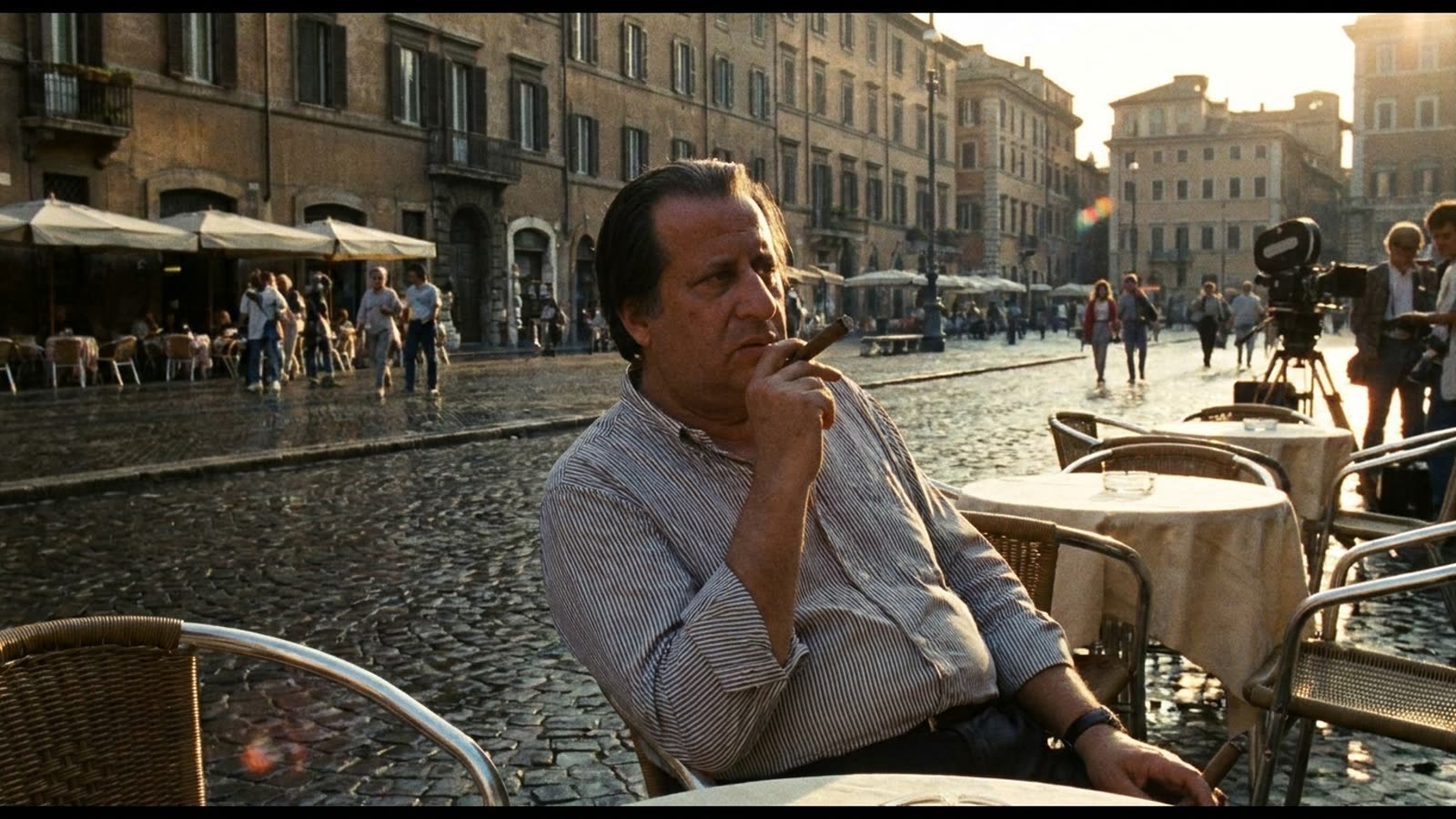
Tinto Brass died as he lived: somewhere between respectability and scandal, never quite landing on either shore. The Italian director, who passed away at 93, will be remembered primarily for Caligula (1979), the X-rated Roman epic that remains one of cinema's most notorious productions — a film so chaotic that its screenwriter, Gore Vidal, demanded his name be removed, and its producer, Bob Guccione of Penthouse fame, inserted hardcore footage without the director's consent.
But to reduce Brass to Caligula is to misunderstand both the man and his moment. He was an eroticist in an era when that word still carried artistic weight, a filmmaker who believed the body could be as expressive as the face, and who spent decades proving it while the industry alternately celebrated and shunned him.
The Caligula curse
The making of Caligula has become its own genre of Hollywood cautionary tale. Malcolm McDowell, Helen Mirren, Peter O'Toole, and John Gielgud signed on for what they understood to be a prestige historical drama. What they got was a production torn apart by competing visions: Vidal wanted literary provocation, Brass wanted sensual spectacle, and Guccione wanted something he could sell to the raincoat crowd.
Brass eventually disowned the theatrical cut entirely. The film grossed over $23 million against a $17 million budget — respectable numbers that masked a creative catastrophe. For decades, it existed as a cultural punchline, a film more discussed than watched. Only in recent years, with the release of reconstructed cuts closer to Brass's original vision, has critical reassessment begun.
The Italian years
What American audiences rarely saw was the director's Italian output, where he operated with fewer constraints and more consistent vision. Films like The Key (1983) and Paprika (1991) found substantial audiences in Europe, blending comedy, period detail, and frank sexuality in ways that defied easy categorization. He was neither pornographer nor prude, but something more interesting: a craftsman who took pleasure seriously.
His visual style — saturated colors, baroque compositions, an almost painterly attention to flesh — influenced everything from fashion photography to music videos, even as his name remained unspeakable in polite Hollywood circles. Directors who would never cite him publicly borrowed liberally from his palette.
Our take
Tinto Brass made the mistake of being too explicit for the art house and too artistic for the adult industry. He fell into the gap between categories, and gaps don't get retrospectives. But his death arrives at a moment when the boundaries he tested — between art and exploitation, between the sensual and the sexual — feel more porous than they have in decades. The streaming era has made room for Saltburn bathtub scenes and Euphoria excess. Perhaps it can finally make room for the man who got there first, even if it took dying to earn the reassessment.