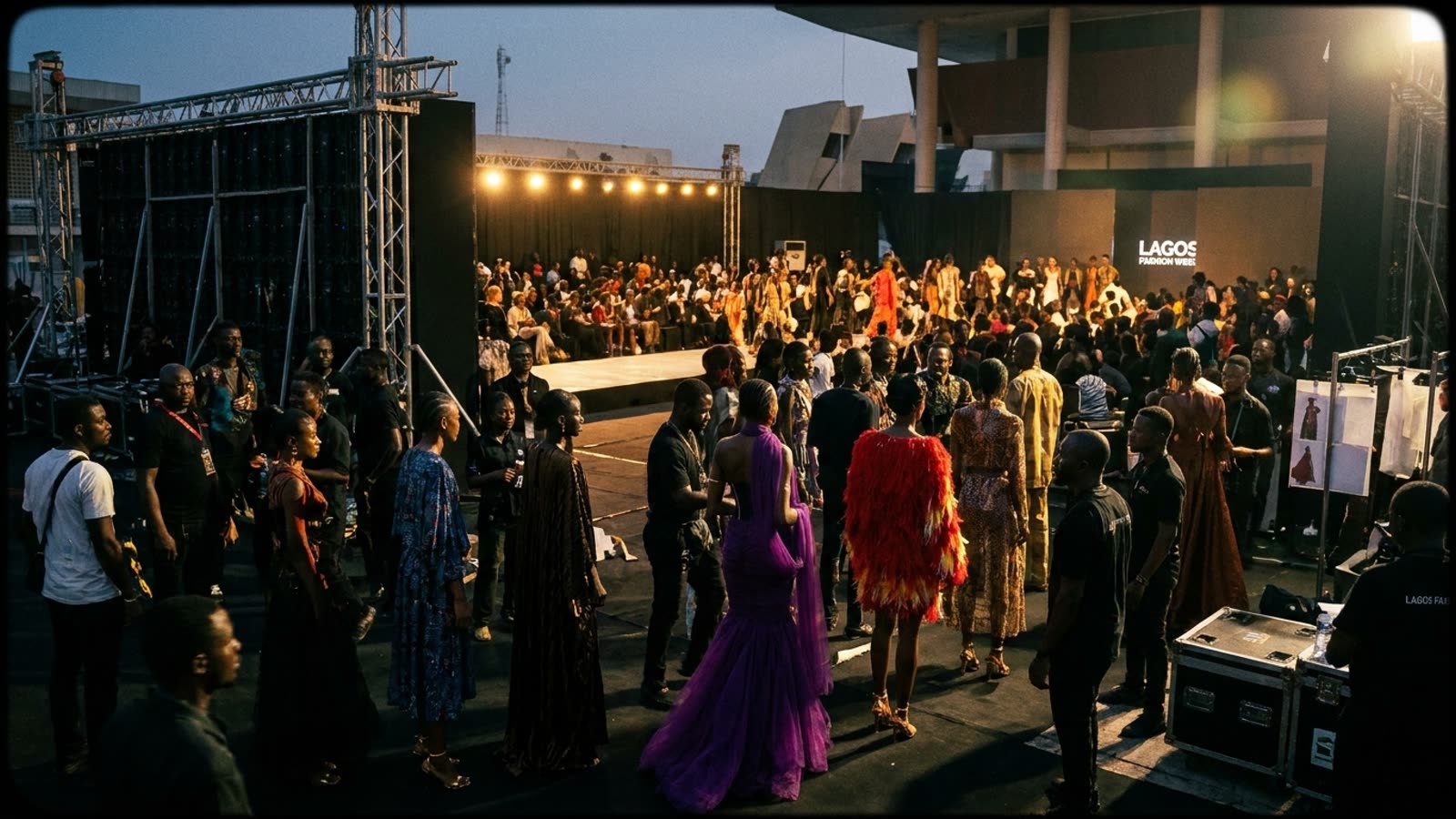
For years, Lagos Fashion Week existed in a peculiar limbo: celebrated enough to warrant glossy coverage, yet perpetually framed as "emerging" by an industry that reserves the word "established" for Paris, Milan, and New York. That framing is becoming untenable. The event's sixteenth edition, which wrapped this week, attracted a record number of international buyers, editors, and talent scouts—people who came not to discover African fashion, but to shop it.
The shift is partly demographic. Nigeria's population will exceed 400 million by mid-century, and its middle class, though battered by inflation, is growing faster than any in the Western hemisphere. But the more immediate catalyst is creative: a generation of designers who trained in London and Antwerp, then returned home, are now producing collections that speak fluently to both Lagos and Los Angeles. Kenneth Ize's handwoven asọ-òkè suiting, Fruché's sculptural tailoring, and Tokyo James's gender-fluid eveningwear are no longer "African fashion" in the ethnographic sense. They are fashion, full stop.
The buyer's calculus
What changed this year is the composition of the audience. Previous editions drew press and influencers; this one drew open-to-buy budgets. Retailers from the Middle East and Europe arrived with mandates to diversify their luxury assortments, a response to consumer demand for non-Western narratives. The math is simple: a Lagos-made piece offers novelty, craftsmanship, and a story—three things fast fashion cannot replicate. For a Selfridges or a Bloomingdale's, stocking a Nigerian label is no longer philanthropy; it is merchandising strategy.
Infrastructure remains the bottleneck
Yet the path from runway to rack is littered with obstacles. Nigerian designers contend with erratic electricity, punitive import duties on fabric, and a banking system that makes international wire transfers an ordeal. Scaling production beyond artisanal quantities requires capital that local investors are only beginning to provide. The result is a paradox: global demand is rising precisely as supply-chain constraints limit the ability to meet it.
Our take
Lagos Fashion Week is no longer auditioning for relevance; it is negotiating terms. The industry's next move will reveal whether "global fashion" means anything beyond a euphemism for European hegemony. If Western conglomerates are serious about the African market, they will invest in manufacturing partnerships, not just wholesale orders. Otherwise, the talent will eventually build its own infrastructure—and its own calendar—without them.