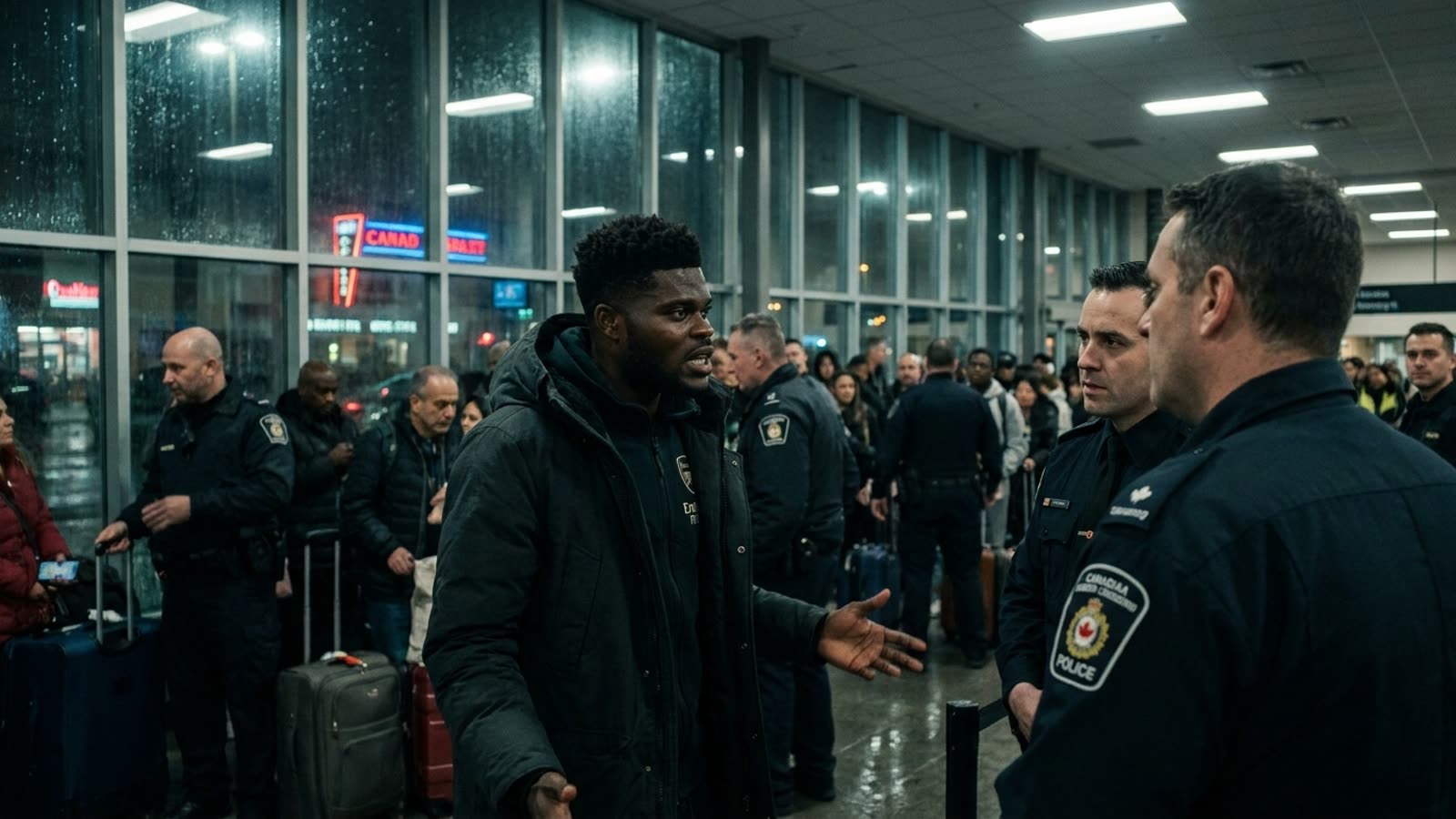
The 2026 World Cup's first genuine crisis has nothing to do with a missed penalty or a tactical miscalculation. It concerns a customs officer, a denied entry stamp, and one of Africa's most important midfielders standing in an airport terminal while his teammates prepared to play without him.
Thomas Partey, Arsenal's 32-year-old midfielder and Ghana's most indispensable player, was refused entry into Canada ahead of the Black Stars' Group D opener. The Canadian Border Services Agency has not disclosed the specific grounds for denial, citing privacy regulations, but reports indicate the decision relates to unresolved legal matters flagged during routine screening. Partey's representatives have declined comment beyond confirming he will not feature in the match.
A tournament built on complexity
The United States, Mexico, and Canada agreed to co-host this World Cup precisely because the scale of modern football's premier event has outgrown any single nation's infrastructure. But tri-nation hosting introduces friction that a single-country tournament avoids. Players must satisfy the entry requirements of three separate sovereign nations, each with distinct immigration protocols, criminal background thresholds, and data-sharing agreements.
FIFA's regulations require participating federations to submit squad documentation months in advance, and host nations conduct their own vetting. The system, in theory, catches problems early. In practice, legal complications can emerge late, particularly when they involve ongoing investigations or civil matters that don't trigger immediate red flags but surface during enhanced screening at the border.
Ghana's football association reportedly believed Partey's travel was cleared. They were wrong, or the situation changed, or someone's paperwork was incomplete. The result is the same: their most complete midfielder watched the match from a different country.
What Ghana loses
Partey's absence is not merely symbolic. At his best, he is the metronome that allows Ghana's attack to function, a player who can absorb pressure in deep positions, carry the ball through midfield thirds, and distribute with precision that few African players can match. His defensive reading compensates for a back line that has looked vulnerable in recent qualifiers.
Ghana's manager, Chris Hughton, has options but no equivalents. Mohammed Kudus can play deeper but sacrifices his attacking threat. Elisha Owusu offers defensive solidity without Partey's progressive passing range. The Black Stars entered this tournament as dark-horse candidates; they now enter their opener as a diminished version of themselves.
Our take
This is embarrassing for everyone involved. For Ghana, whose preparation should have identified any travel risk weeks ago. For FIFA, whose vetting protocols apparently missed or dismissed whatever issue surfaced at the Canadian border. For the tournament itself, which promised seamless integration across three nations and has instead delivered a reminder that borders remain borders, even when football asks them to yield. Partey may yet appear in Ghana's subsequent matches in the United States or Mexico, assuming those nations clear him. But the damage to Ghana's campaign may already be done, and the World Cup has its first cautionary tale before the group stage is a day old.