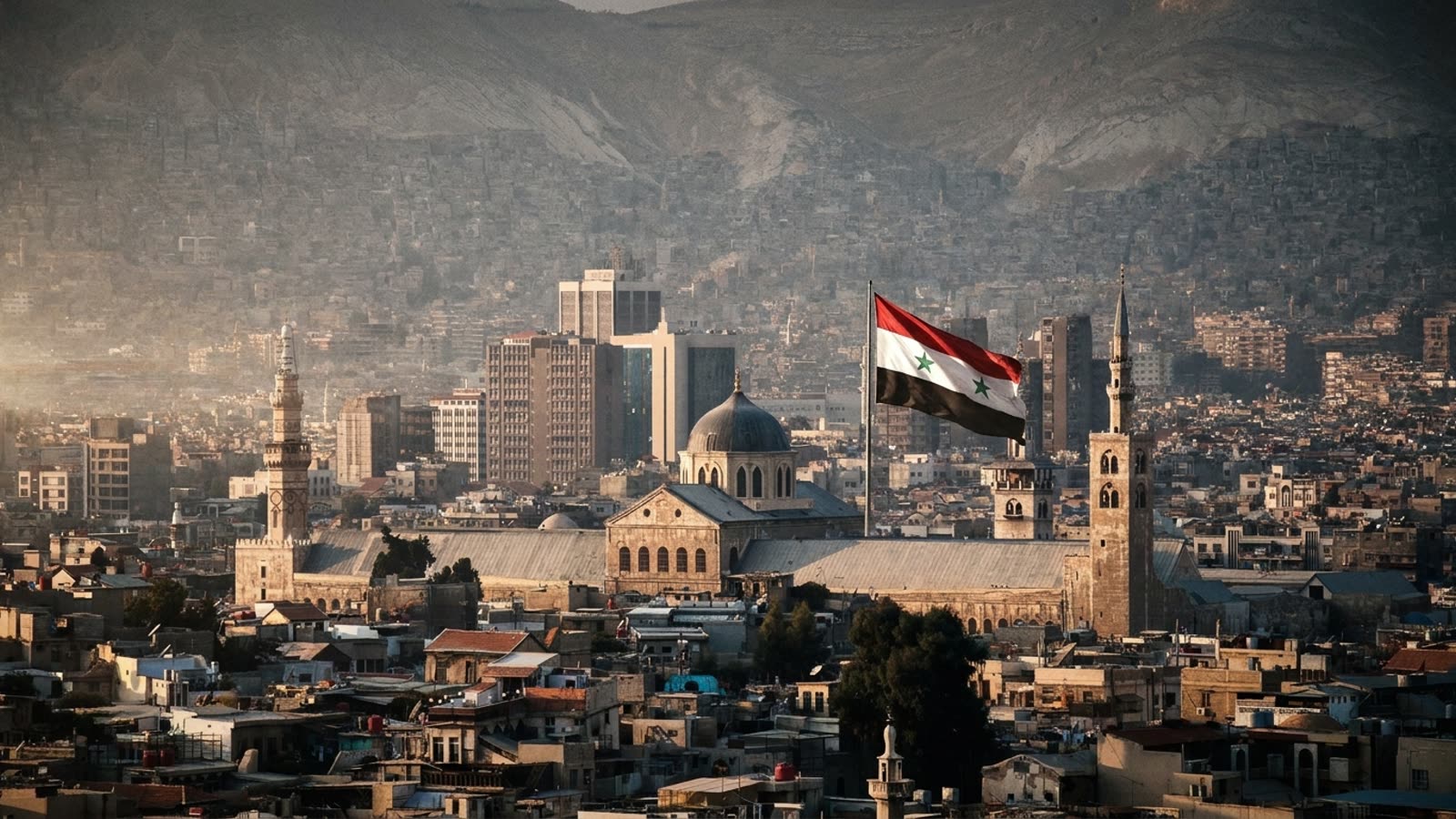
Bashar al-Assad spent a decade as a pariah. Now he may become a treaty ally of the kingdom that once funded rebels trying to kill him. Syria is in advanced discussions to join the Saudi-Turkish-Pakistani mutual defense agreement, according to officials in Riyadh and Damascus, a move that would formalize Assad's return to the Arab fold while potentially obligating Syrian forces to support Saudi Arabia's grinding war against the Houthis in Yemen.
The logic, from Assad's perspective, is straightforward. Syria's economy remains shattered, its military hollowed out, and its Iranian patrons stretched thin by their own confrontations with Israel and the United States. Saudi cash and Gulf reconstruction money offer a lifeline. The price is strategic alignment against Tehran's proxies—a betrayal of Assad's longtime backers that would have seemed unthinkable five years ago.
The pact's expanding footprint
The Saudi-Turkish-Pakistani agreement, signed in 2024, was initially dismissed as a paper alliance—a diplomatic gesture without operational teeth. That assessment looks increasingly naive. Turkish drones have appeared over Yemeni battlefields. Pakistani naval vessels have conducted joint patrols in the Red Sea. The framework has quietly become the nucleus of a Sunni security architecture designed to counter Iranian influence without relying on American guarantees that both Riyadh and Ankara now view as unreliable.
Syria's accession would add a fourth member and, crucially, a border with Iraq—providing potential staging ground for operations against Iranian supply lines. It would also represent a complete inversion of the region's post-2011 alignments, when Saudi Arabia and Turkey backed opposing sides of the Syrian civil war while Assad depended on Iranian Revolutionary Guards and Hezbollah fighters for survival.
Tehran's narrowing options
Iran's leadership has watched Assad's drift toward Riyadh with mounting alarm but limited leverage to stop it. The Islamic Republic is consumed by its own crises: an economy buckling under renewed American sanctions, a proxy network degraded by Israeli strikes, and domestic unrest that has never fully subsided since 2022. Supreme Leader Khamenei can threaten Assad with abandonment, but abandonment is precisely what Assad is preemptively arranging on his own terms.
The Houthis, meanwhile, continue to demonstrate that they can strike Saudi infrastructure and disrupt Red Sea shipping regardless of how many countries join Riyadh's coalition. Adding Syria to the alliance may expand the war's geographic scope without improving Saudi Arabia's ability to end it.
Our take
This is less a strategic masterstroke than a mutual act of desperation dressed up as statecraft. Assad gets money and legitimacy; Mohammed bin Salman gets another flag on a coalition that has yet to deliver victory. The likeliest outcome is a wider war with more participants and no clearer path to resolution. The Middle East has a long history of alliances that look clever on signing day and catastrophic within the decade. This one has all the hallmarks.