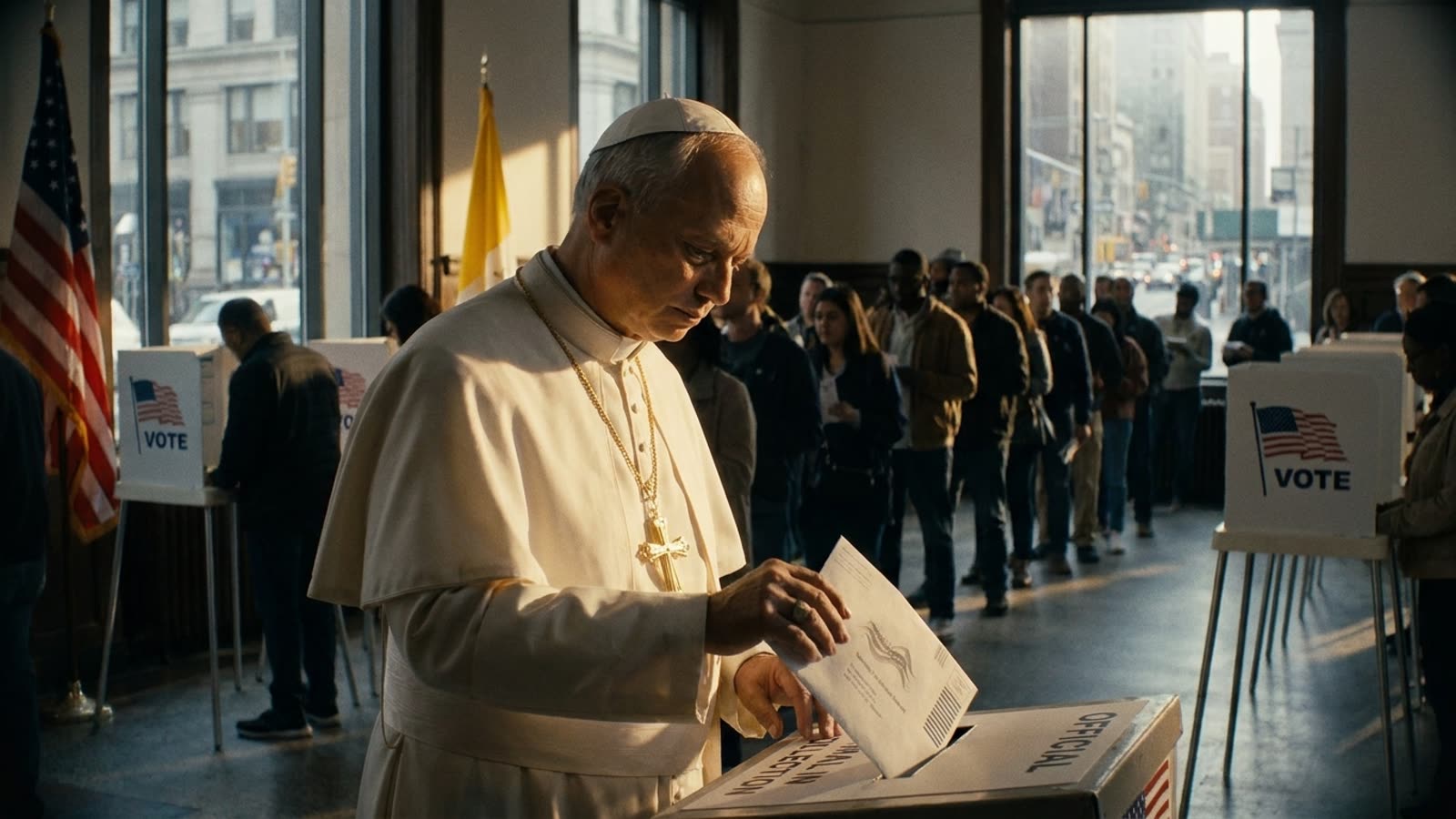
When Robert Francis Previtali was elected Pope Leo XIV last year, becoming the first American-born pontiff in the Catholic Church's two-millennium history, constitutional scholars and canon lawyers alike began gaming out a peculiar scenario: could the Bishop of Rome vote in a U.S. election? On Friday, the Vatican confirmed that he had done exactly that, submitting a mail-in ballot to his native Chicago ahead of the November 3 midterm elections.
The Holy See's matter-of-fact announcement—delivered without fanfare in a routine press briefing—belied the genuinely extraordinary nature of the act. No pope has ever cast a ballot in a foreign election while serving as head of the Vatican City State. The theological implications are one thing; the political optics in a hyperpolarized American electorate are quite another.
The legal mechanics
Pope Leo retains his U.S. citizenship, a status the Vatican has not asked him to renounce and which American law does not automatically revoke upon assuming foreign headship. Illinois permits overseas citizens to vote by mail, and the Chicago Board of Elections confirmed it processed a ballot from Vatican City without incident. Legally, the pope is simply an American abroad exercising his franchise—no different from an expatriate banker in London or a soldier stationed in Okinawa.
But the pope is not a banker or a soldier. He commands the spiritual allegiance of roughly 70 million American Catholics, a constituency both parties court aggressively. His ballot, even if its contents remain secret, carries symbolic weight that no absentee envelope from Zurich ever could.
Why the Vatican isn't worried
Senior Vatican officials, speaking on background, framed the decision as a matter of personal conscience rather than institutional policy. The pope, they noted, did not campaign for any candidate, did not disclose his choices, and views voting as a civic duty consistent with Catholic social teaching on participation in public life. The Holy See's diplomatic posture—strict neutrality in the internal affairs of sovereign states—remains intact, they insist, because the act was private.
Critics will find that distinction unconvincing. The mere fact of papal participation in an American election invites speculation about which candidates align with Church doctrine on abortion, immigration, and social welfare. Republican and Democratic operatives will each claim the pontiff's implicit endorsement, and neither will be entirely wrong or right.
Our take
Pope Leo's ballot is less a political act than an identity statement: he is an American, and Americans vote. The Vatican's refusal to treat this as controversial is itself a message—that the Church sees no contradiction between universal spiritual leadership and particular civic belonging. Whether American voters, perpetually primed to detect partisan signals, will accept that framing is another matter. The pope has cast his vote; the rest of us will spend the next week casting interpretations.