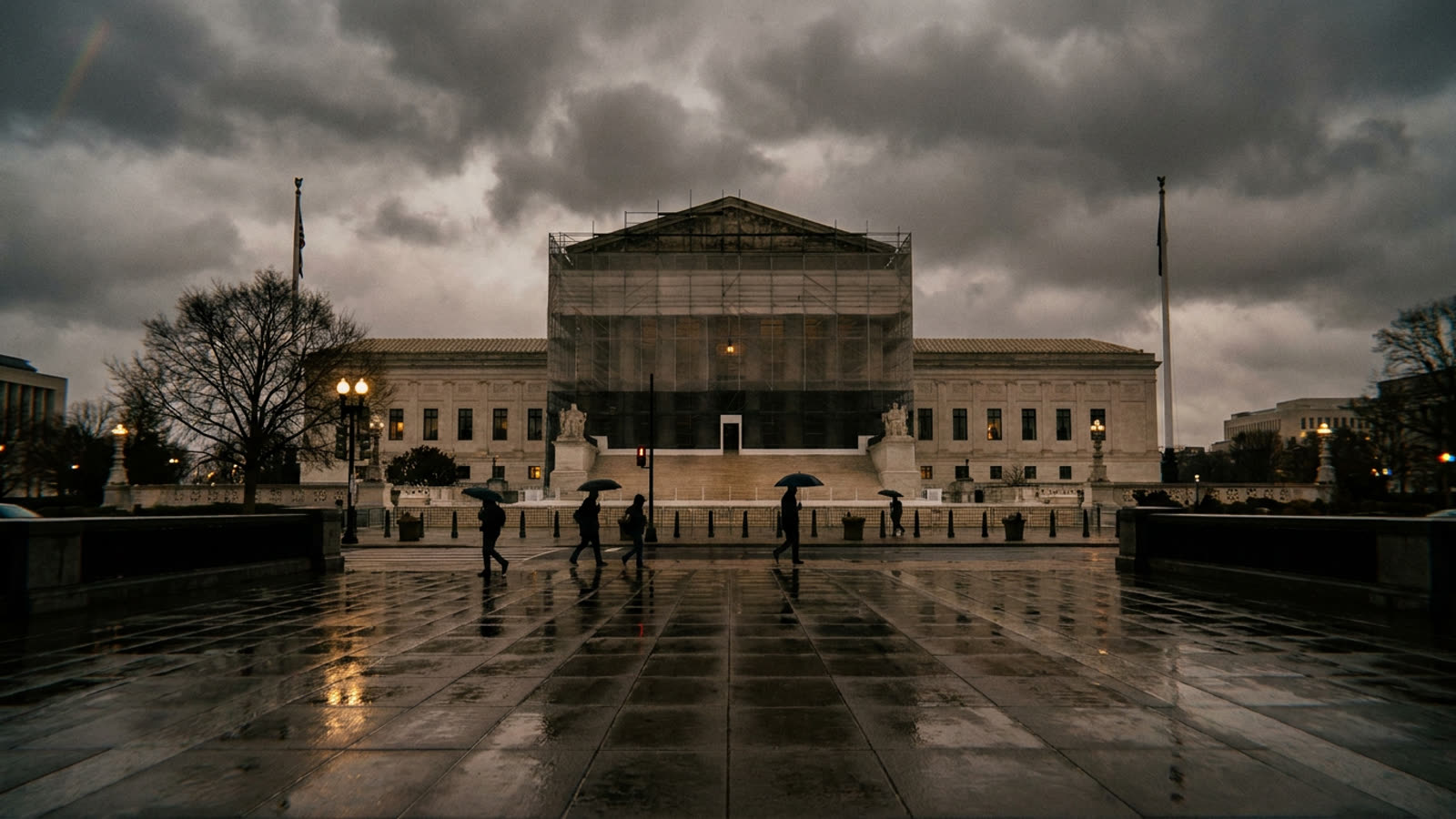
The Supreme Court's Monday decision in Collins v. Trump nominally preserved the Federal Reserve's ability to resist White House pressure, rejecting the administration's argument that the president can fire Fed governors at will. Headlines declared it a victory for central bank independence. The celebration is premature.
What the Court actually did was far more surgical — and far more consequential. While affirming that Fed governors retain for-cause removal protection, the six-justice majority simultaneously expanded presidential authority over the heads of other independent agencies, including the Securities and Exchange Commission, the Federal Trade Commission, and the Consumer Financial Protection Bureau. The reasoning: these agencies exercise executive power, and the president must be able to control those who wield it.
The Fed exception that proves the rule
The distinction the Court drew is revealing. The Federal Reserve, the majority argued, occupies a unique constitutional position because monetary policy requires insulation from short-term political pressures. Fair enough. But the opinion explicitly declined to extend that logic to agencies regulating securities, consumer finance, or antitrust — precisely the domains where the current administration has signaled its desire for more compliant leadership.
Justice Kagan's dissent called this what it is: a roadmap. The Court has now told any future president exactly which agency heads can be removed and which cannot. The Fed survives this round; the regulatory state's other sentinels do not.
What changes immediately
The practical implications will unfold over months, not days. SEC Chair Gary Gensler's successor, appointed in 2025, now serves at the president's pleasure in a way his predecessors did not. The same applies to the FTC commissioners who have pursued aggressive antitrust enforcement against Big Tech. The CFPB director — already a target of conservative legal challenges — loses what remained of statutory job security.
For markets, this means regulatory policy becomes more directly tethered to electoral outcomes. A president who dislikes how the SEC treats cryptocurrency, or how the FTC treats mergers, can now replace the relevant commissioners without demonstrating misconduct. The agencies remain; their independence does not.
Our take
The Court did not abolish the administrative state on Monday. It did something more subtle: it made clear that most of it answers to the Oval Office. The Federal Reserve's exemption is real but narrow, a constitutional carve-out for the one agency whose capture would immediately destabilize global markets. Everyone else is now on notice. The president who enters office in 2029 — whoever that is — will inherit a regulatory apparatus more responsive to White House direction than at any point since the New Deal. Whether that represents democratic accountability or executive overreach depends entirely on whose ox is being gored.