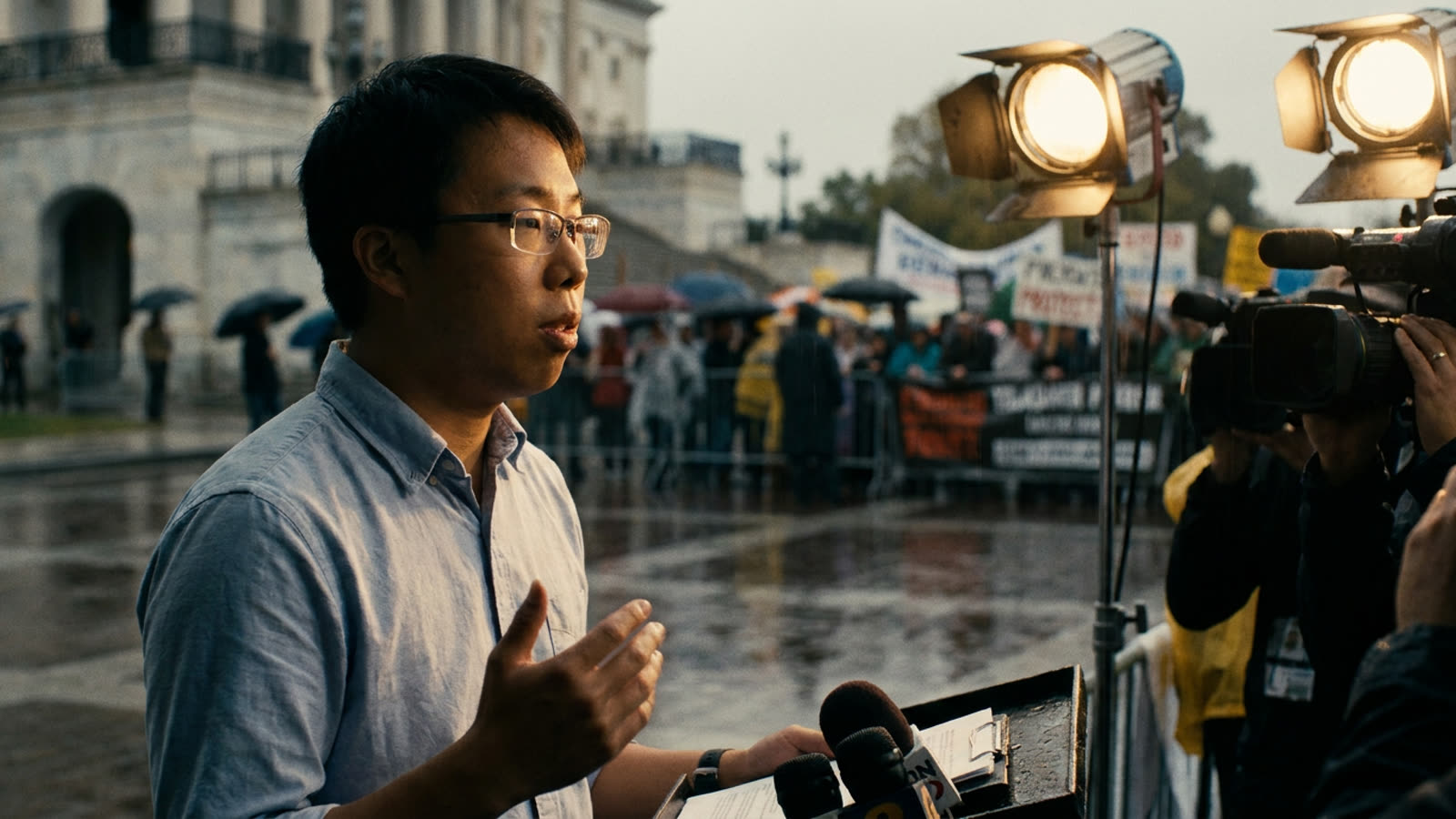
The ceasefire announced with such fanfare barely two weeks ago has collapsed not because of bad faith on either side, but because it was never really a ceasefire at all. That is the blunt assessment of Harold Chen, director of Stanford's Center for International Security and Cooperation, whose analysis of the agreement's structural flaws has proven grimly prescient.
Chen, who advised three administrations on Persian Gulf security before returning to academia, identified the core problem before the ink dried: the June accord contained no enforcement mechanism, no neutral monitoring body, and no agreed definition of what constituted a violation. "It was a press release dressed up as diplomacy," he told Bloomberg this week as missiles flew again over the Strait of Hormuz.
The architecture of failure
The agreement's fatal weakness was its deliberate ambiguity. Both Washington and Tehran needed to claim victory to their domestic audiences, so negotiators papered over every substantive disagreement with language flexible enough to mean anything—which meant it meant nothing.
Chen points to three specific provisions that guaranteed collapse. First, the "humanitarian corridor" for oil shipments was never geographically defined, leaving both navies to interpret its boundaries in real time. Second, the freeze on enrichment activities applied only to "new" centrifuges, a term Iran read narrowly and the U.S. read broadly. Third, and most critically, the agreement contained no mechanism for resolving disputes short of resuming hostilities.
"Every successful arms control agreement in history has included a joint commission or neutral arbiter," Chen notes. "This one had a hotline that neither side trusted enough to use."
Why both sides wanted ambiguity
The uncomfortable truth is that neither capital was negotiating in good faith toward a durable peace. The administration needed a foreign policy win before midterms but could not afford to appear soft on Iran. Tehran needed sanctions relief but could not abandon its nuclear leverage without security guarantees Washington was unwilling to provide.
The result was an agreement designed to buy time rather than resolve conflict. Chen compares it unfavorably to the 2015 JCPOA, which whatever its flaws contained 159 pages of technical specifications and a dedicated monitoring apparatus. The June accord ran to eleven pages, most of them preamble.
What comes next
Chen sees three possible trajectories. The optimistic scenario involves both sides using the current escalation as leverage to negotiate a more substantive follow-on agreement—essentially treating the failed ceasefire as a first draft. The pessimistic scenario is a grinding war of attrition that neither side can win but both can sustain indefinitely. The catastrophic scenario involves miscalculation leading to direct strikes on Iranian nuclear facilities or American carrier groups.
"The window for the optimistic scenario is measured in days, not weeks," Chen warns. "Every strike hardens positions and makes compromise more politically costly."
Our take
Chen's analysis is valuable precisely because it resists the temptation to assign blame. The ceasefire failed not because one side cheated but because both sides built a structure incapable of bearing weight. That is a more troubling diagnosis than simple bad faith—it suggests the diplomatic infrastructure for ending this conflict does not yet exist and will have to be invented under fire. The scholars who study these failures will have plenty of material; the rest of us will pay for their tuition in blood and treasure.