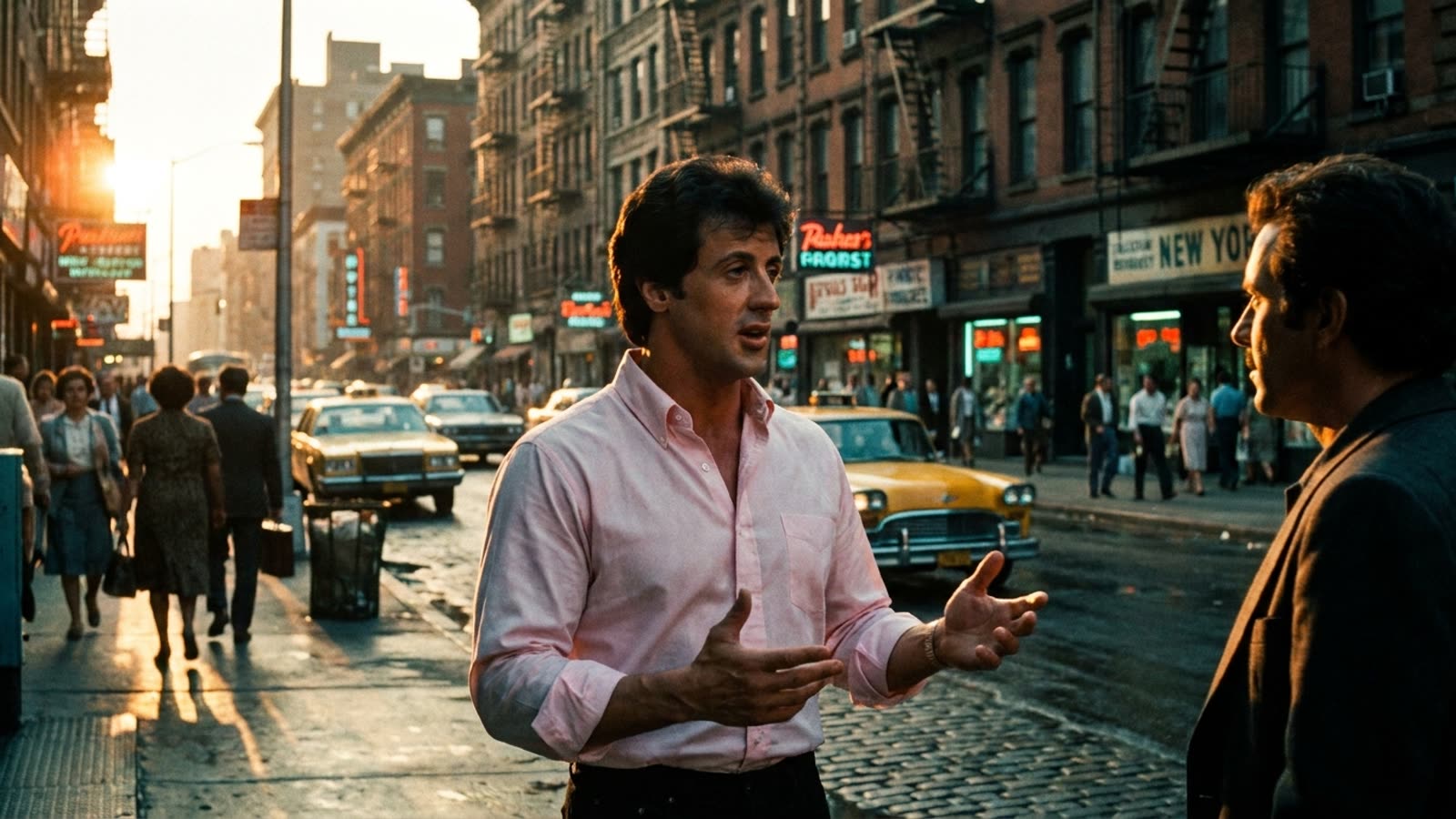
Sylvester Stallone has never been accused of reading the room. The man who wrote Rocky in three days and fought to star in it against studio wishes has built a career on ignoring conventional wisdom. Now, at 80, he's doing it again—this time by publicly championing the technology that much of Hollywood has spent the past three years treating as an existential threat.
In an interview on The Overlap podcast, Stallone revealed he's been shopping a concept for a film that would be "half human, half AI"—a project that predictably ignited fury across an industry still raw from the 2023 strikes that made artificial intelligence a central battleground. "You get blasted," Stallone acknowledged of the reaction. "But I would take that risk."
The generational divide
Stallone's willingness to court AI controversy is less surprising when you consider his position. He's not a mid-career actor worried about digital replicas stealing future roles. He's a legacy star whose earning power comes from intellectual property he created decades ago—Rocky Balboa and John Rambo are already being licensed in ways that don't require his physical presence. For Stallone, AI represents creative possibility rather than career threat.
This puts him at odds with the guild consensus that emerged from the 2023 labor disputes, which established strict guardrails around AI use in film production. The WGA and SAG-AFTRA contracts require consent and compensation when AI is used to replicate a performer's likeness or voice, but they didn't—couldn't—anticipate every hybrid approach a filmmaker might dream up. Stallone's "half human, half AI" pitch exists in precisely this gray zone.
What he's actually proposing
The details remain vague, but Stallone suggested the project would blend traditional performance with AI-generated elements in ways that haven't been attempted at scale. Whether that means AI-enhanced action sequences, digitally created supporting characters, or something more radical isn't clear. What is clear is that Stallone sees the technology as a tool for extending what aging action stars can physically accomplish—a concern that's obviously personal for someone who built his brand on performing his own stunts well into his seventies.
The backlash, Stallone implied, comes from an industry that's chosen fear over curiosity. "AI is here," he said, with the bluntness of someone who's watched Hollywood resist every technological shift from sound to streaming. The question isn't whether the technology will be used, but who gets to shape how.
Our take
Stallone is being characteristically unsubtle about a genuinely complicated issue. The anxiety around AI in Hollywood isn't irrational paranoia—it's a reasonable response to technology that could fundamentally alter who captures the economic value of creative work. But he's also not wrong that blanket resistance is a losing strategy. Someone is going to figure out how to make compelling AI-hybrid cinema, and it might as well be people who understand what makes movies work. That Stallone, of all people, wants to be that pioneer is either inspired casting or a cautionary tale waiting to happen.