Most economic problems come with their own solutions built in. Recession? Cut rates and stimulate. Inflation? Raise rates and cool things down. Stagflation offers no such comfort. It is the macroeconomic equivalent of being told you have both high blood pressure and low blood pressure—every treatment makes one condition worse.
The term itself, a portmanteau of stagnation and inflation, entered the lexicon in the 1960s when British politician Iain Macleod used it to describe the United Kingdom's peculiar malaise. But the concept achieved its fullest, most terrifying expression in the United States during the 1970s, when the impossible became reality and stayed for nearly a decade.
The mechanics of misery
In a healthy economy, inflation and unemployment tend to move in opposite directions—a relationship economists call the Phillips Curve. When businesses are hiring and wages are rising, prices tend to follow. When the economy slows, both wages and prices typically moderate. Stagflation breaks this relationship entirely.
The trigger is usually a supply shock—something that simultaneously raises costs and reduces productive capacity. In the 1970s, it was oil. The OPEC embargo quadrupled petroleum prices almost overnight, making everything from transportation to manufacturing more expensive while simultaneously reducing what the economy could produce. Businesses couldn't expand because inputs cost too much. Consumers couldn't buy because prices kept rising. Workers couldn't find jobs because companies were contracting.
Central bankers faced an impossible choice. Raising interest rates to fight inflation would crush an already weakening economy. Lowering rates to stimulate growth would pour fuel on the inflationary fire. The Federal Reserve, under successive chairmen, tried both approaches and neither worked. Inflation reached double digits. Unemployment climbed above ten percent. The misery index—simply the two figures added together—hit levels that seemed designed to mock the very concept of economic management.
Why conventional wisdom fails
The standard macroeconomic toolkit assumes you're fighting one enemy at a time. Keynesian stimulus works when the problem is insufficient demand—people want to buy things but lack the money. Monetary tightening works when the problem is excess demand—too much money chasing too few goods. Stagflation presents neither problem in isolation.
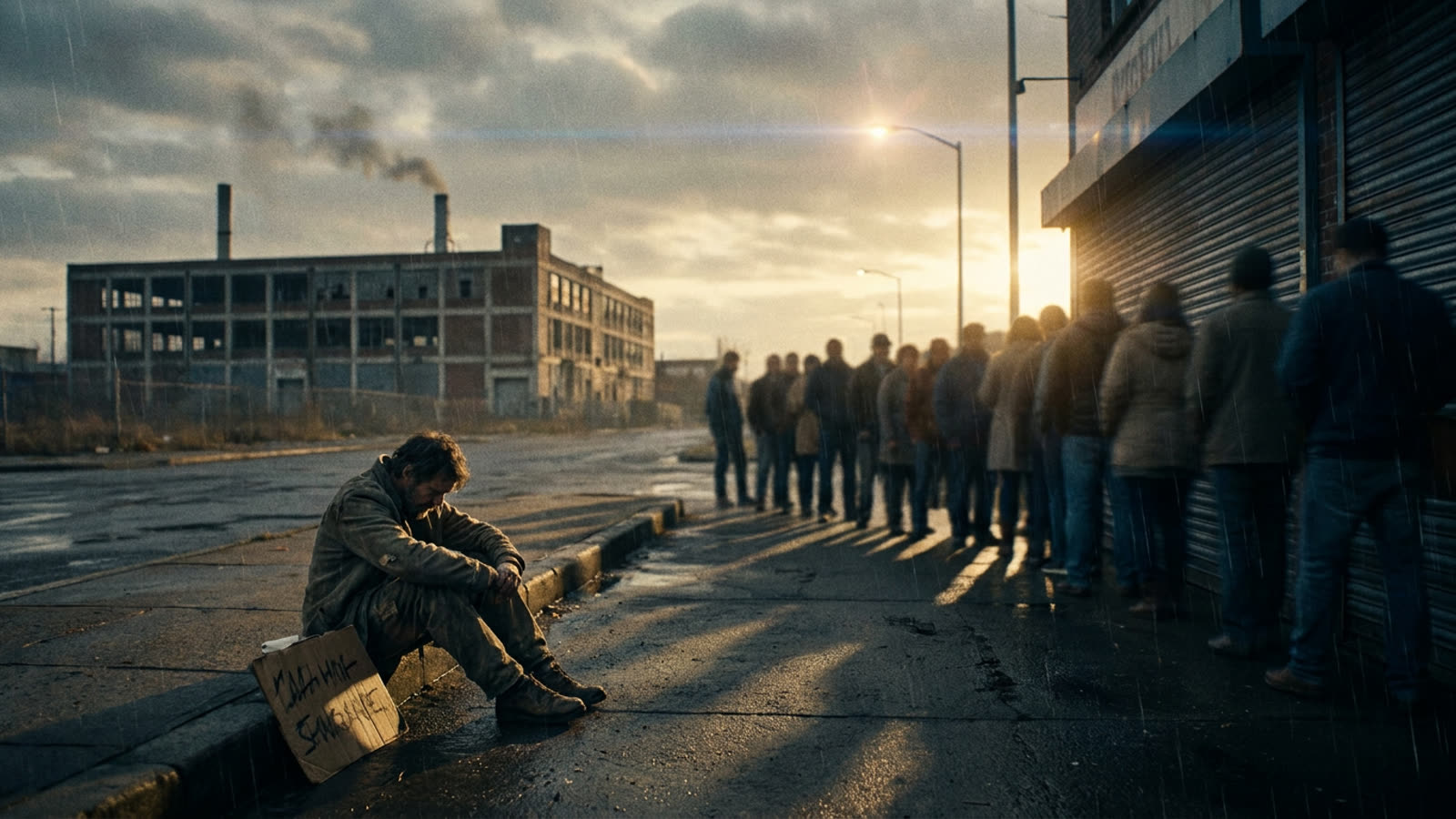
What finally broke the 1970s stagflation was a brutal choice. Paul Volcker, appointed Fed chairman in 1979, raised interest rates to nearly twenty percent, deliberately inducing the worst recession since the Great Depression. Unemployment spiked. Businesses failed. Farmers drove tractors to Washington in protest. But inflation broke, and when it did, the economy could finally begin a genuine recovery.
The lesson was clear but unpleasant: there is no painless exit from stagflation. Someone pays, and usually it's workers and borrowers who pay first and most.
The modern vulnerability
Today's economy has different exposures but similar fragilities. Global supply chains, while efficient, create dependencies that a sufficiently large shock can exploit. Energy transitions, however necessary, involve periods where old capacity retires faster than new capacity comes online. Geopolitical tensions can disrupt trade flows with little warning.
None of this means stagflation is imminent or inevitable. But the conditions that create it—supply constraints meeting loose monetary policy meeting external shocks—are not historical curiosities. They are structural possibilities that any sophisticated observer should understand.
Our take
Stagflation is the economic equivalent of a stress test that reveals which institutions and individuals have genuine resilience versus those who have merely been lucky. The wealthy can hedge with real assets. The poor cannot. The politically connected get bailouts. Everyone else gets lectures about belt-tightening. Understanding the phenomenon isn't pessimism—it's the minimum preparation required to navigate an uncertain world without being blindsided by outcomes that history has already demonstrated are entirely possible.