Rivian's decision to lift its 2026 sales guidance is less a triumph than a relief — evidence that the company can, in fact, produce vehicles at something approaching the rate it once promised. For an automaker that became synonymous with delivery delays and factory-floor chaos, hitting production targets feels almost transgressive.
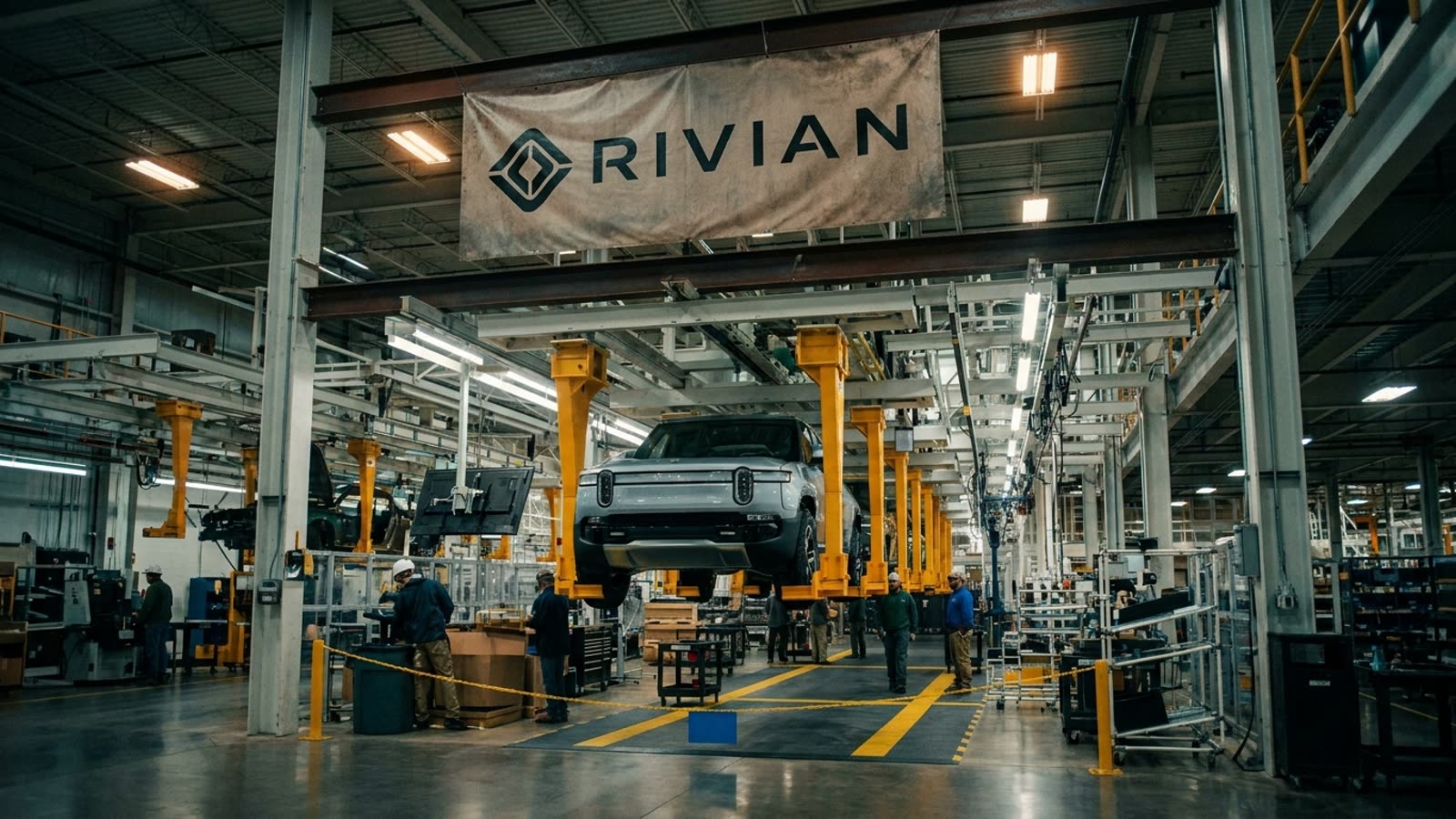
The Irvine-based EV maker raised its full-year sales forecast after a stronger-than-expected second quarter, with production ramping at its Normal, Illinois plant. The revision suggests Rivian is finally extracting efficiency from a manufacturing operation that once seemed allergic to it. Shares responded accordingly, though the stock remains well below its 2021 IPO highs — a reminder that Wall Street's memory for EV disappointments runs long.
The production problem
Rivian's early years read like a cautionary tale about the gap between prototype and production. The R1T pickup and R1S SUV earned rapturous reviews; actually getting them to customers proved considerably harder. Supply chain snarls, semiconductor shortages, and the basic difficulty of building trucks at scale turned delivery timelines into suggestions. Amazon, which owns roughly 17% of the company and ordered 100,000 electric delivery vans, watched its fleet rollout slip repeatedly.
The new guidance implies those days are receding. Rivian has invested heavily in retooling its assembly lines, reducing the number of unique parts per vehicle, and bringing more component production in-house. The strategy mirrors what Tesla learned a decade ago: vertical integration and manufacturing obsession matter more than design brilliance when you're trying to survive.
The cash equation
Production gains mean little if they arrive too late. Rivian has burned through billions since going public, and the EV market has grown considerably more hostile. Tesla has slashed prices repeatedly, legacy automakers have flooded the segment, and consumer appetite for six-figure electric trucks has proven finite. Rivian's path to profitability requires not just building more vehicles but building them cheaply enough to compete.
The company's R2 platform, a smaller and more affordable SUV slated for production at a new Georgia facility, represents its best shot at mass-market relevance. But that plant won't come online until 2026's second half at the earliest, meaning Rivian must survive on its current lineup until then. The raised forecast buys time, but not much.
Our take
Rivian raising guidance is genuinely good news, the kind of operational progress that separates survivors from casualties in the EV shakeout. But let's not mistake competence for victory. The company still loses money on every vehicle, still faces a price war it didn't start, and still needs its Georgia plant to work on the first try. Rivian is no longer a cautionary tale. Whether it becomes a success story remains very much unwritten.