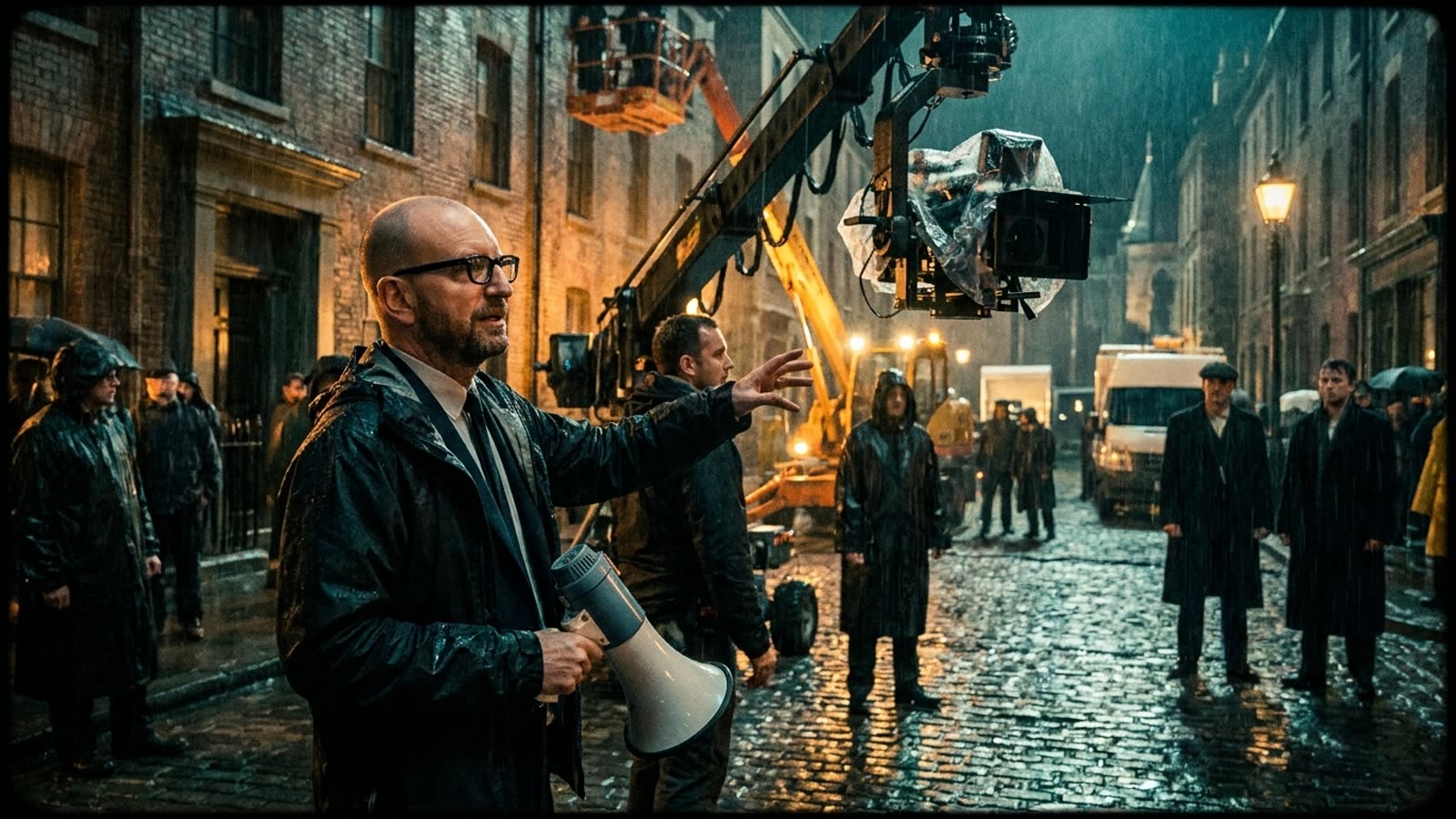
When a tentpole production loses its director mid-shoot, the usual playbook involves frantic calls to agents, emergency insurance filings, and breathless trade leaks about creative differences. The Batman Part II chose a different route: Steven Soderbergh simply showed up.
Matt Reeves, who turned Robert Pattinson's brooding Gotham into a genuine auteur franchise, stepped away from the Warner Bros. set to attend to an undisclosed family situation. Rather than halt a production that employs hundreds and has release windows to protect, Reeves called in a favour from one of the few filmmakers who could plausibly steer a $200 million superhero sequel without missing a beat. Soderbergh, who has never directed a comic-book film but has helmed everything from heist capers to pandemic thrillers to experimental iPhone features, agreed to collaborate remotely with Reeves and oversee principal photography until the director can return.
Why Soderbergh makes sense
On paper, the pairing is odd. Soderbergh's aesthetic—handheld naturalism, wry detachment, ruthless efficiency—sits at the opposite end of the spectrum from Reeves's operatic, rain-soaked noir. But the two share a crucial trait: both are control freaks who also happen to be generous collaborators. Soderbergh famously operates his own camera and edits under a pseudonym; Reeves storyboards obsessively. Each understands that a film's DNA is set long before the first take, which means Soderbergh can execute Reeves's vision without imposing his own signature.
There is also a practical calculus. Soderbergh has spent the past decade proving he can deliver studio-quality work on compressed schedules and modest budgets. His recent output—thrillers shot in weeks, not months—has made him Hollywood's unofficial pinch-hitter. Warner Bros. knows he will not turn a personal favour into a vanity project.
What it says about the industry
The arrangement is quietly radical. In an era when directors are often treated as interchangeable content managers, Reeves's ability to hand off his film to a peer rather than a studio-appointed overseer suggests he retains meaningful creative authority. It also suggests Soderbergh, who has publicly questioned the superhero economy, is willing to suspend his scepticism when a friend needs help.
That kind of professional solidarity used to be unremarkable. Directors covered for each other during illness, personal crises, and the occasional studio coup. But the franchise era has atomised creative relationships; everyone is pitching the next IP extension, not building long-term alliances. Soderbergh stepping onto a Batman set feels almost nostalgic—a reminder that Hollywood, beneath the spreadsheets, is still a small town.
Our take
This is a good-news story disguised as an industry footnote. Reeves gets to attend to his family without sacrificing years of work; Soderbergh gets to stretch muscles he rarely uses; audiences get a film that will feel like a Reeves picture, not a salvage job. If the final product is seamless, credit will rightly go to both directors—and to a studio that, for once, trusted the talent to solve its own problems. Hollywood could use more of this quiet competence.