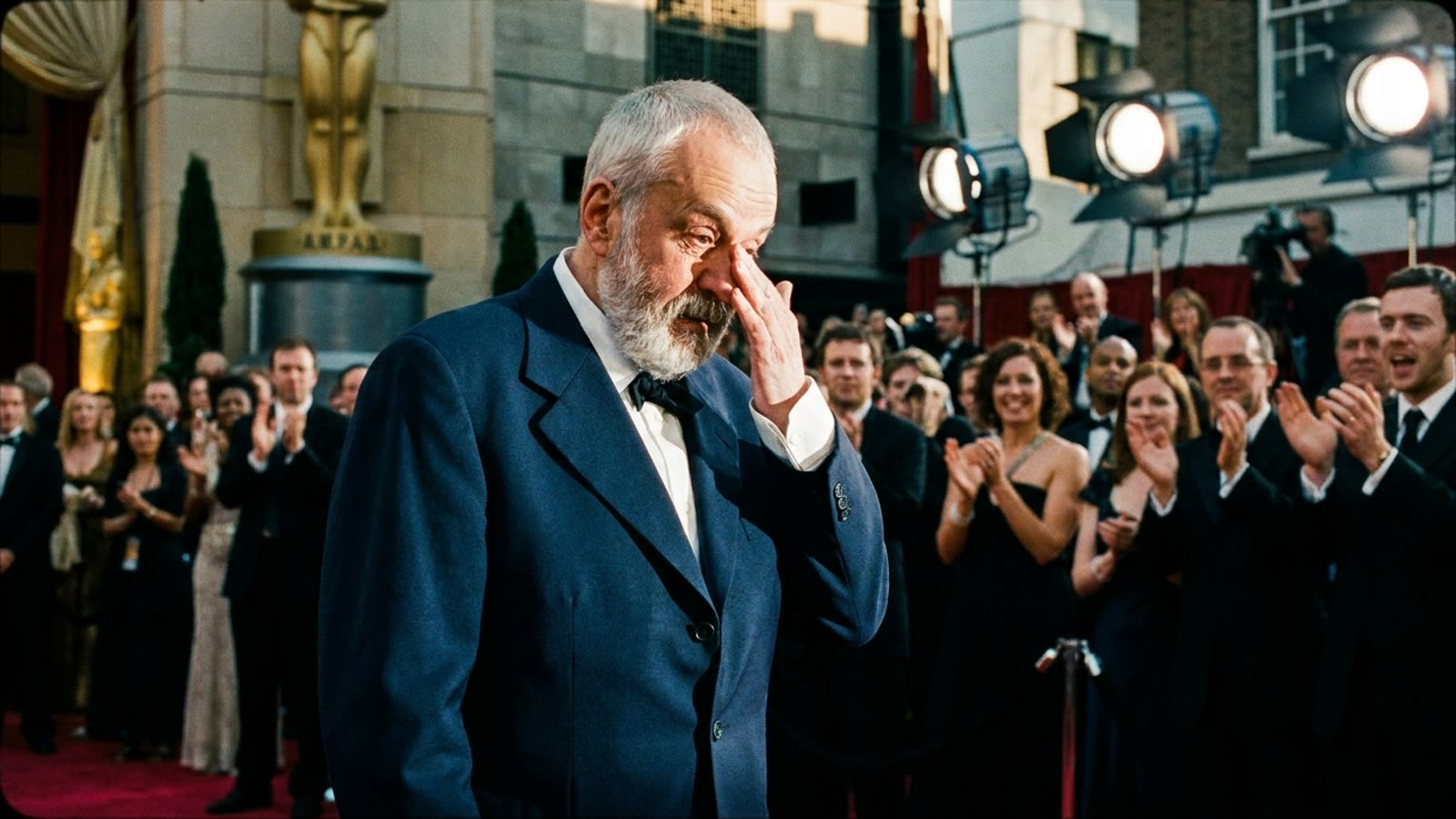
British audiences are famously stingy with their applause. They sit through curtain calls with the enthusiasm of commuters waiting for a delayed train. So when a London cinema rose to its feet on Thursday night for Mike Leigh—the director who spent half a century excavating the comedy and tragedy of ordinary British life—it meant something.
Tender Loving Care, which Leigh has indicated will be his final feature, premiered at the BFI London Film Festival to the kind of reception that felt less like film criticism and more like collective gratitude. The standing ovation wasn't for the movie alone. It was for Secrets & Lies, for Vera Drake, for Happy-Go-Lucky, for Another Year—for a body of work that insisted working-class stories deserved the same scrutiny and craft as period dramas about aristocrats.
The Leigh method, one last time
Leigh's process has always been unusual, bordering on eccentric. He develops scripts through months of improvisation with actors, building characters from the ground up before committing anything to paper. The result is dialogue that sounds overheard rather than written, performances that feel inhabited rather than acted. It's a method that requires extraordinary trust between director and cast, and extraordinary patience from financiers who must greenlight films without knowing what they're actually about.
That this approach has survived into an era of IP-driven franchises and algorithm-optimized content feels almost miraculous. Leigh has never made a sequel, never adapted a comic book, never directed an episode of prestige television. He has simply made Mike Leigh films, one after another, each one a small miracle of human observation.
What British cinema loses
The timing of Leigh's retirement feels pointed, even if unintentionally so. British film is in a strange place—awash in international co-productions and streaming money, yet increasingly disconnected from the kinds of stories Leigh told. His films were unapologetically local: the accents, the interiors, the class anxieties were specifically, irreducibly English. They didn't need to explain themselves to American audiences or sand down their edges for global distribution.
There are younger directors working in similar territory—Andrea Arnold, Clio Barnard, Sarah Gavron—but none with Leigh's particular combination of rigour and warmth. His films could be brutal, but they were never cynical. He believed in his characters even when they were petty, deluded, or cruel.
Our take
Standing ovations are usually cheap currency, handed out at premieres like gift bags. This one wasn't. Mike Leigh made films about people who rarely get films made about them, and he did it with a seriousness that never tipped into condescension. If Tender Loving Care is indeed his last, British cinema has lost something it cannot easily replace: a director who looked at ordinary life and found it extraordinary enough.