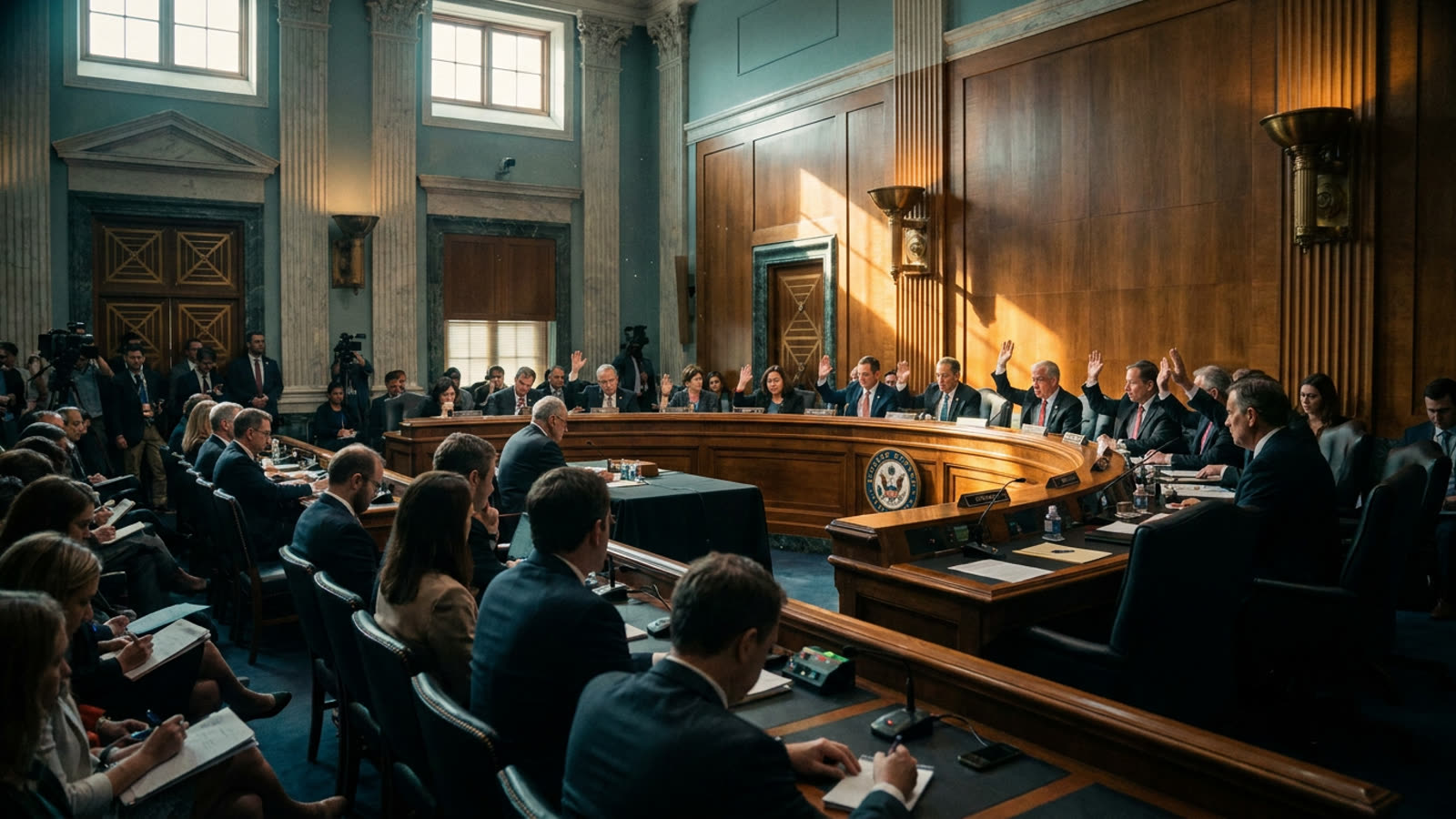
The United States Senate has done something it almost never does: it told a president to stop a war he wants to fight.
In a 50-48 vote that crossed party lines, the chamber passed a resolution invoking the War Powers Act to curtail the administration's military operations against Iran—a procedural maneuver that, while facing an almost certain presidential veto, nonetheless represents the most significant congressional challenge to executive war-making authority since the post-9/11 Authorization for Use of Military Force became Washington's all-purpose permission slip for global conflict.
The coalition that made it possible
The vote required Republican defections, and it got them. A handful of GOP senators—reportedly including members from states where war fatigue polls highest—joined a unified Democratic caucus to pass the resolution. The margin matters less than the message: even within his own party, the president's Iran posture has become a liability.
The War Powers Act of 1973 was designed precisely for moments like this, giving Congress a mechanism to reassert its constitutional authority over military commitments. In practice, the law has been more symbol than substance; presidents of both parties have routinely ignored or circumvented it, and Congress has rarely mustered the political will to force the issue. That this Senate did so—against a president who commands fierce loyalty from the party base—suggests the political calculus on Iran has shifted in ways the White House may have underestimated.
What the polls are saying
A Reuters/Ipsos survey released alongside the vote found that few Americans believe the Iran engagement has been worth its costs, while presidential approval has tied its lowest mark of the current term. The numbers explain the Republican defections: senators facing reelection in swing states cannot afford to be seen as rubber-stamping an unpopular conflict. War weariness, it turns out, is bipartisan.
The administration has insisted that Iran agreed to expanded UN nuclear inspections—a claim that remains disputed and which, even if accurate, does not address the constitutional question at the heart of the Senate vote. Congress did not authorize sustained military operations against Iran; the executive branch proceeded anyway. The resolution is, at its core, a demand that the president seek permission before continuing.
The veto question
The White House has signaled it will veto the resolution, and the Senate lacks the two-thirds majority needed to override. In pure legislative terms, the vote changes nothing about the administration's freedom of action. But legislation is not the only way Congress exercises power. The vote creates a political fact: a majority of the Senate, including members of the president's own party, has formally declared that the Iran operations exceed constitutional bounds.
That fact will shape the next appropriations fight, the next judicial challenge, and the next election. It may not end the conflict, but it reframes who owns it.
Our take
The War Powers Act has been a dead letter for so long that watching it stir feels almost archaeological. Yet here it is, invoked by a Senate that decided—for once—that the Constitution's assignment of war powers to Congress was not merely decorative. The president will veto, the operations will continue, and the usual cynics will call the vote performative. They are not entirely wrong. But performance matters in a republic. A Senate that refuses to even gesture at oversight becomes complicit; one that does, however ineffectually, at least preserves the principle that wars require democratic consent. The principle survived today. Whether it survives the veto override vote is another question.