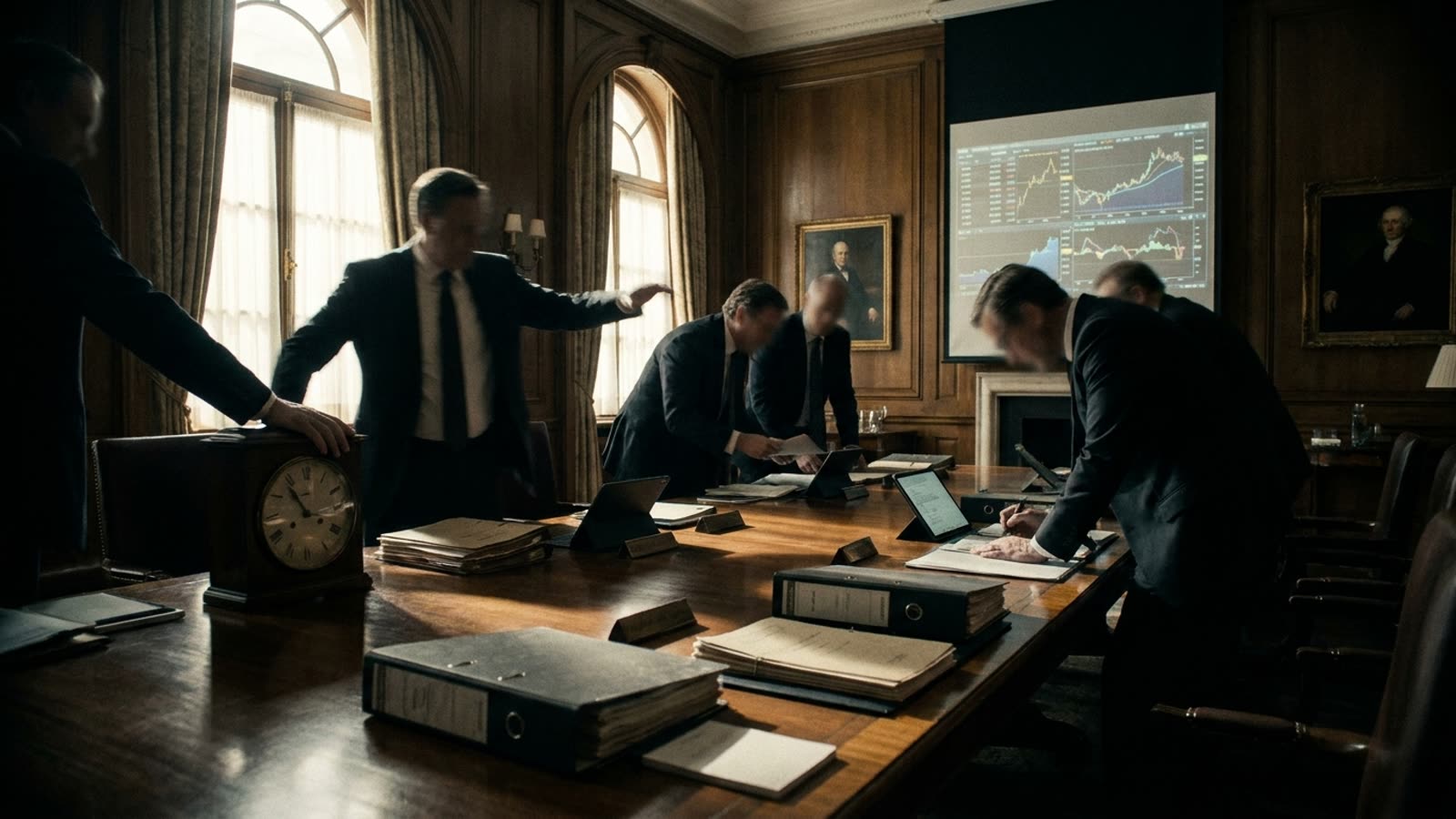
The most consequential economic decisions on Earth are made by small groups of people sitting around tables, arguing about numbers that no one can measure with precision. Central bank rate-setting committees—the Federal Reserve's FOMC, the European Central Bank's Governing Council, the Bank of England's Monetary Policy Committee—wield extraordinary power through a process that remains opaque even to sophisticated observers. Understanding how these committees actually function reveals why monetary policy is as much craft as science.
The popular image of rate decisions involves economists plugging data into models and reading off the optimal rate. Reality is messier. Committee members arrive at meetings with different theoretical frameworks, different readings of ambiguous data, and different institutional memories of past mistakes. The Fed's FOMC includes twelve voting members with backgrounds ranging from academic macroeconomics to regional banking to labor economics. Each interprets the same inflation print through a different lens.
The Theater of Consensus
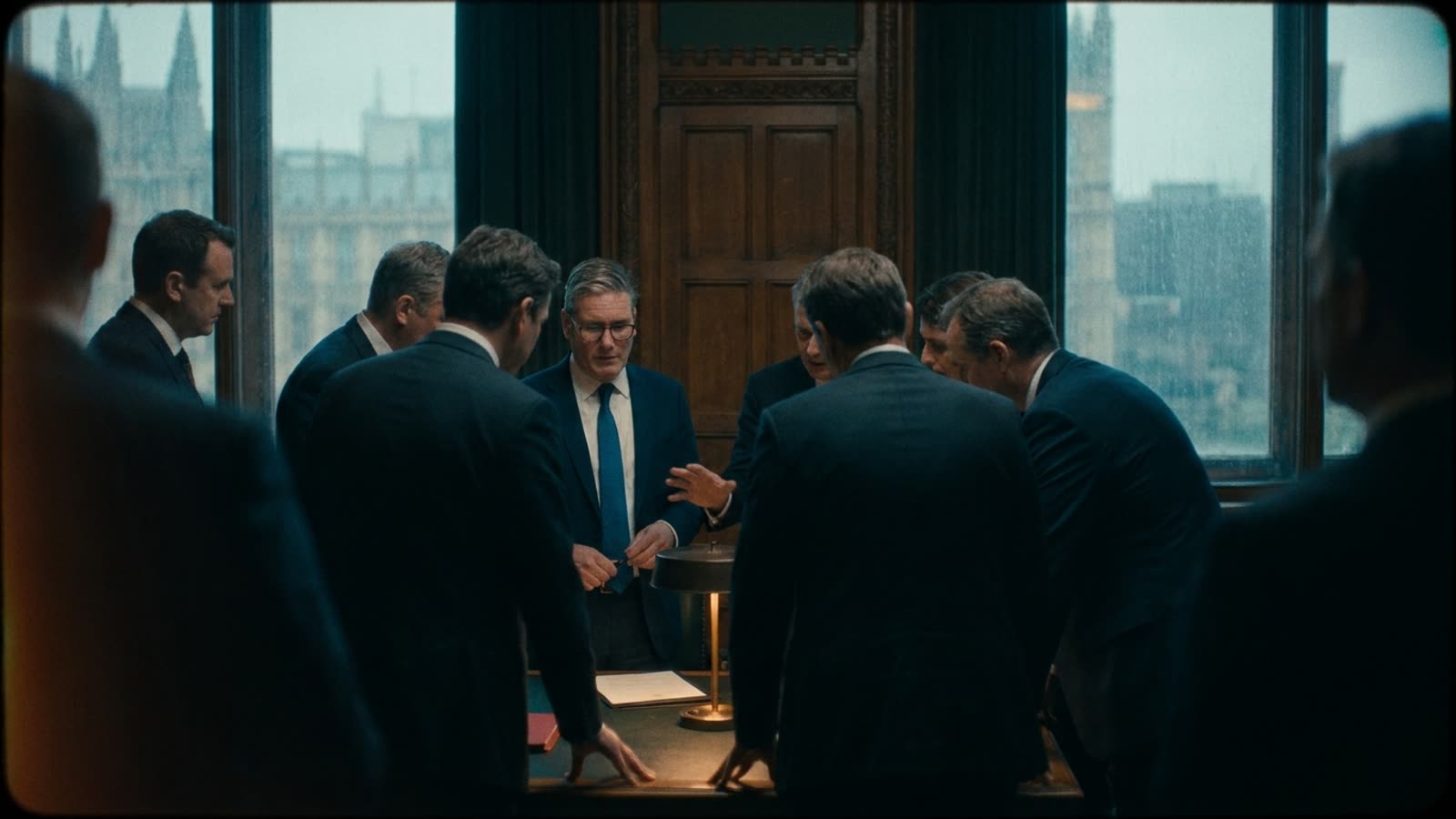
Central bank committees operate under an unusual constraint: they must project unity while accommodating genuine disagreement. The choreography begins weeks before any meeting. Staff economists at the Fed prepare the Tealbook (formerly the Greenbook and Bluebook), hundreds of pages of analysis and forecasts. Members receive this material and begin forming preliminary views. By the time they sit down together, much of the intellectual work is done—but the political work of building consensus has just begun.
The chair's role is less decider than orchestrator. A skilled chair reads the room, sequences speakers to build toward a preferred outcome, and crafts statement language that all members can accept. Alan Greenspan was famous for his oracular opacity; his successors have moved toward greater clarity, but the fundamental challenge remains: how do you commit to a policy path when the future is genuinely uncertain?
The Tyranny of Forecasts
Every rate decision is implicitly a forecast about where the economy is heading. Yet central bank forecasts have a dismal track record. The Fed failed to anticipate the 2008 financial crisis, consistently overestimated post-crisis growth, and initially dismissed the inflation surge of the early 2020s as transitory. This is not incompetence—it reflects the genuine difficulty of predicting complex adaptive systems.
Committee members cope with this uncertainty through what might be called "scenario planning by committee." Rather than betting on a single forecast, they debate the balance of risks. Is the greater danger overtightening into recession or undertightening into entrenched inflation? These judgments are irreducibly subjective, shaped by each member's intellectual formation and career experience. A governor who lived through the stagflation of the 1970s weighs risks differently than one whose formative experience was the post-2008 deflationary scare.
The Forward Guidance Trap
Modern central banking has become obsessed with communication. The theory is elegant: if markets understand the central bank's reaction function, they will do much of the work themselves, adjusting financial conditions before the central bank even acts. In practice, forward guidance creates its own pathologies. Once a central bank signals a policy path, deviating from it risks a credibility crisis. This can lock committees into policies that no longer fit circumstances.
The result is a peculiar dance. Central bankers speak in carefully hedged language designed to preserve optionality while still moving markets. They watch market reactions to their words in real time, sometimes clarifying or walking back statements within hours. The line between communicating policy and being captured by market expectations grows blurry.
Our take
The mystique surrounding central bank committees serves a purpose: it insulates technocratic decision-making from short-term political pressure. But it also obscures how much judgment, personality, and institutional culture shape outcomes. The next time a rate decision moves markets, remember that it emerged not from an algorithm but from a room full of fallible humans, arguing about an unknowable future, trying to thread a needle that may not exist. The miracle is not that they sometimes get it wrong but that the system works as well as it does.