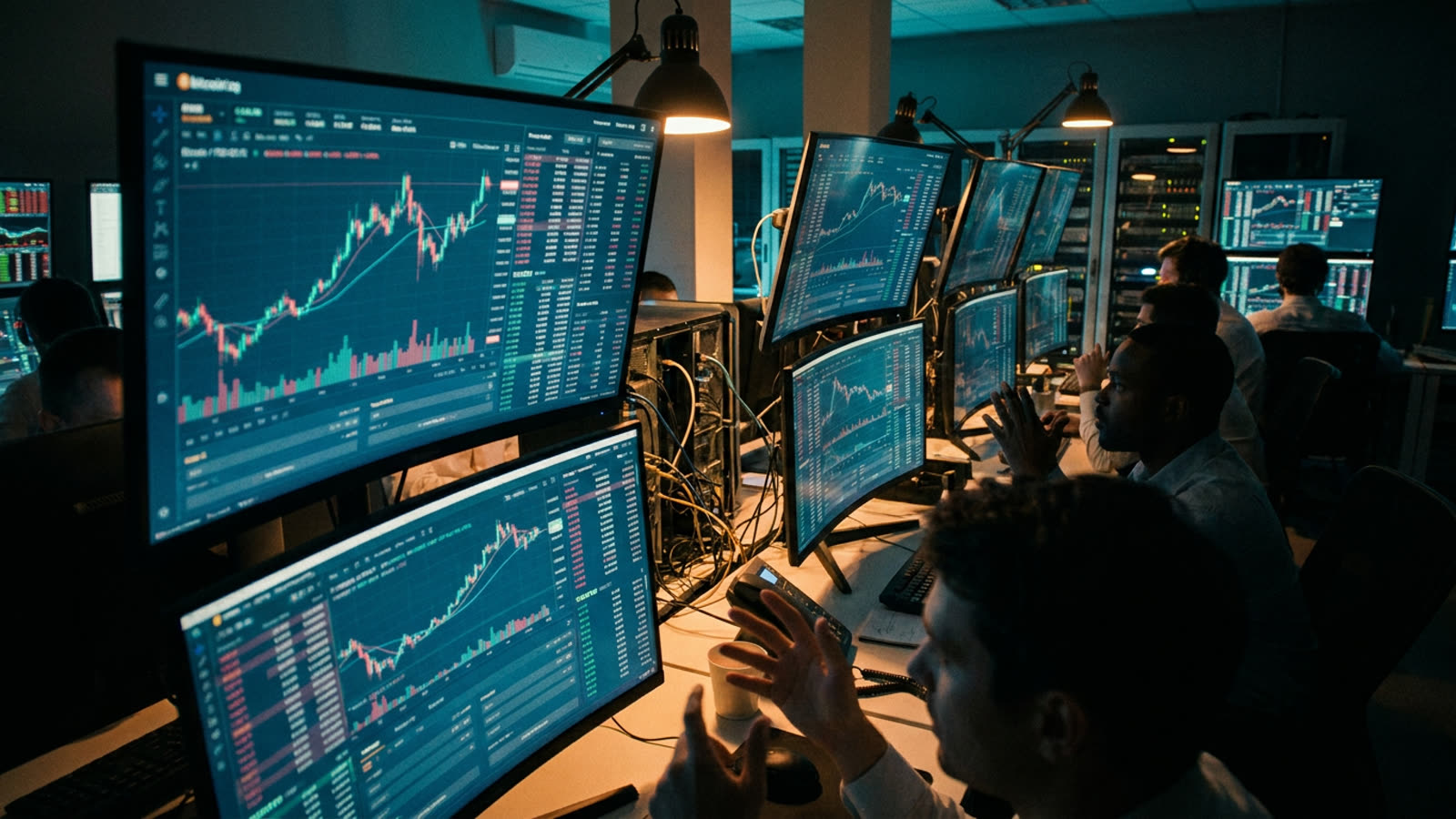
For months, the trade was simple: buy anything with "AI" in the investor presentation, especially if it made chips. Nvidia, Micron, and the broader semiconductor complex became the default expression of optimism about artificial intelligence, and by extension, about the American economy's ability to grow its way out of inflation without a recession. That trade is now unwinding.
The shift happened quietly over the holiday-shortened week. Memory and semiconductor stocks lost momentum even as broader equity indexes touched record highs. Meanwhile, bitcoin rebounded past $61,000, holding gains that had seemed fragile just days earlier. The divergence is not random noise. It reflects a genuine recalibration of what benefits most from the macro environment investors now expect.
The rate calculus changes everything
Soft employment data released ahead of Independence Day eased fears that the Federal Reserve would need to keep rates elevated deep into 2026. Rate futures now price a more dovish path, and that changes the relative attractiveness of different risk assets. Semiconductor stocks, which had been priced for both AI growth and a resilient economy, suddenly look expensive if growth moderates even slightly. Their valuations depend on sustained capital expenditure from hyperscalers—spending that becomes harder to justify if corporate treasurers start worrying about demand.
Bitcoin operates on different logic. It does not generate earnings, so it cannot disappoint on them. Its appeal in a lower-rate environment is straightforward: when the opportunity cost of holding a non-yielding asset falls, that asset becomes relatively more attractive. The same dynamic that punished bitcoin when rates rose now works in reverse.
What the rotation reveals
The more interesting signal is not which asset is winning but that investors are making active choices at all. For much of 2024 and early 2025, correlations across risk assets were uncomfortably high. Everything moved together because everything was a bet on the same thing: whether the Fed could engineer a soft landing. Now, with that landing looking more plausible, investors are differentiating again.
Chip stocks are growth plays that require the economy to keep spending. Bitcoin is a duration play that requires only that real rates fall. The fact that money is flowing from one to the other suggests the market believes the soft landing comes with slower growth, not just stable prices. That is a subtler bet than it appears.
Our take
Rotations like this one are easy to over-interpret in real time. A week of divergence does not make a regime change. But the logic is sound: if you believe rates are heading lower because growth is cooling, you want assets that benefit from the rate move without needing the growth. Bitcoin fits that description better than Nvidia does. The semiconductor trade was always partly a macro bet dressed up as a tech thesis. Investors are now separating the two, and that is healthy. It means markets are thinking again, not just buying the same basket on autopilot.