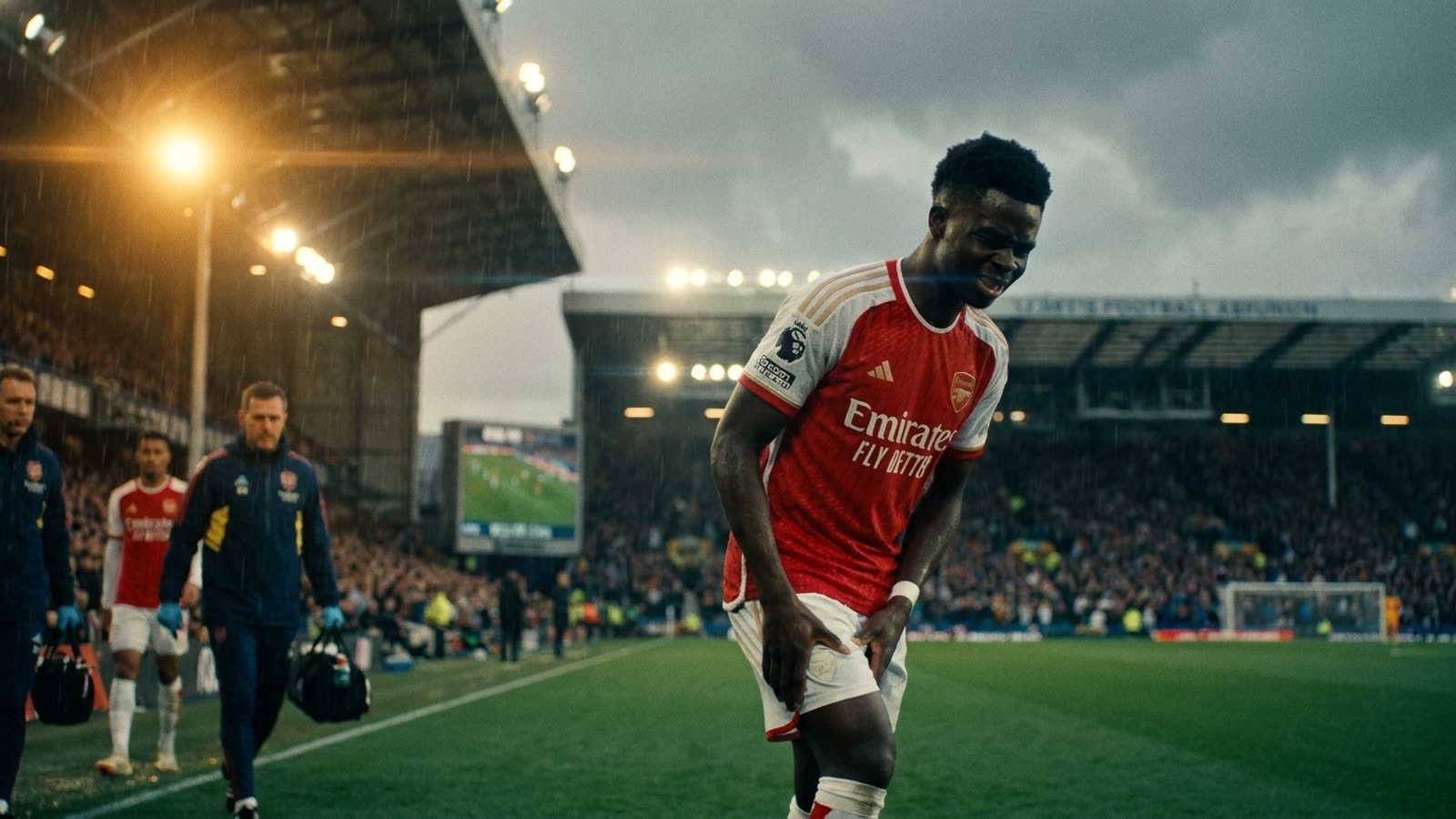
Arsenal went to the Allianz Arena and did what Arsenal have rarely done in the post-Wenger era: they competed with European royalty on equal terms, clawed back from a deficit, and left with a result that suggested genuine continental ambition. Then Bukayo Saka grabbed the back of his leg, and the narrative shifted from triumph to dread.
Arteta's post-match assessment was grimly unambiguous. The quadriceps injury "does not look good at all," he said, the kind of managerial understatement that typically precedes weeks of absence rather than days. For a club that has built its entire attacking identity around one 25-year-old's right boot, the timing could hardly be worse.
The Saka dependency problem
Arsenal's reliance on their number seven has been an open secret for three seasons. He leads the squad in goal contributions, carries the creative burden on the right flank, and draws defensive attention that opens space for everyone else. When Saka plays, Arsenal look like title challengers. When he doesn't, they look like a team missing its central nervous system.
The club's summer business did little to address this vulnerability. While rivals stockpiled attacking depth, Arsenal trusted that Saka's durability would hold. It was a calculated gamble that now appears to have gone wrong at precisely the moment when the fixture list turns brutal: Liverpool at home, then a run of matches that will determine whether their Premier League challenge survives into the new year.
Declan Rice and the case for resilience
There is, however, a counterargument emerging from Munich. Declan Rice was immense, the kind of performance that reminded everyone why Arsenal paid a British-record fee for him. His suggestion that the Gunners can win without elite forward additions is not mere optimism—it reflects a genuine belief that this squad's defensive solidity and midfield control can compensate for attacking shortfalls.
Rice's point carries weight. Arsenal conceded fewer goals than any other Premier League side last season. They grind results from matches they don't dominate. If Saka's absence forces Arteta to lean even harder into pragmatism, the approach might prove sustainable, if aesthetically joyless.
The broader European picture
The Bayern draw leaves Arsenal well-positioned in the Champions League's new league phase, but the competition's knockout rounds demand the kind of individual brilliance that Saka provides. No other Arsenal attacker possesses his ability to unlock a low block in the 85th minute, to produce something from nothing when legs are heavy and ideas are exhausted. Gabriel Martinelli is talented but inconsistent. Leandro Trossard is useful but limited. Neither is Saka.
Our take
Arsenal's project under Arteta has always been a story of incremental progress shadowed by the fear that one injury could unravel everything. That fear has now materialized. The Gunners will cope, because good teams always cope, but coping is not the same as thriving. If Saka's injury is as serious as Arteta's tone suggested, Arsenal's season will be defined not by what they achieve, but by what they might have achieved with their best player healthy. The cruelty of football is that you only get one chance at each campaign. Arsenal's may have just gotten significantly harder.