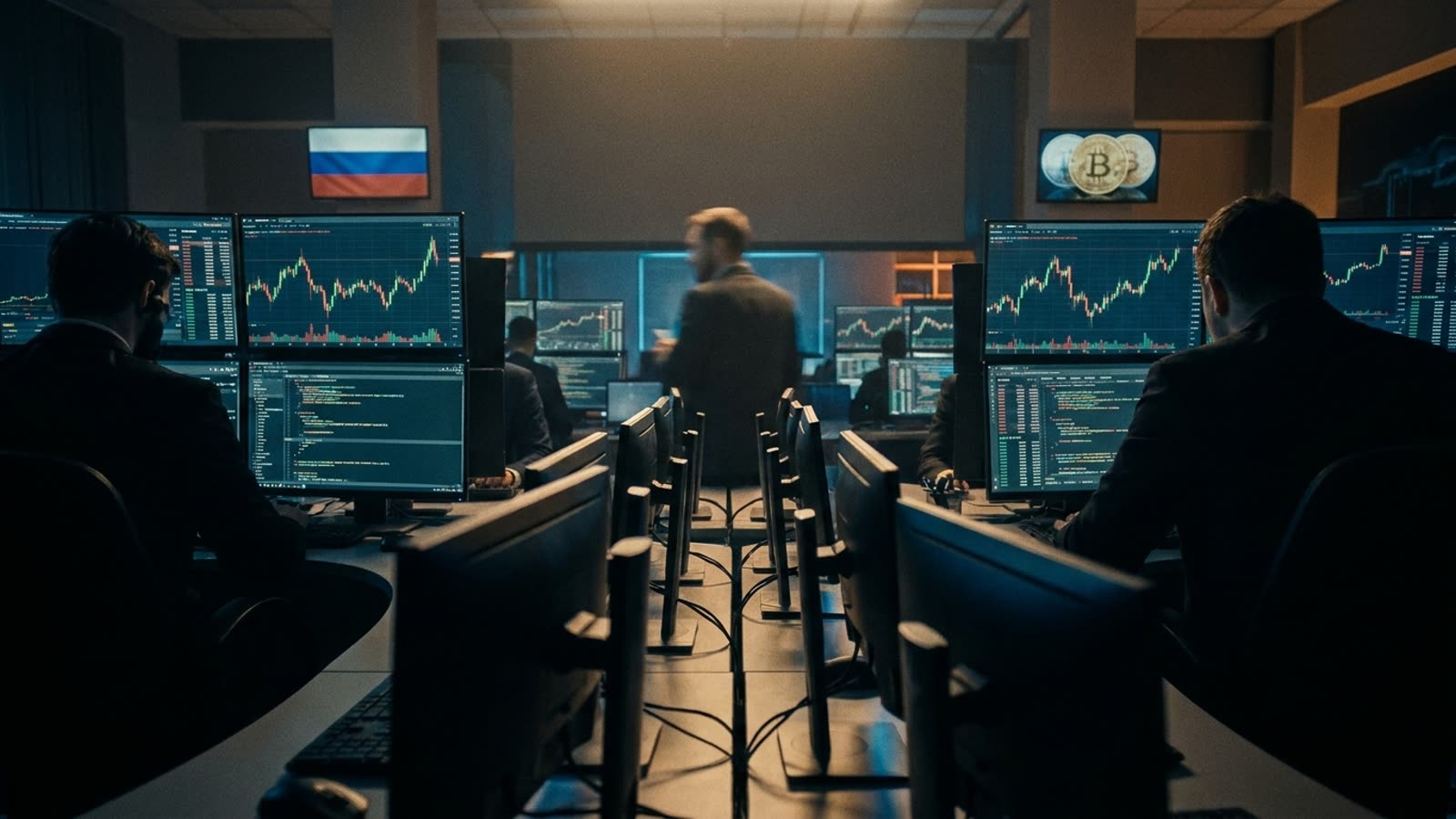
A teenager in Birmingham has joined the ranks of Western officials, oligarch critics, and intelligence operatives on Russia's sanctions list—not for espionage or sabotage, but for publishing spreadsheets.
The Russian Foreign Ministry announced Wednesday that it had placed sanctions on a 19-year-old British national who operates under the pseudonym associated with the A7A5 blockchain analysis project. His alleged offense: documenting cryptocurrency flows that, according to his research, link Russian military procurement networks to exchanges operating outside Western sanctions regimes. Moscow called the work "information terrorism" and accused him of participating in a coordinated Western disinformation campaign. The teenager, whose identity remains partially obscured, responded on social media with a single word: "Thanks."
The blockchain paper trail
The A7A5 project has spent the past eighteen months tracing on-chain transactions that its researchers claim connect Russian defense contractors to cryptocurrency exchanges in jurisdictions with limited enforcement cooperation. The methodology—publicly documented and peer-reviewed by several independent blockchain forensics firms—follows wallet clusters rather than named individuals, building probabilistic maps of fund flows. Western intelligence agencies have privately acknowledged the work's utility, though none have officially endorsed its conclusions.
What makes the Kremlin's response notable is its directness. Russia has previously dismissed similar open-source investigations as amateur meddling or CIA fronts, but rarely elevated individual researchers to the status of sanctioned enemies. The move suggests either that the A7A5 findings have touched genuinely sensitive networks, or that Moscow sees strategic value in intimidating the growing ecosystem of civilian blockchain investigators who have proliferated since the Ukraine invasion began.
The chilling-effect calculation
The practical impact of Russian sanctions on a British teenager is negligible—he presumably has no assets in Russia and no plans to visit. But the symbolic weight is considerable. Blockchain analysis has become a cottage industry in the years since 2022, with amateur sleuths and professional firms alike competing to map illicit finance. Most operate with a sense of legal and physical safety, working from laptops in Western cities far from the jurisdictions they investigate.
Russia's decision to name and sanction a teenage researcher tests that assumption. While the immediate risk remains low, the precedent introduces uncertainty into a field that has thrived on the perception of consequence-free transparency. Other authoritarian regimes watching this episode may draw their own conclusions about how to respond to unwelcome scrutiny of their financial networks.
Our take
There is something darkly comic about a nuclear-armed state formally sanctioning a teenager for being too good at Excel. But the comedy obscures a serious point: open-source intelligence has become a genuine irritant to state actors who once enjoyed informational asymmetry, and those actors are searching for ways to push back. The Kremlin cannot arrest a researcher in Birmingham, so it settles for the next best thing—making him famous in exactly the way that might complicate his life. Whether this deters future investigators or simply recruits more of them remains to be seen. History suggests the latter.