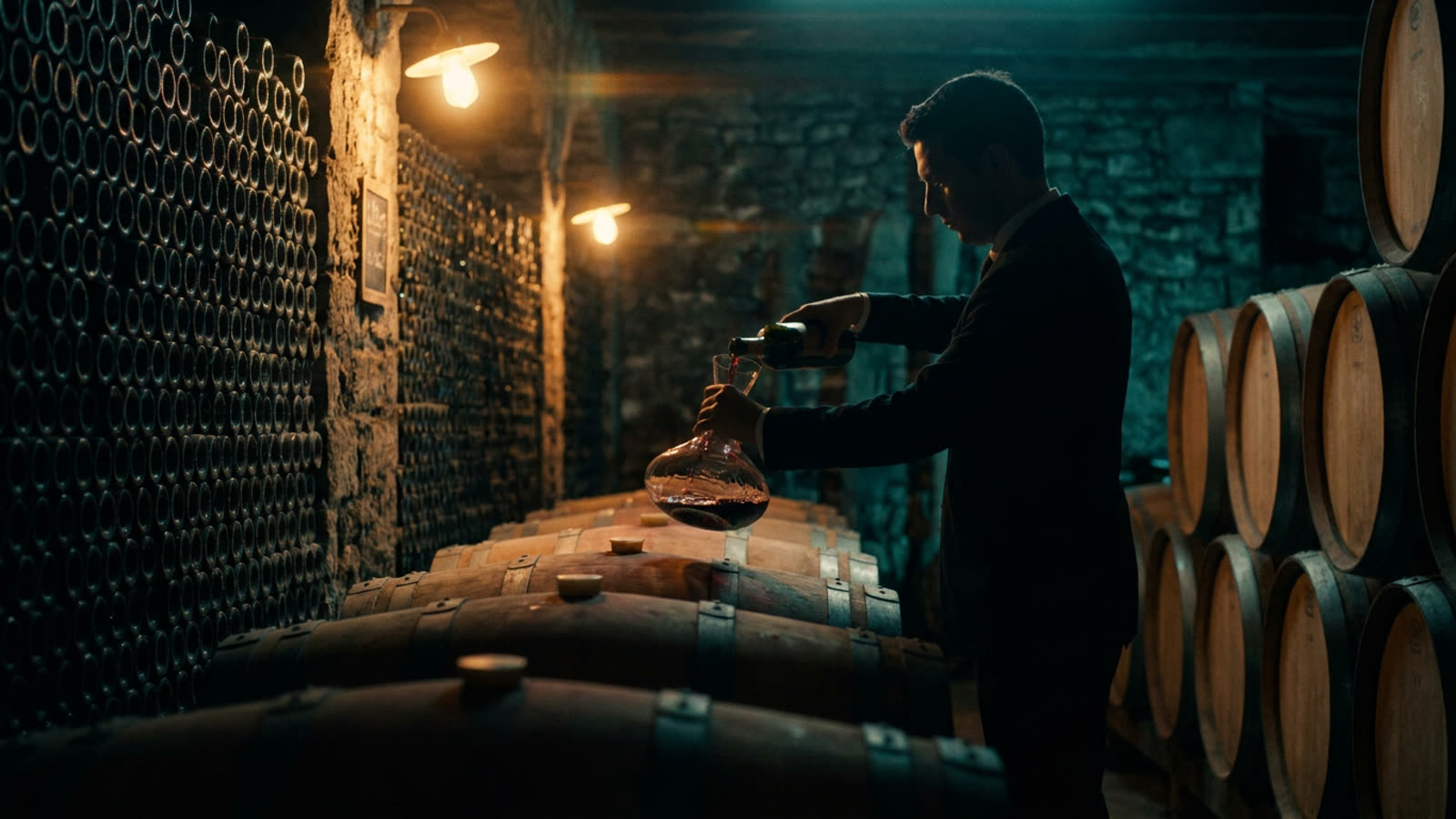
For most of the twentieth century, the sommelier occupied an awkward position in the restaurant hierarchy—somewhere between headwaiter and furniture. They existed to decant Bordeaux for businessmen who already knew what they wanted, their expertise deployed mainly to prevent embarrassment when a cork crumbled. The transformation of this service role into something approaching cultural authority is one of dining's stranger recent developments, and it tells us more about contemporary status anxiety than about wine itself.
The shift began, roughly, with the professionalization of wine education through organizations like the Court of Master Sommeliers, founded in Britain in 1977 but achieving American prominence only in the following decades. What had been an informal apprenticeship became a credentialing gauntlet of legendary difficulty—the Master Sommelier examination, with its blind-tasting trials and encyclopedic knowledge requirements, reportedly has a pass rate hovering in the single digits. Scarcity manufactured prestige.
The documentary effect
The 2012 film Somm did for wine service what Jiro Dreams of Sushi did for omakase: it revealed obsession as entertainment. Audiences watched candidates memorize soil compositions and vintage variations with the intensity of surgeons preparing for boards. The sommelier emerged not as servant but as athlete-scholar, someone who had suffered for knowledge. Restaurants noticed. Wine directors began appearing in press coverage alongside chefs. Some opened their own establishments.
Power behind the glass
The sommelier's real influence operates invisibly. They decide which small producers reach diners and which languish in obscurity. A placement on a prestigious list can make a winery's allocation; exclusion can doom it to commodity distribution. This gatekeeping function has only intensified as wine lists have grown more adventurous—when a restaurant offers Georgian qvevri wines or high-altitude Argentine Malbecs instead of predictable Napa Cabernets, someone had to make that choice, and someone had to sell it to skeptical guests. The modern sommelier is equal parts curator, educator, and salesperson, translating producer ambition into consumer desire.
The role has also become unexpectedly glamorous. Top sommeliers now have Instagram followings, book deals, and consulting contracts. They judge competitions, launch wine brands, and appear on podcasts discussing terroir with the solemnity once reserved for philosophy. The Court's examinations have become spectator events, their results announced with the gravity of papal elections.
Our take
There is something faintly absurd about the elevation of wine service to quasi-religious status—the ceremonial decanting, the knowing murmurs about malolactic fermentation, the entire apparatus of connoisseurship deployed over what is, finally, fermented grape juice. But the sommelier's rise reflects a genuine hunger for expertise in an age of algorithmic recommendations and amateur reviews. We want someone who has done the work, who can be trusted, who will save us from our own uncertain palates. The sommelier sells not just wine but the comfort of deference to someone who knows better. In a culture suspicious of authority, we have made an exception for the person holding the corkscrew.