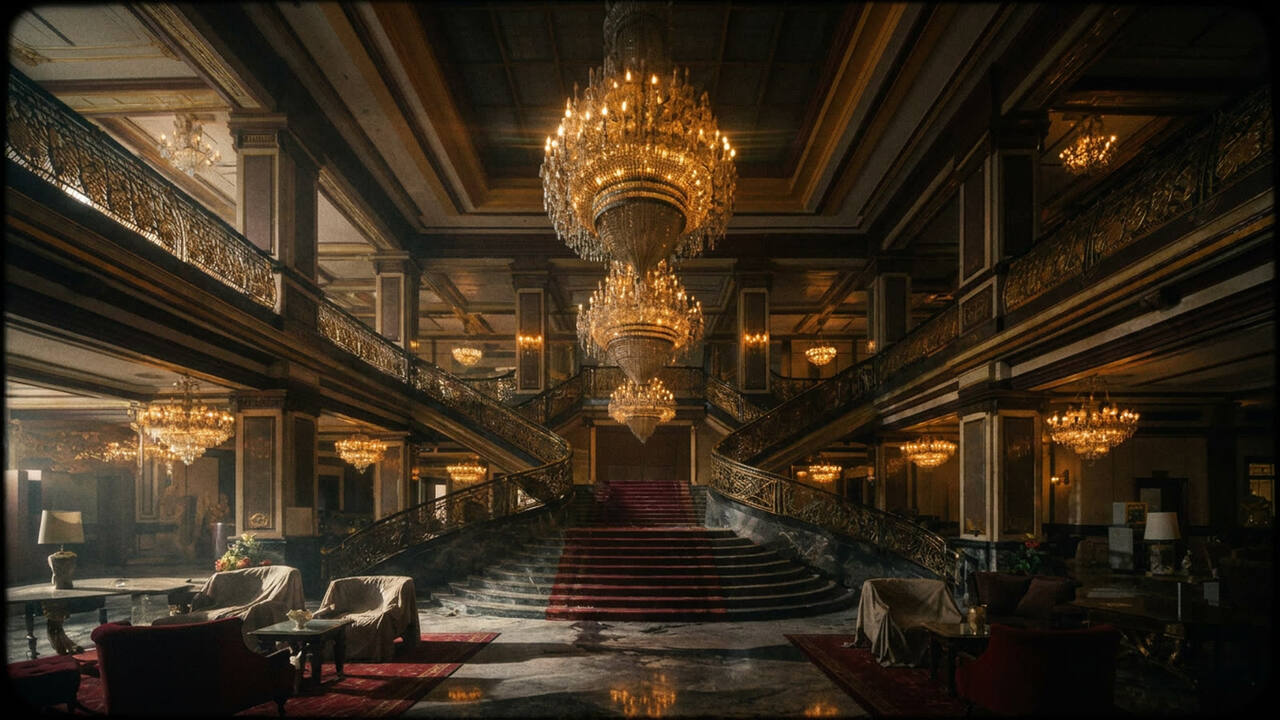
The great hotel lobbies of the twentieth century were designed to make you feel smaller, then larger. You entered through revolving doors into a cathedral of commerce, craned your neck at coffered ceilings, and emerged at the front desk as someone worth attending to. The architecture performed a kind of secular transubstantiation: you arrived as a tired traveler and departed the elevator as a guest.
This theatrical function has been systematically dismantled. The forces are familiar—labor costs, real estate optimization, the smartphone's colonization of every service interaction—but the cumulative effect is a hospitality industry that has forgotten why lobbies existed in the first place. They were never about efficiency. They were about transformation.
The economics of empty grandeur
A traditional grand lobby is, by contemporary real estate logic, an act of financial self-harm. The soaring atrium of a Ritz or a Peninsula represents thousands of square feet generating zero direct revenue per hour. Modern hotel development math demands that space justify itself: a lobby bar here, a co-working installation there, perhaps a retail pop-up colonizing the corner where bellhops once marshaled luggage carts.
The shift accelerated after 2020, when contactless check-in transformed from amenity to expectation. Marriott, Hilton, and IHG now route millions of guests through apps that render the front desk vestigial. Some properties have eliminated it entirely, replacing the mahogany counter with a lonely kiosk and a QR code. The guest proceeds directly to their room, never breaking stride, never making eye contact with another human being.
This is presented as convenience. It is also the erasure of a liminal space where the mundane self was shed and the traveling self assumed.
What the ritual accomplished
The sociologist Erving Goffman would have recognized the grand lobby as a "front stage"—a space where social performance was not merely permitted but required. You dressed for arrival. You observed and were observed. The bellhop's choreographed solicitude, the concierge's theatrical omniscience, the other guests arranged in wing chairs like extras in your personal film—all of it constructed a temporary identity liberated from the constraints of home.
The boutique hotel movement, for all its design intelligence, abandoned this dramaturgy. Ian Schrager's lobbies were beautiful, but they were nightclubs, not theaters of arrival. The guest was audience, not protagonist. And the budget chains that followed stripped even that ambition away, offering lobbies that resembled nothing so much as airport gates: functional, fluorescent, designed to be passed through rather than inhabited.
A handful of properties still understand the assignment. The Aman hotels maintain arrival rituals that border on ceremony. The Rosewood group invests in what it calls "sense of place" lobbies that resist generic internationalism. But these are luxury exceptions proving a dispiriting rule.
Our take
The hotel industry has optimized for throughput and forgotten that hospitality is, at its root, a form of theater. The grand lobby was never an inefficiency to be engineered away; it was the entire point. When you eliminate the ritual of arrival, you do not create a more convenient hotel. You create an expensive dormitory with better sheets. The travelers who remember what they are missing grow fewer each year. Their children will never know to miss it at all.