There was a time when falling asleep in a strange city meant placing your fate in the hands of an unseen voice. You would lift the receiver, dial zero, and ask a human being to remember you existed at 6:15 the next morning. Then you would surrender to sleep, trusting that somewhere in the building, someone had written your room number on a list and would think of you at the appointed hour.
This small act of mutual obligation—stranger agreeing to wake stranger—has all but vanished from modern travel. The smartphone alarm has rendered it unnecessary. But necessity was never really the point.
The mechanics of morning trust
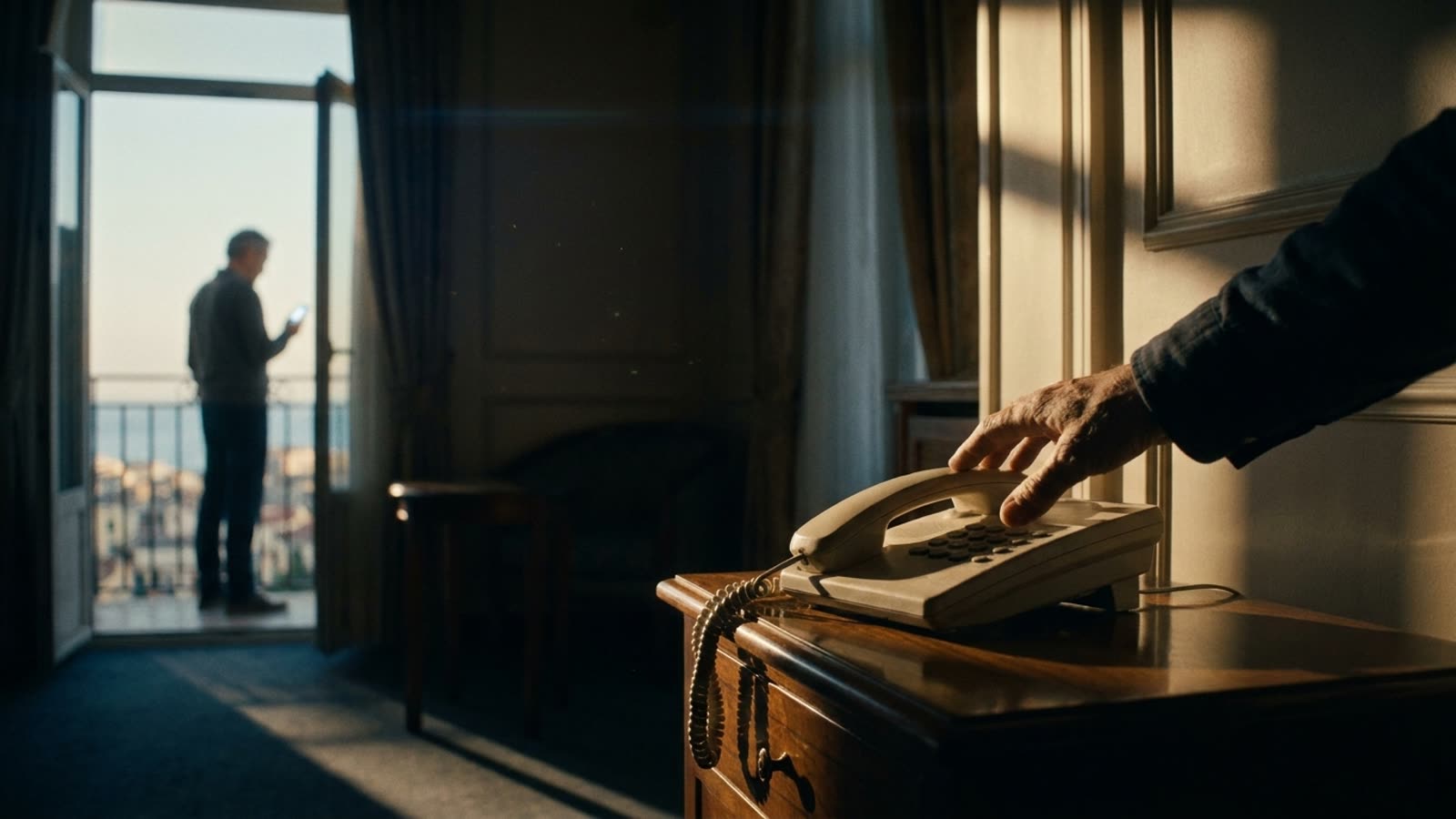
The wake-up call system that dominated twentieth-century hospitality was an elaborate choreography of human attention. At large hotels, a night operator maintained a ledger of requests, setting a kitchen timer or marking a switchboard to prompt each call. At smaller establishments, the front desk clerk simply remembered. The call itself followed an unwritten script: a ring, a pause, then a voice confirming your name and the time, occasionally adding weather or breakfast hours. Some callers were brisk; others cultivated a soothing warmth, understanding they were the first human contact of your day.
The intimacy was peculiar. You were paying for a room, not a relationship, yet this brief exchange created one. The caller knew you were vulnerable—groggy, disoriented, possibly naked under thin sheets—and their voice carried you across that threshold. Hotels that did it well understood they were selling not just a service but a feeling: that someone was looking out for you.
Why the alarm clock won
The technology that killed the wake-up call did not arrive suddenly. Clock radios appeared on nightstands in the 1970s, and by the 1990s many travelers carried portable alarms. But the decisive blow came from the smartphone, which made redundancy effortless. Why rely on a stranger when you can set three alarms, each with a different tone, and check them compulsively before sleep?
The shift reflects a broader retreat from dependence on service workers. We prefer self-checkout to cashiers, apps to concierges, automated check-in to human greeting. Efficiency is the stated reason, but control is the real motive. We have become uncomfortable asking others to do small things for us, perhaps because we sense the asymmetry: their labor, our convenience.
Hotels noticed. Staffing the overnight switchboard became an expense without return. Automated systems—press one for a recorded wake-up call—offered a compromise, but they stripped the ritual of its humanity. A robot voice at dawn is not care; it is a notification.
What we traded away
The loss is difficult to quantify because it was never about reliability. Phones fail, alarms get silenced, travelers oversleep regardless of method. What disappeared was the texture of being a guest—the sense that a hotel was not merely a building with beds but a temporary household with staff who noticed your comings and goings.
Certain luxury properties still offer human wake-up calls, marketing them as bespoke touches. But the gesture now reads as nostalgia rather than standard practice, a premium add-on for those who remember what travel once felt like.
Our take
We did not lose the wake-up call because technology forced us to. We abandoned it because we stopped believing that small dependencies on strangers were worth preserving. The smartphone alarm is more reliable, yes, but it is also lonelier—a device talking to itself on your nightstand, confirming that no one else needs to think of you. The old system asked something of both parties: the hotel to remember, the guest to trust. That exchange, humble as it was, made travel feel less like logistics and more like being briefly, gently, held.