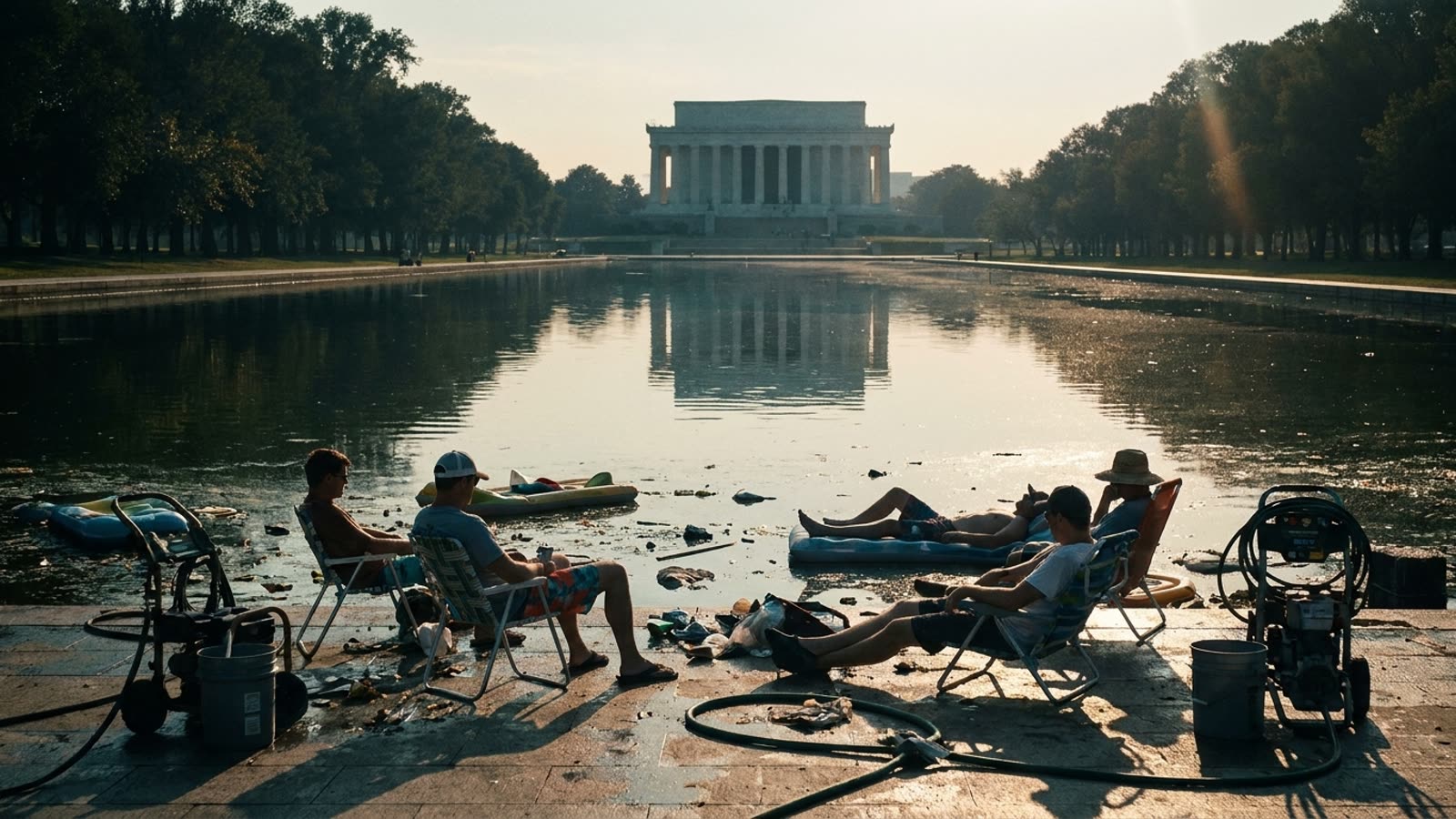
The morning after Independence Day, while most of Washington nurses its collective hangover, a small army of National Park Service workers descends on the Reflecting Pool with nets, vacuums, and the quiet resignation of people who have done this many times before.
The 2,029-foot basin that normally mirrors the Lincoln Memorial and Washington Monument in postcard-perfect stillness is, on July 5th, a repository of celebration's detritus: spent sparkler sticks, abandoned lawn chairs, the occasional errant flip-flop, and enough food wrappers to suggest America's birthday diet consists primarily of items sold from carts. The cleanup, which began at dawn this morning, will take the better part of two days.
The aesthetics of aftermath
There is something almost poetic about the Reflecting Pool's annual transformation from sacred national symbol to evidence locker. The same body of water that has hosted Martin Luther King Jr.'s dream and countless presidential inaugurations spends one weekend each year as the world's most historically significant kiddie pool, complete with waders who ignore the "No Swimming" signs with the cheerful impunity that only a national holiday can provide.
The Park Service, to its credit, has developed this into something approaching performance art. Workers in waders move methodically across the shallow basin—the pool is only eighteen inches deep at its edges—fishing out debris with the practiced efficiency of people who understand that by next July 4th, they will be doing this again. The pool's recirculating system, installed during a 2012 renovation, helps with the water quality, but cannot assist with the fundamental problem of 500,000 people treating a memorial as a tailgate venue.
What the trash reveals
The composition of Reflecting Pool debris offers an inadvertent time capsule of American consumer habits. Park Service veterans report that the ratio of plastic to paper has shifted dramatically over the decades, and that the appearance of hard seltzer cans in recent years has become a reliable indicator of demographic change among Mall visitors. This year's haul reportedly included several inflatable bald eagles, a genre of patriotic merchandise that did not exist twenty years ago and now appears to be mandatory.
The fireworks themselves—launched from the opposite end of the Mall near the Capitol—contribute surprisingly little to the pool's pollution. The fallout that does drift westward is mostly paper and cardboard, which the pool's filtration system handles without complaint. The human contribution is another matter entirely.
Our take
The Reflecting Pool cleanup is America in miniature: a beautiful thing made temporarily chaotic by enthusiasm, then quietly restored by underpaid public servants while everyone else moves on. There is no malice in the mess, only the particular American belief that celebration and consequence exist in separate time zones. The pool will be pristine again by Wednesday, ready for its next close-up, its brief career as a trash receptacle forgotten until next July 5th, when the whole ritual begins again.