The instinct to gather, categorize, and display objects predates currency, literacy, and probably language itself. Archaeological sites from the Paleolithic era contain hoards of unusually colored stones and shells with no apparent practical function. Whatever else our ancestors were doing in those caves, they were also collecting.
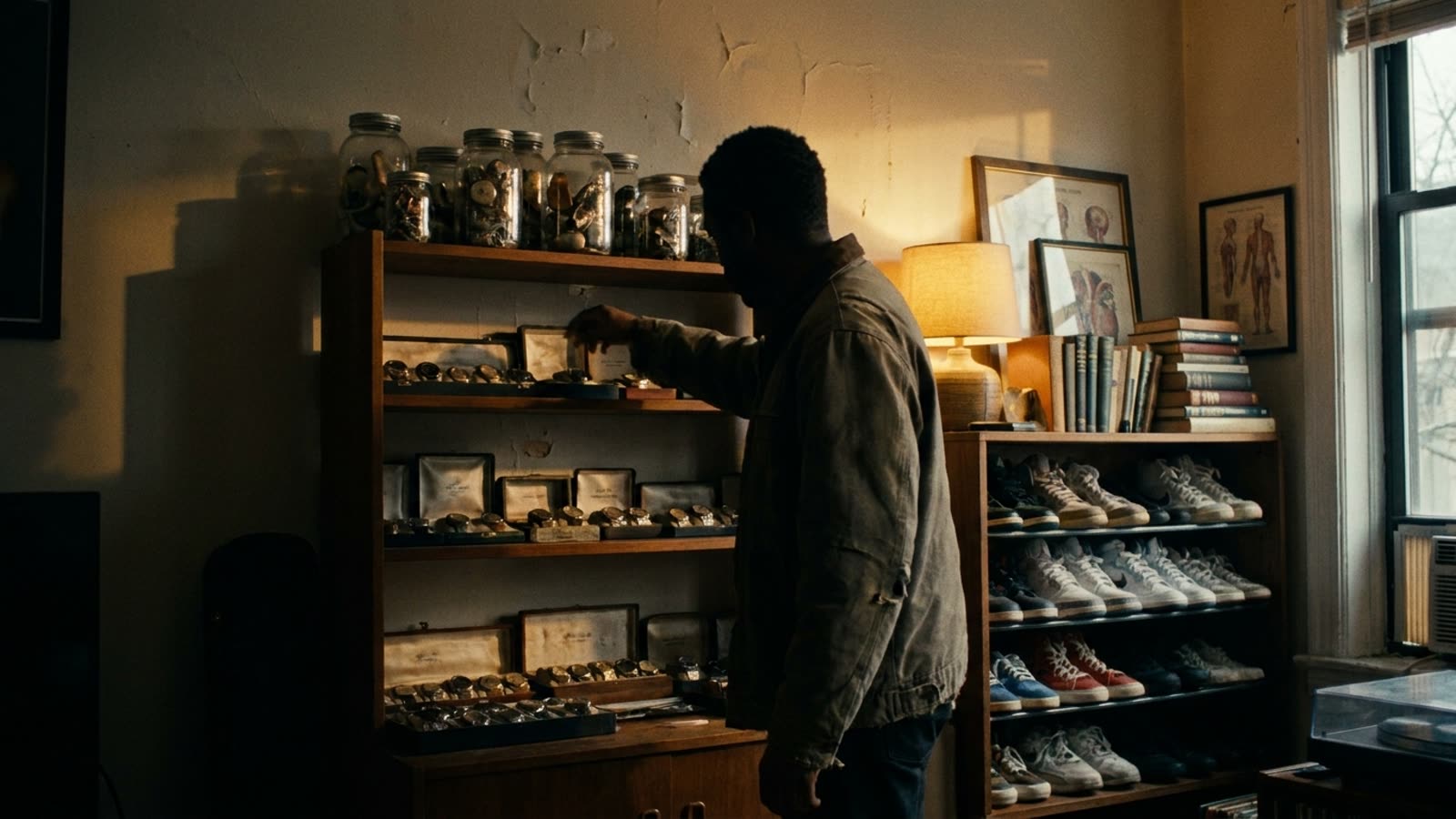
This impulse has never disappeared. It has merely shape-shifted through history—from Renaissance wunderkammern stuffed with narwhal tusks and Roman coins, to Victorian butterfly cases, to the temperature-controlled sneaker rooms of contemporary collectors who treat Air Jordans with the reverence once reserved for reliquaries. The objects change; the underlying psychology does not.
The self, distributed across shelves
Psychologists who study collecting behavior have identified a consistent pattern: collectors describe their objects not as possessions but as extensions of themselves. The boundaries between owner and owned become porous. A record collection is not merely records one happens to own; it is a physical manifestation of taste, memory, and the person one believes oneself to be. Sell the collection, and something of the self goes with it.
This explains why collectors often continue acquiring long past any rational stopping point. The collection is never complete because the self is never complete. There is always another gap to fill, another variant to hunt, another object that might finally make the assemblage—and by extension, the assembler—whole.
Investment as alibi
Modern collecting culture has developed an elaborate vocabulary of financial justification. Vintage watches "hold their value." First-edition books are "alternative assets." Limited-edition whisky is "liquid gold." The collector who spends lavishly on objects of desire can frame the expenditure as prudent portfolio diversification rather than indulgence.
This is mostly self-deception, and often a useful one. The vast majority of collectibles underperform index funds over any meaningful time horizon. Transaction costs are high, storage is expensive, authentication is uncertain, and liquidity is poor. The collector who insists their assemblage of mid-century ceramics will fund retirement is probably wrong—but the fiction permits the pleasure without the guilt.
The social architecture of scarcity
What distinguishes contemporary collecting from its historical antecedents is the deliberate manufacture of scarcity. Luxury brands, sneaker companies, and spirits producers have learned to engineer limited releases that transform ordinary commerce into competitive sport. The object matters less than the hunt, the queue, the confirmation email, the unboxing.
This manufactured scarcity creates communities of shared obsession. Collectors find one another in forums, Discord servers, and convention halls. They develop specialized vocabularies and hierarchies of expertise. The collection becomes a passport to belonging—proof that one cares enough, knows enough, and has spent enough to merit admission.
Our take
The urge to collect is neither pathology nor investment strategy. It is something older and stranger: a way of imposing order on chaos, of building a material autobiography, of surrounding oneself with evidence that one's tastes and enthusiasms matter. The cabinet of curiosities endures because curiosity endures. The objects are beside the point. The collecting is the point.