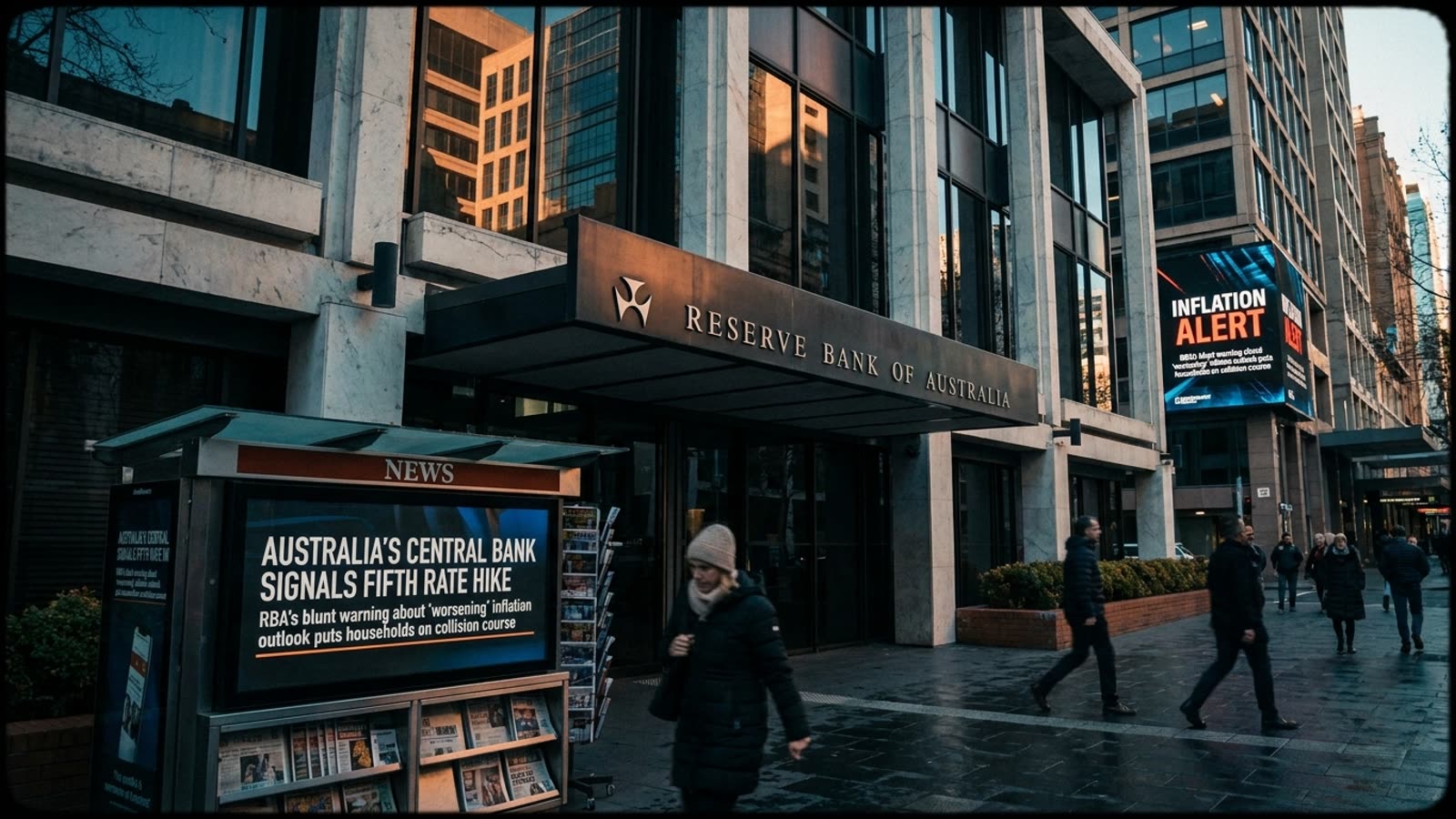
The Reserve Bank of Australia has spent 2026 trying to thread an impossible needle: crush inflation without crushing the economy. On Tuesday, deputy governor Andrew Hauser effectively conceded the needle has slipped.
Hauser's comments that the inflation outlook is "worsening" and that the RBA faces "hard choices" amount to the clearest signal yet that a fifth interest rate increase this year is not merely possible but probable. For an economy that has avoided recession for over three decades—a streak that became part of national mythology—the admission marks a sobering inflection point.
The arithmetic of pain
Australia's predicament is arithmetically brutal. Inflation remains stubbornly above the RBA's 2-3 percent target band, driven by services costs, housing, and energy prices that have proven resistant to the rate increases already delivered. Meanwhile, household debt-to-income ratios rank among the highest in the developed world, meaning each quarter-point hike lands with disproportionate force on mortgage holders.
The RBA's four previous hikes in 2026 have already pushed the cash rate well into restrictive territory. A fifth would test the limits of what Australian households can absorb before consumption collapses—and with it, the labour market the RBA claims it wants to protect.
The global context
Hauser's hawkish turn comes as other major central banks have begun cautiously easing. The Federal Reserve has signalled its tightening cycle is complete; the European Central Bank has delivered its first cuts. Australia, by contrast, finds itself swimming against the tide, forced to keep hiking because its inflation problem has proven more persistent than peers.
Part of this reflects structural factors: a housing market that never fully corrected, immigration-driven population growth that has outpaced housing supply, and an economy still digesting the fiscal largesse of the pandemic years. Part of it reflects timing—Australia's inflation peaked later than in the US or Europe, so the lag in policy transmission is correspondingly delayed.
What markets are pricing
Swap markets have moved swiftly. Odds of a November hike have shortened considerably since Hauser's remarks, with traders now pricing better-than-even chances of another twenty-five basis points. The Australian dollar has firmed on the hawkish rhetoric, though the currency's strength only partially offsets imported inflation pressures.
For equity markets, the picture is murkier. Banks, which benefit from wider net interest margins, have held up reasonably well. Consumer discretionary stocks have not. Retailers and hospitality firms face the dual headwind of higher borrowing costs and consumers who have simply stopped spending on anything beyond essentials.
Our take
The RBA is caught in a trap partly of its own making. Years of insisting inflation was "transitory" delayed the tightening cycle; now the bank must deliver more pain than would otherwise have been necessary. Hauser's candour is welcome, but candour is not a substitute for credibility. A fifth hike may be economically necessary, but it will be politically toxic—and the RBA, despite its nominal independence, operates in a democracy where mortgage stress translates directly into electoral pressure. The lucky country built its identity on avoiding the hard choices other nations faced. That era appears to be ending.