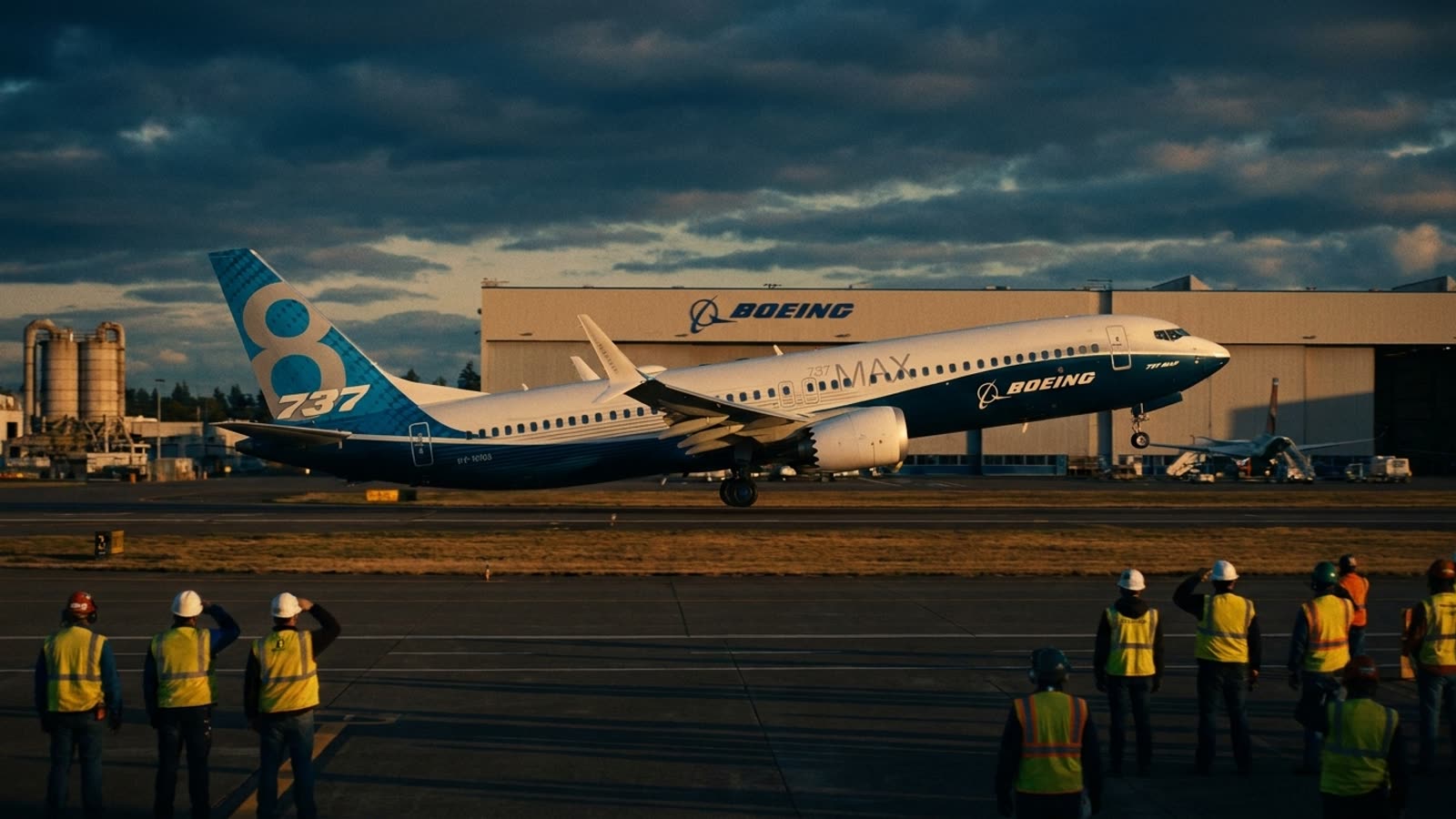
The Federal Aviation Administration has certified the 737 Max 10, Boeing's largest single-aisle jet, closing a chapter of corporate humiliation that stretched across two fatal crashes, a global grounding, congressional hearings, and a near-existential crisis for America's flagship aircraft manufacturer.
The approval arrives years behind schedule. Boeing originally expected the Max 10 to enter service by 2020. Instead, the plane became hostage to the broader Max debacle — the 346 deaths from the Lion Air and Ethiopian Airlines crashes, the revelations of corner-cutting engineering culture, and the subsequent regulatory overhaul that transformed the FAA from rubber-stamp partner to something approaching an actual watchdog.
What the Max 10 actually is
The aircraft seats roughly 230 passengers in a typical two-class configuration, making it the largest variant of Boeing's workhorse narrow-body family. It competes directly with the Airbus A321neo, which has dominated the market for larger single-aisle jets while Boeing's certification languished. Airlines prize these stretched narrow-bodies for their economics on medium-haul routes — they burn less fuel per seat than wide-bodies while offering enough capacity for high-demand city pairs.
United Airlines has been the most vocal advocate for the Max 10, having ordered the jet as the backbone of its domestic fleet refresh. Delta, which had sworn off Boeing narrow-bodies entirely, has reportedly reconsidered now that certification is complete. The plane's range and seat count make it particularly attractive for transcontinental routes where wide-body aircraft are overkill.
The cost of delay
Boeing does not disclose Max 10-specific development costs, but the broader Max crisis has extracted a staggering toll. The company has paid billions in settlements, compensation to airlines, and production disruptions. More damaging has been the reputational collapse: Boeing was once synonymous with engineering excellence, a company whose name carried the same weight in aerospace that IBM once held in computing. Today it is a case study in what happens when financial engineering supplants the real kind.
The certification delay also forced Boeing to confront an uncomfortable regulatory reality. Congress imposed a deadline requiring new aircraft to meet updated cockpit-alerting standards — a response to the Max crashes, in which pilots struggled to understand what their planes were doing. Boeing lobbied furiously for an extension, arguing the Max 10 was merely a derivative of an existing design. Lawmakers, chastened by their earlier deference, initially refused. The eventual compromise required Boeing to implement safety enhancements that would not have been necessary under the old regime.
Our take
The Max 10 certification is good news for Boeing, for United, and for the broader aviation supply chain that depends on healthy order books. But it is difficult to celebrate an approval that should have come half a decade ago, for a plane that exists because Boeing refused to design a clean-sheet replacement for an airframe dating to the 1960s. The Max saga revealed a company that had forgotten what it was supposed to be good at. One certification does not fix that. It merely gives Boeing another chance to remember.