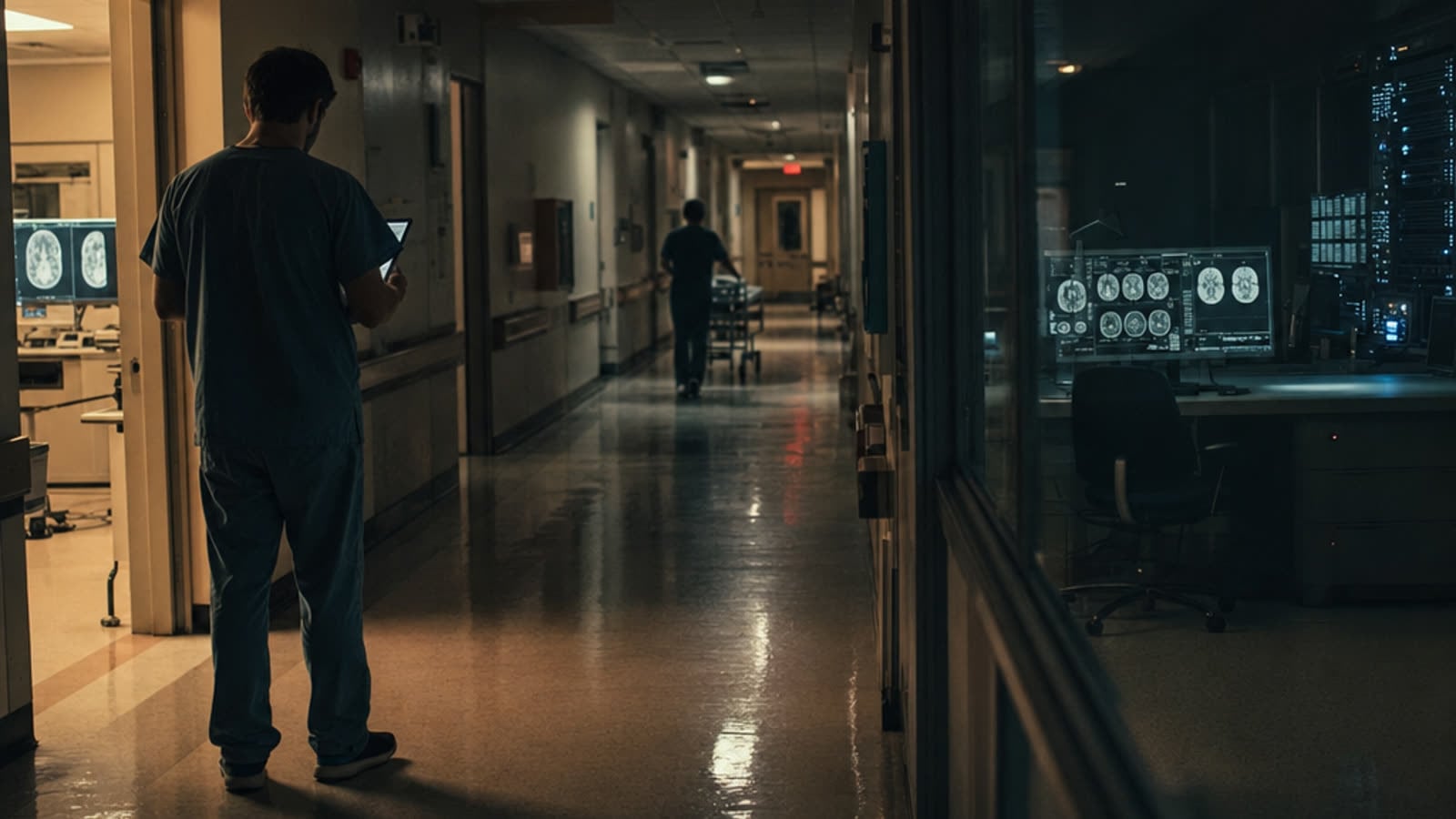
Walk into any major hospital's radiology department today and you will find something that would have seemed like science fiction two decades ago: algorithms reading X-rays alongside physicians, flagging potential tumors, measuring organ volumes, and prioritizing urgent cases in the queue. The radiologist has not been replaced. But the radiologist is no longer alone.
This quiet transformation offers perhaps the clearest window into how artificial intelligence actually integrates into skilled professional work — not as a dramatic substitution but as an awkward, evolving collaboration that raises questions neither technology companies nor medical institutions have fully answered.
The workflow revolution nobody announced
The integration happened gradually, almost bureaucratically. First came the computer-aided detection systems for mammography in the early 2000s, drawing circles around suspicious densities. Then came more sophisticated tools for chest imaging, capable of measuring nodule growth with precision no human eye could match. Now, AI systems pre-read scans before radiologists even open them, highlighting potential pathology, estimating bone age in pediatric cases, and calculating cardiac ejection fractions from echocardiograms.
The pitch from vendors is compelling: AI handles the tedious measurements and pattern recognition, freeing physicians to focus on complex interpretation and patient communication. In practice, the dynamic is considerably messier. Radiologists report a phenomenon researchers call "automation bias" — the subtle tendency to trust algorithmic findings even when clinical intuition suggests otherwise. When the AI says a scan is normal, it becomes psychologically harder to look as carefully.
The liability question nobody has settled
Here lies the profession's central anxiety. If an AI system flags a finding and the radiologist dismisses it, who bears responsibility when the patient returns with advanced cancer? If the algorithm misses something obvious, can the physician claim they reasonably relied on the technology? Courts have not definitively answered these questions, and insurance frameworks remain ambiguous.
Hospital administrators love AI's efficiency gains — faster turnaround times, more consistent measurements, fewer backlogs. But they have proven less enthusiastic about explicitly defining where human judgment ends and algorithmic recommendation begins. The result is a professional limbo where radiologists are expected to use AI tools but remain fully accountable for outcomes, essentially checking the machine's work while the machine checks theirs.
What the technology actually does well
Fairness requires acknowledging where AI genuinely excels. For certain narrow tasks — detecting diabetic retinopathy from fundus photographs, measuring tumor volumes over time, identifying pneumothorax on portable chest films — algorithms now match or exceed average human performance. They do not get fatigued at the end of a long shift. They apply the same criteria to the first scan of the day and the hundredth.
For overworked departments in understaffed hospitals, this consistency matters. AI triage systems that push critical findings to the front of the reading queue have demonstrably reduced time-to-diagnosis for stroke and pulmonary embolism. The technology works best when it augments attention rather than replaces judgment.
Our take
Radiology's AI experiment is neither the catastrophe that early critics predicted nor the revolution that vendors promised. It is something more instructive: a case study in how powerful but imperfect tools get absorbed into professional practice through negotiation, workaround, and institutional inertia. The radiologist of today reads more scans than ever before, aided by algorithms that catch some things and miss others, celebrated by administrators and quietly resented by physicians who remember when the job felt more like craft and less like quality control. This is probably what AI integration looks like for most skilled professions — not replacement, but a subtle redefinition of what the work actually is.