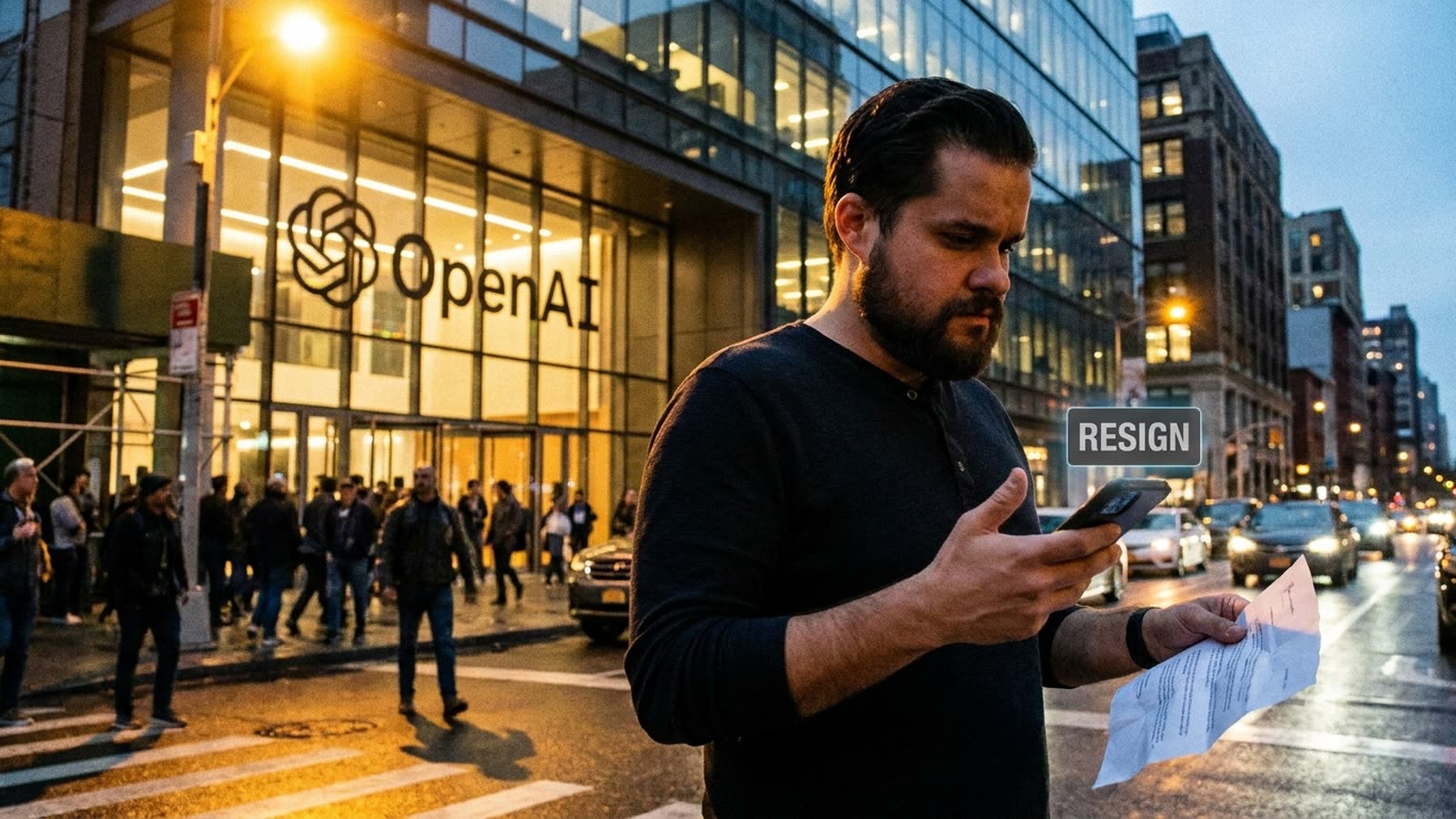
The departure of yet another safety-focused employee from OpenAI, this time with a public declaration that the company's "culture is broken," would be unremarkable at most tech firms. Engineers leave. They sometimes leave loudly. But OpenAI is not most tech firms, and the steady drip of safety talent heading for the exits has become less a personnel story than a referendum on whether the world's most prominent AI company can police itself.
The resignation, reported this week, follows a now-familiar script: an employee with visibility into OpenAI's safety processes concludes that commercial imperatives have overwhelmed the mission. The specific grievances vary—inadequate testing timelines, sidelined red teams, leadership that treats caution as an obstacle—but the throughline is consistent. People hired to pump the brakes keep quitting because no one is listening.
The arithmetic of attrition
OpenAI's safety and alignment teams have suffered notable departures over the past two years, including co-founder Ilya Sutskever and superalignment lead Jan Leike, both of whom left in 2024 amid reported tensions over resource allocation. Each exit prompts a round of reassurances from the company—new governance structures, expanded red-teaming, commitments to responsible scaling. And each subsequent departure suggests those reassurances have not altered the underlying dynamic.
The pattern matters because OpenAI has staked its public legitimacy on being the responsible steward of transformative technology. That claim is harder to sustain when the people charged with responsibility keep walking away.
Why it matters beyond the org chart
OpenAI is not merely a company; it is a regulatory argument. Its executives have lobbied governments on the premise that industry self-governance, supplemented by light-touch oversight, is preferable to heavy-handed rules. Every safety resignation undercuts that argument. If OpenAI cannot retain its own internal critics, why should policymakers trust it to flag external risks?
The timing is also notable. OpenAI has delayed its IPO, citing safety concerns, and recently announced it will watermark ChatGPT outputs—but only in the EU, where regulators demanded it. The company appears responsive to external pressure while struggling to maintain internal dissent. That is not a stable equilibrium.
Our take
One resignation is a data point. A pattern is a diagnosis. OpenAI's safety culture may not be broken in the catastrophic sense the departing employee implies, but it is clearly not working well enough to retain the people most attuned to its failures. For a company asking the world to trust its judgment on existential risk, that is a credibility problem no press release can fix.