The most expensive garment in any room is increasingly the one you cannot identify. No interlocking letters, no heritage monogram, no gold hardware catching the light — just a sleeve that drapes with suspicious perfection and a collar that lies flat in a way mass production cannot replicate. This is the triumph of quiet luxury, a movement that inverted fashion's oldest status game by making recognition the enemy of taste.
The shift did not happen overnight. For decades, the visible logo served as fashion's universal translator: a Chanel double-C or a Louis Vuitton canvas announced membership in a club whose dues were printed on the receipt. The logo democratized aspiration even as it stratified it. You could save for the entry-level bag and join the conversation. But when everyone joined, the conversation became noise.
The Brunello Cucinelli doctrine
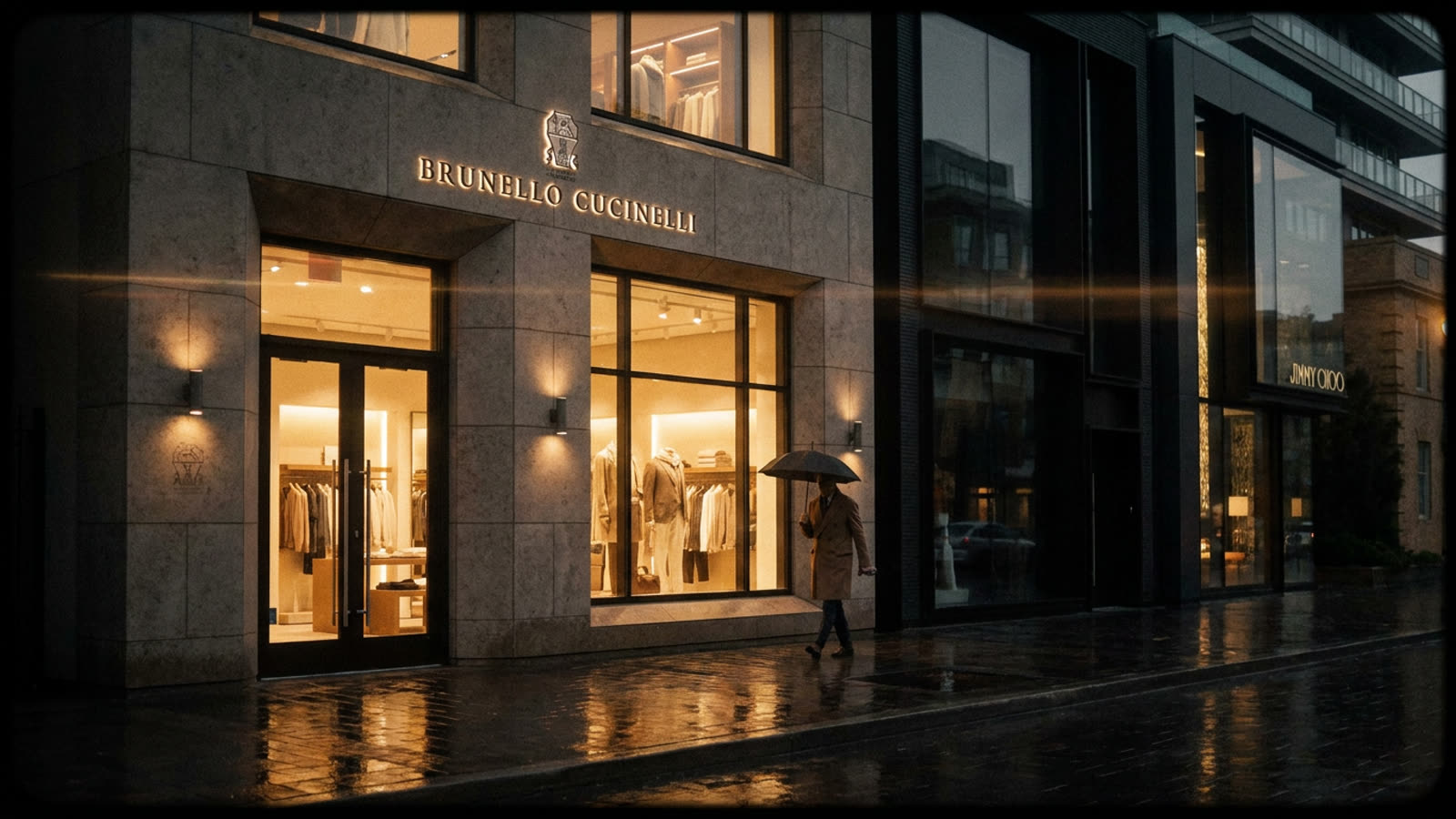
No brand embodies the quiet revolution more completely than Brunello Cucinelli, the Italian house that built a cashmere empire in the Umbrian hills by refusing to shout. The company's garments carry no external branding. Its stores resemble private libraries. Its prices — often four figures for a sweater — assume a customer who needs no explanation and wants none offered. The model proved that scarcity of recognition could command premiums that scarcity of product once did. Loro Piana, The Row, and Zegna followed the template, each cultivating clienteles who understood that true exclusivity meant being overlooked by everyone except those who mattered.
Television's stealth curriculum
Cultural transmission required a syllabus, and prestige television provided it. The wardrobe of Succession's Siobhan Roy became a case study in wealth that refuses to perform: camel coats without visible buttons, cream knits that cost more than most people's rent, not a single piece that would register on a street-style photographer's radar. The message was legible only to initiates. Billions, The White Lotus, and Industry continued the education, dressing their plutocrats in clothes that whispered while their actions screamed. A generation learned to read fabric weight the way their parents read logos.
The paradox of invisible signaling
Quiet luxury contains its own contradiction. The aesthetic promises escape from status competition, yet it merely relocates the battlefield. Instead of recognizing a monogram, the discerning eye now clocks a particular shade of oatmeal, a specific drape of trouser, the absence of synthetic sheen. The game remains zero-sum; only the vocabulary changed. Critics argue the movement is simply old money's revenge on new money, a reassertion of inherited taste over earned purchasing power. There is truth in this. When the signal becomes invisible, only those raised with the decoder ring can read it.
Yet something genuine shifted alongside the snobbery. The quiet luxury consumer often demands durability, ethical production, and timelessness — values that happen to align with sustainability even when that is not the stated motive. A four-thousand-dollar jacket worn for fifteen years costs less per wear than fast fashion's churn. The aesthetic's longevity promises extend to the garments themselves.
Our take
Quiet luxury is not the death of status; it is status refined to its most potent and exclusionary form. The logo era let anyone with a credit limit join the party. The post-logo era requires cultural fluency that money alone cannot purchase — or at least, not quickly. Whether this represents progress depends entirely on whether you already own the cashmere.