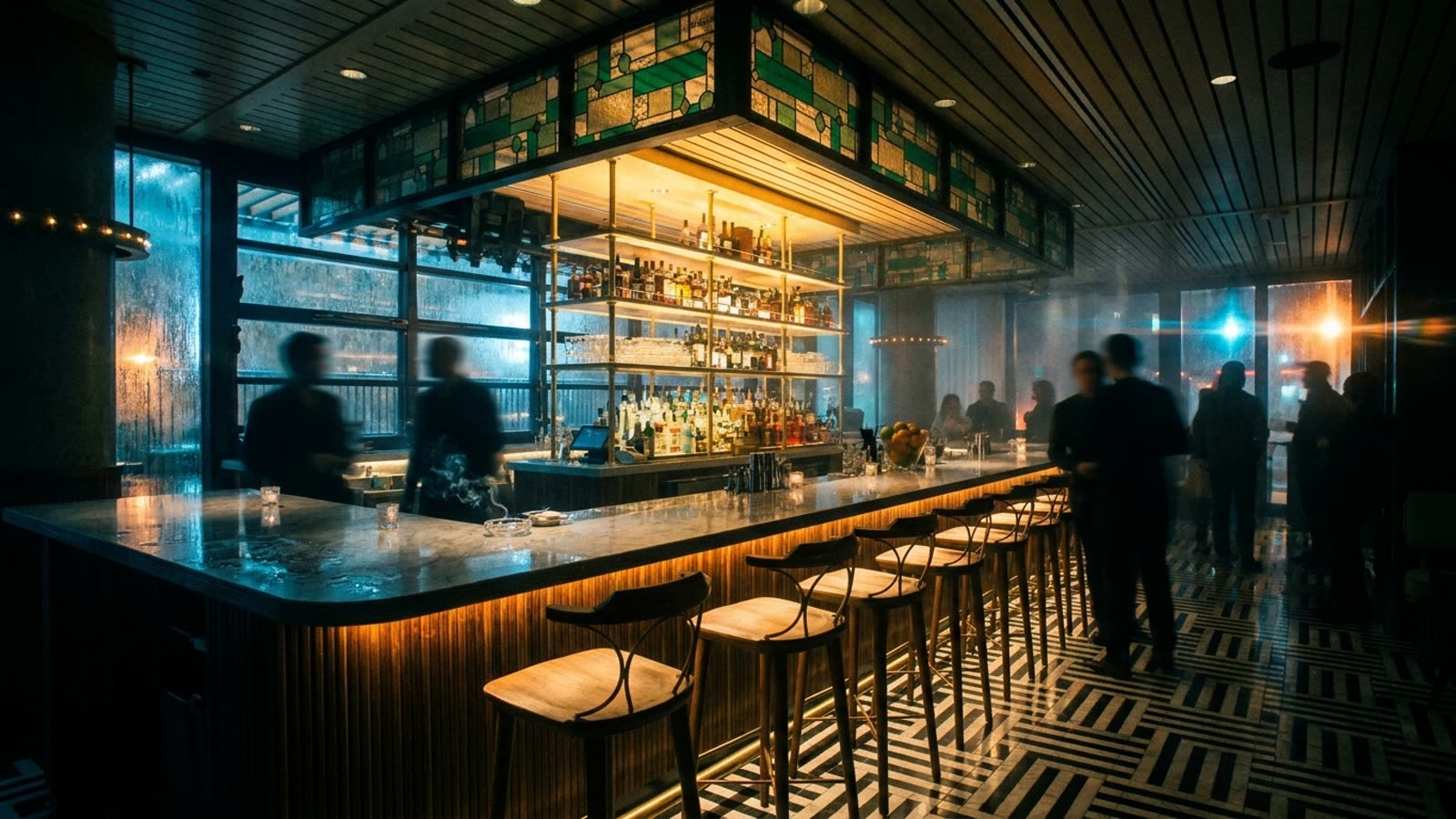
There is a particular kind of loneliness that is actually quite pleasant, and the hotel bar is its natural habitat. You are somewhere between departure and arrival, accountable to no one, visible to everyone, and the bartender—if the establishment is any good—understands that you may want conversation or you may want silence, and will read the room accordingly.
This is not nostalgia talking. The hotel bar has outlasted countless trends that were supposed to render it obsolete: the speakeasy revival, the farm-to-glass movement, the rise of the members-only club, the pandemic pivot to outdoor drinking. Each wave crashed against the lobby lounge and receded. The Bemelmans Bar still serves its frozen hot chocolate. The Connaught Bar still performs its martini ritual with a trolley. The Polo Bar still fills with people who could drink anywhere and choose to drink there.
The architecture of anonymity
What the hotel bar offers is structural, not merely atmospheric. It is the only drinking establishment designed around the assumption that most of its patrons do not know each other and have no obligation to pretend otherwise. A neighborhood bar demands regulars. A club demands members. A restaurant bar demands that you are waiting for a table or pretending to. The hotel bar demands nothing. You can nurse a single drink for two hours or order four martinis before dinner. You can be a guest upstairs or a local who wandered in from the street. The transaction is clean.
This anonymity has commercial value that hoteliers understand even when they cannot articulate it. The bar subsidizes the lobby's function as a living room for people who do not live there. Business travelers conduct meetings they do not want in their rooms. Affairs begin and end. Journalists meet sources. The recently divorced sit alone and feel, briefly, cosmopolitan rather than pathetic.
The economics of the eternal
Running a great hotel bar is expensive in ways that standalone establishments cannot absorb. The rent is already paid by the rooms. The staff can be cross-trained with banquets. The hours can be generous because someone is always checking in late. Most importantly, the hotel bar does not need to be fashionable—it needs to be reliable. The Carlyle does not worry about what Brooklyn thinks. The Savoy's American Bar has been serving drinks since the 1890s and will be serving them when the last speakeasy has become a smoothie shop.
This permanence attracts a clientele that values it. The hotel bar regular is not chasing the new; they are seeking the known. They want the same corner seat, the same Gibson, the same piano player who knows not to make eye contact during the sad songs.
Our take
The hotel bar endures because it solves a problem that never goes away: the need for a place where you can be alone in public, observed but not known, comfortable but not home. Every generation invents new ways to drink, and every generation eventually discovers that sometimes you just want to sit in a leather chair in a room full of strangers and watch the ice melt. The algorithm cannot recommend this. You have to find it yourself, and when you do, you understand why your grandparents found it too.