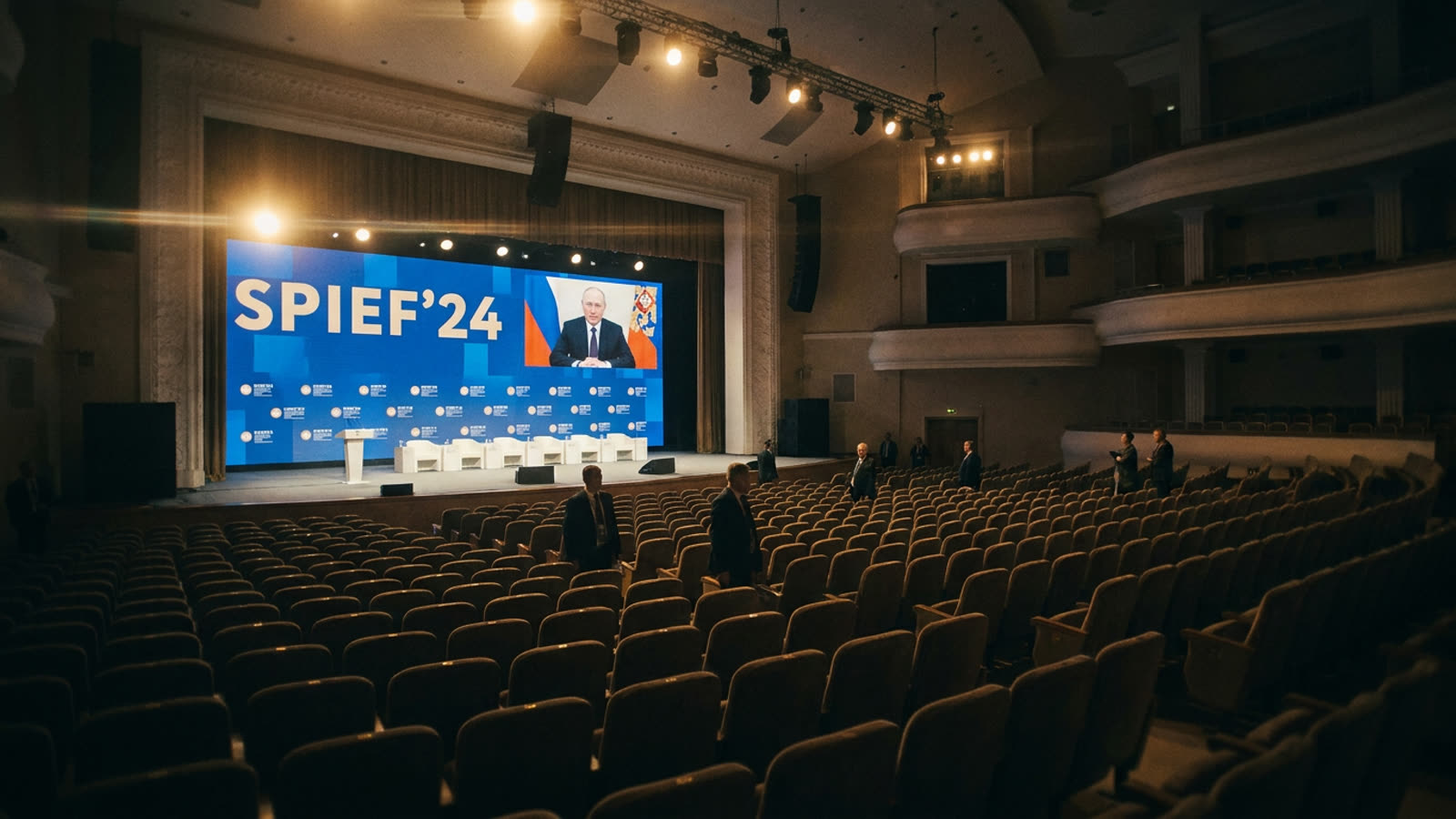
The St. Petersburg International Economic Forum was once Russia's answer to Davos — a place where oligarchs clinked champagne with Western executives and Putin could play the statesman courting global capital. This year's edition, wrapping up amid the usual fanfare of influencers and carefully curated panels, instead showcases something the Kremlin would rather not advertise: the slow suffocation of an economy that has traded its future for territorial ambition.
The forum's guest list tells the story more honestly than any official communiqué. Gone are the Goldman partners and Siemens executives who once jostled for face time with Russian ministers. In their place: delegations from Iran, North Korea, and a smattering of African nations — partners of necessity rather than choice. The influencers flown in to project glamour on social media cannot quite paper over the void where serious money used to sit.
The numbers behind the performance
Russia's economy has proven more resilient than many Western analysts predicted when sanctions first landed in 2022. But resilience is not the same as health. The ruble's stability is maintained through capital controls that trap Russian wealth inside the country. Inflation has forced the central bank into punishing interest-rate territory, choking domestic investment. The much-touted pivot to China has delivered dependency rather than partnership, with Beijing extracting steep discounts on Russian energy while providing little of the technology Moscow desperately needs to modernize.
The forum's panels on "technological sovereignty" and "import substitution" have become annual rituals of magical thinking. Four years into the sanctions regime, Russia still cannot manufacture advanced semiconductors, modern aircraft, or the industrial equipment its factories require. The war economy keeps GDP figures respectable, but it does so by consuming resources that might otherwise build something lasting.
The audience that matters
Putin's real audience at St. Petersburg is not foreign investors — those bridges burned long ago. It is the Russian elite itself, the businessmen and regional governors who need reassurance that the system will hold, that their fortunes remain secure, that the war's costs will not eventually land on their balance sheets. The influencers and the carefully staged optimism serve this domestic purpose: manufacturing consent among the people who actually keep the machinery running.
Whether that audience remains convinced is another matter. The forum's networking lounges reportedly buzzed with quieter conversations about succession, about what comes after, about how long the current trajectory can sustain itself. These are not the discussions of a confident ruling class.
Our take
Potemkin villages have a long history in Russia, and the St. Petersburg forum has become their corporate equivalent. The Kremlin can still summon a crowd and generate flattering coverage for domestic consumption. What it cannot do is conjure the capital, technology, and partnerships that made Russia's pre-war economy function. The swank remains; the substance has departed for jurisdictions with fewer artillery expenditures.