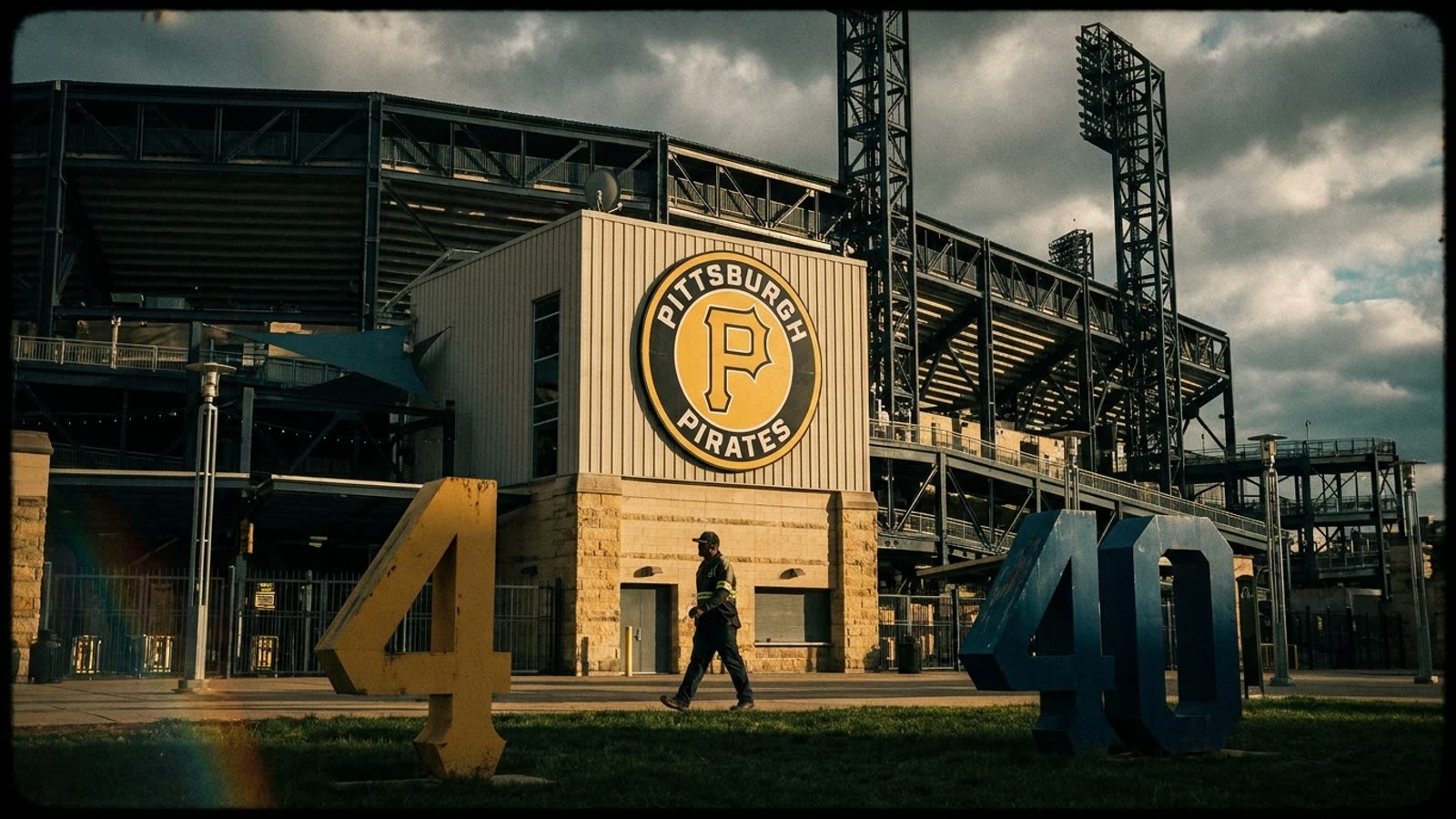
The Pittsburgh Pirates exist as a controlled experiment in baseball economics, and Bryan Reynolds just provided another data point. His two-run blast to walk off a victory this week was the sort of moment that small-market teams are supposed to be too poor to produce consistently—yet here are the Pirates, competitive again, spending roughly $85 million on payroll while the Mets and Dodgers each clear $300 million.
The question isn't whether Reynolds can hit. The question is whether Major League Baseball's economic structure can survive the cognitive dissonance of teams like Pittsburgh proving you don't actually need to spend like a sovereign wealth fund to win games.
The efficiency paradox
Pittsburgh's front office has become quietly excellent at identifying undervalued talent and developing homegrown players like Reynolds, who signed a team-friendly extension in 2023 that looks increasingly like highway robbery. The Pirates' cost-per-win ratio consistently ranks among the league's best, which sounds like a compliment until you realize it's also an indictment of how other franchises allocate capital.
The Dodgers spent approximately $4.2 million per win last season. The Pirates spent roughly $1.8 million. Both made the playoffs. This isn't a market inefficiency—it's a market failure that the league's revenue-sharing system was supposed to prevent but instead seems to have institutionalized.
Labor implications
The ongoing collective bargaining discussions between MLB and the players' union have centered on implementing salary floors alongside the existing luxury tax ceiling. Owners have resisted, arguing that forcing minimum spending would harm competitive balance. Pittsburgh's success undermines that argument entirely—if a team can compete while spending less than the proposed floor, the floor isn't constraining competitive balance; it's constraining owner profits.
Reynolds himself represents the tension. He's a legitimate All-Star caliber player earning a fraction of what he'd command in free agency, locked into a deal that benefits the franchise's bottom line while suppressing the broader wage market for similar players.
The attendance question
Pittsburgh's attendance figures tell the uncomfortable part of the story. Despite competitive play, PNC Park remains underattended relative to its capacity. The franchise's decades of losing created a fanbase conditioned to expect failure, and winning games hasn't yet translated into proportional revenue recovery. This creates a perverse incentive: the Pirates can remain profitable by keeping payroll low, regardless of whether they're actually trying to maximize wins.
The walk-off was thrilling. The business model that produced it is something closer to a cautionary tale.
Our take
Bryan Reynolds deserves better than being a case study in labor economics, but that's what happens when you're excellent for a franchise that has mastered the art of competitive frugality. Pittsburgh's success should embarrass the teams spending four times as much to achieve similar results—but it should also trouble anyone who believes players deserve a larger share of the $11 billion in annual revenue they generate. The Pirates aren't breaking baseball. They're revealing that it was already broken.