College baseball operates on the thinnest margins in major collegiate athletics, and that financial precarity is precisely what makes it the most watchable sport in the NCAA portfolio right now.
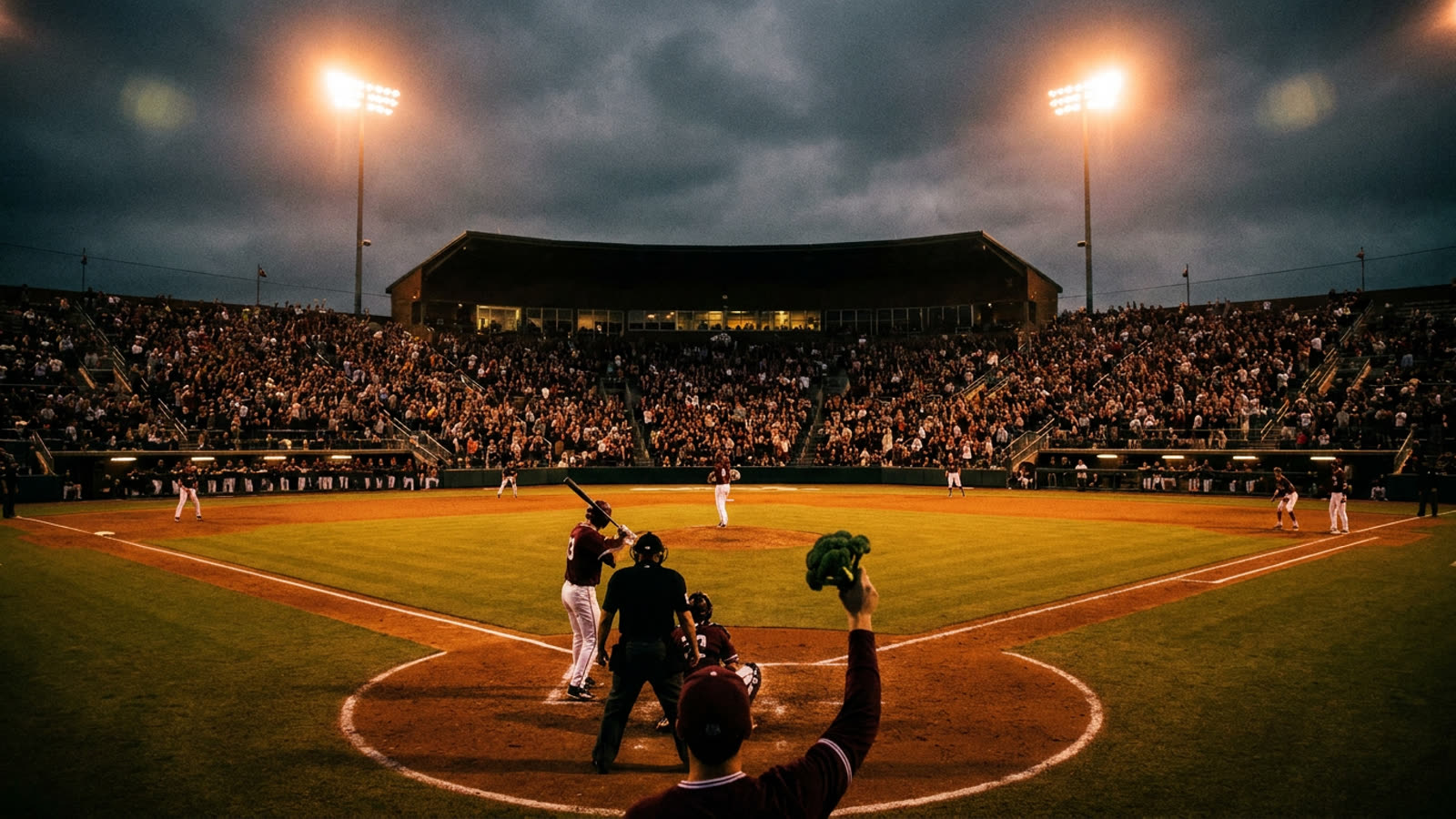
Mississippi State's run through the 2026 tournament—propelled in part by a fan brandishing broccoli who has become the team's unofficial talisman—is the kind of organic, unscripted theater that no amount of television money can engineer. The Bulldogs, playing in a conference that generates a fraction of the SEC's football revenue, have captured national attention not through NIL spending or transfer portal machinations but through the oldest currency in sports: a good story at the right moment.
The economics of being overlooked
College baseball's relative poverty is well-documented. Most programs operate at a loss, subsidized by football and men's basketball. Facilities are modest by Power Five standards. Coaching salaries, while rising, remain a rounding error compared to their gridiron counterparts. The sport receives minimal national television coverage outside the College World Series, and even that showcase operates on a scale that would embarrass the CFP.
Yet this financial neglect has produced an unexpected dividend: authenticity. Without the corrupting influence of massive media contracts, college baseball has retained something approaching competitive balance. Mid-majors regularly upset blue bloods. Regional hosts fall in their own stadiums. The tournament bracket, unlike March Madness, has not been reverse-engineered to protect television investments.
Why broccoli works and corporate synergy doesn't
The Mississippi State broccoli phenomenon—a fan's inexplicable vegetable choice becoming a rallying symbol—could not have been designed by a marketing department. It emerged from the stands, was adopted by players, and spread organically through social media. Compare this to the manufactured traditions that conferences spend millions attempting to cultivate, and the contrast is instructive.
College sports administrators have spent the past decade chasing football's revenue model, consolidating conferences, expanding playoffs, and maximizing broadcast windows. The result has been a product that feels increasingly professional without the actual professionalism. College baseball, left largely alone in this gold rush, has preserved the amateur chaos that once defined all collegiate athletics.
Our take
Mississippi State's tournament run is a reminder that sports economics operate on two ledgers: the one that tracks revenue, and the one that tracks attention. College baseball will never compete on the first metric, but its structural underinvestment has accidentally optimized it for the second. In an era when every major sport feels focus-grouped into blandness, there is real value in a product that still permits a man with broccoli to become part of the story. The Bulldogs may not win it all, but they have already demonstrated something their football colleagues cannot: that being too small to manipulate is sometimes the biggest competitive advantage of all.