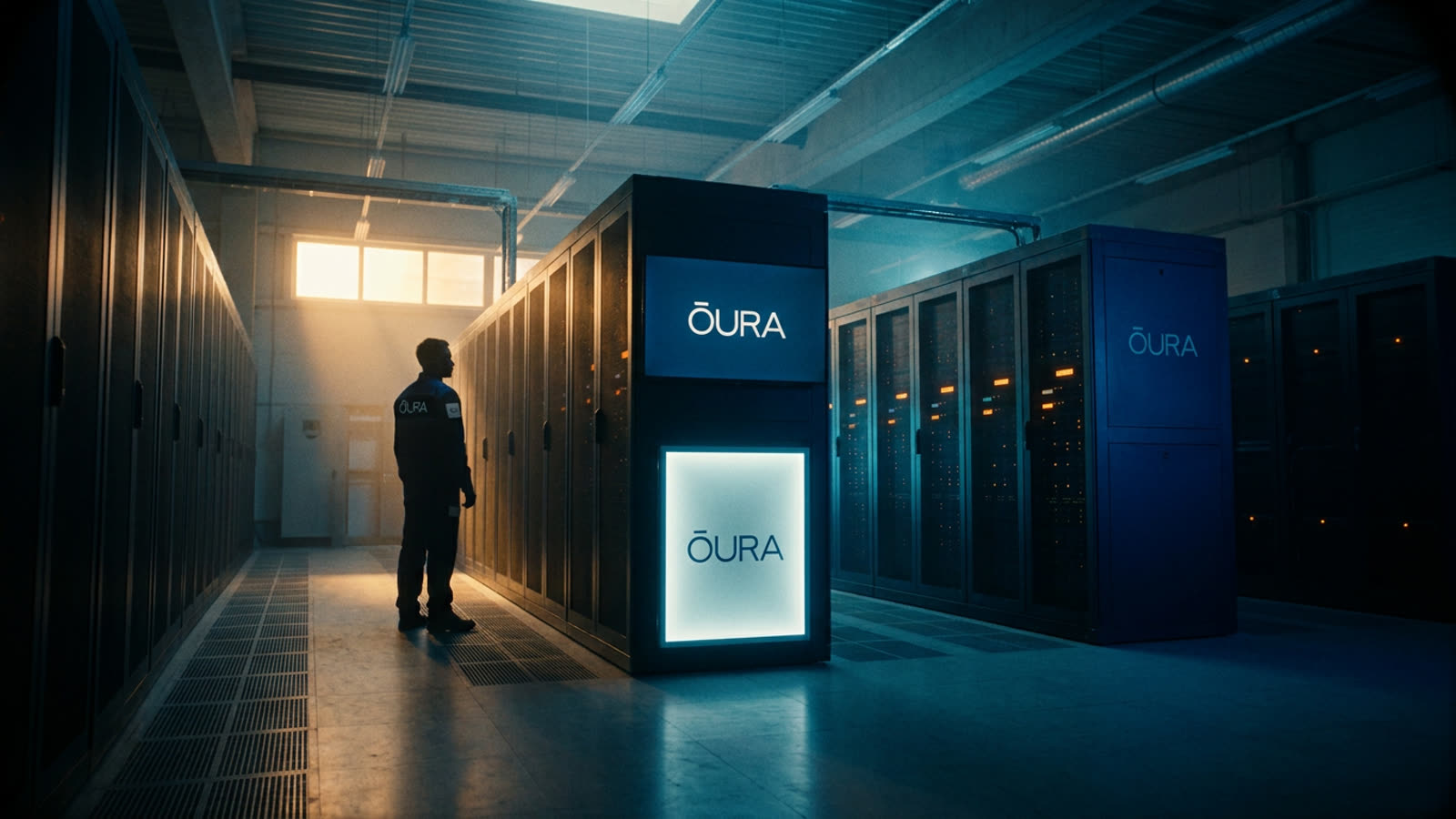
Oura's decision to file for an initial public offering marks a pivotal moment for the wearable health sector—not because another gadget company wants public market validation, but because it crystallizes the uncomfortable truth about where value actually accrues in consumer health technology. The company isn't really selling rings. It's selling access to an ever-growing corpus of sleep patterns, heart rate variability data, and activity metrics that become exponentially more valuable when fed into machine learning systems.
The Finnish firm has carved out a peculiar niche: premium enough to signal wellness-conscious affluence, unobtrusive enough to wear constantly, and data-rich enough to matter. Its titanium rings, which retail for several hundred dollars before the mandatory subscription kicks in, have found their way onto the fingers of tech executives, professional athletes, and the sort of people who track their "readiness scores" before deciding whether to attempt a morning workout.
The subscription pivot
Oura's business model evolution tells the real story. The company shifted to requiring a monthly subscription for full functionality several years ago, a move that frustrated early adopters but revealed management's understanding of where sustainable revenue lives. Hardware margins in consumer electronics are brutal and shrinking; recurring software revenue tied to proprietary health insights is defensible and growing. The subscription effectively monetizes the AI layer that transforms raw sensor data into actionable recommendations—or at least recommendations that feel actionable.
This positions Oura less as a hardware company and more as a health data platform that happens to manufacture its own collection devices. The distinction matters enormously for how public markets will value the business.
The AI training ground
What makes Oura's data particularly interesting is its longitudinal nature. Users wear these rings continuously, generating months or years of uninterrupted biometric streams. For training health-focused AI models, this kind of consistent, labeled data is extraordinarily difficult to obtain through clinical studies or episodic device usage. Oura has effectively crowdsourced a massive sleep and recovery dataset from a self-selected population of health-obsessed early adopters.
The company has already partnered with research institutions and begun licensing anonymized data for studies. An IPO would provide capital to accelerate this secondary business while raising questions about user consent and data governance that the company has thus far navigated without major controversy.
Our take
Oura's IPO filing is less about validating smart rings as a product category and more about testing whether public markets will pay platform multiples for a wearable company with AI ambitions. The bet is that investors see past the hardware and recognize the data moat. If they do, expect every fitness tracker and health wearable company to suddenly rediscover their "AI strategy." If they don't, Oura becomes a cautionary tale about the gap between data potential and data monetization. Either outcome reshapes how the industry thinks about what it's actually selling.