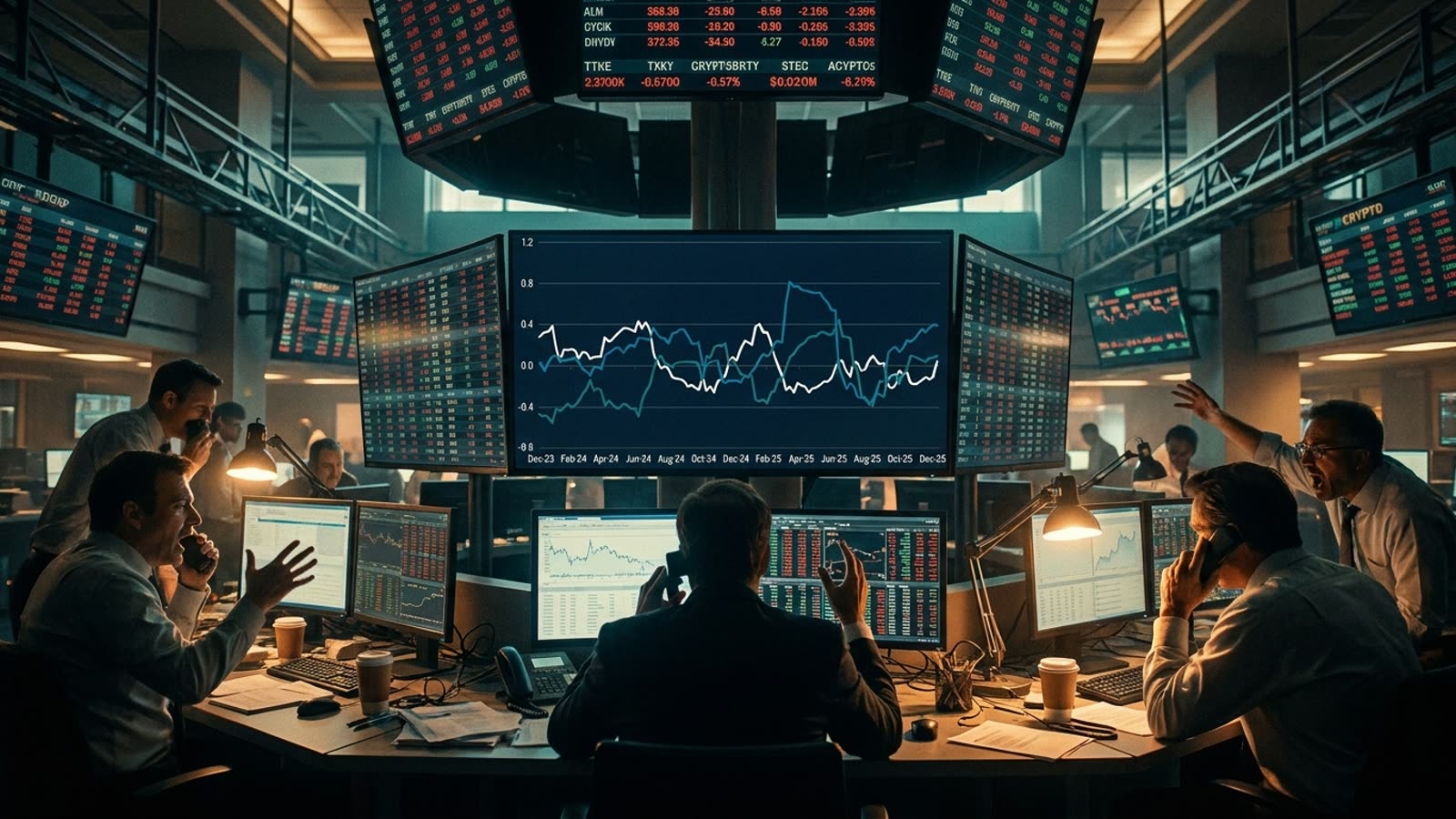
The cross-asset selloff that defined early June continued Wednesday, with cryptocurrencies and US stocks declining in lockstep while oil prices staged another recovery. Bitcoin fell below $68,000, Ethereum dropped more than 4%, and Solana shed roughly 5%—all as West Texas Intermediate crude pushed back toward $78 per barrel. The S&P 500 and Nasdaq both closed lower, completing a picture of synchronized weakness that would have seemed bizarre a decade ago but has become the defining feature of 2026's markets.
The persistence of this correlation tells us something important about the current investment landscape: liquidity conditions, not fundamentals, are driving nearly everything. When oil rises, it stokes inflation fears, which tighten financial conditions, which punish risk assets across the board. The mechanism is blunt but effective, and it has turned supposedly uncorrelated assets into variations on a single theme.
The Iran premium won't quit
Crude's resilience owes much to the unresolved tensions in the Persian Gulf. Even as diplomatic channels have reopened between Washington and Tehran, traders remain skeptical that any durable settlement is imminent. Tanker insurance rates through the Strait of Hormuz remain elevated, and OPEC+ has shown no inclination to boost supply into what it perceives as a structurally tight market. The result is an oil price that refuses to retreat meaningfully, keeping the inflation wolf at the door.
For equity investors, this creates an unpleasant calculus. Corporate earnings have held up reasonably well, but multiple expansion is impossible when the Federal Reserve cannot credibly signal rate cuts. The Fed's own projections, released last month, showed officials evenly split on whether 2026 would see any easing at all. Oil above $75 makes the doves' case considerably harder to argue.
Crypto's identity crisis deepens
The digital asset market's behavior is particularly telling. Bitcoin was supposed to be digital gold—a hedge against monetary debasement and geopolitical chaos. Instead, it has traded like a leveraged tech stock for most of the year. Wednesday's decline extended a pattern that began with Michael Saylor's controversial treasury sale last month, which spooked retail holders and triggered a wave of ETF outflows.
Ethereum and Solana fared even worse, as both ecosystems grapple with their own challenges. Ethereum continues to lose developer mindshare, while Solana's recent network congestion issues have raised questions about its scalability claims. Neither problem is existential, but both make it harder for these tokens to attract the institutional capital that might decouple them from broader risk sentiment.
Our take
The market is telling a coherent story, even if it's not a pleasant one: we remain in a regime where macro factors dominate micro fundamentals, and where the price of oil is the closest thing to a master variable. Until either the Gulf situation resolves or the Fed gains enough confidence to cut rates, expect this correlation to persist. Diversification, that old portfolio chestnut, simply isn't working the way the textbooks promised.