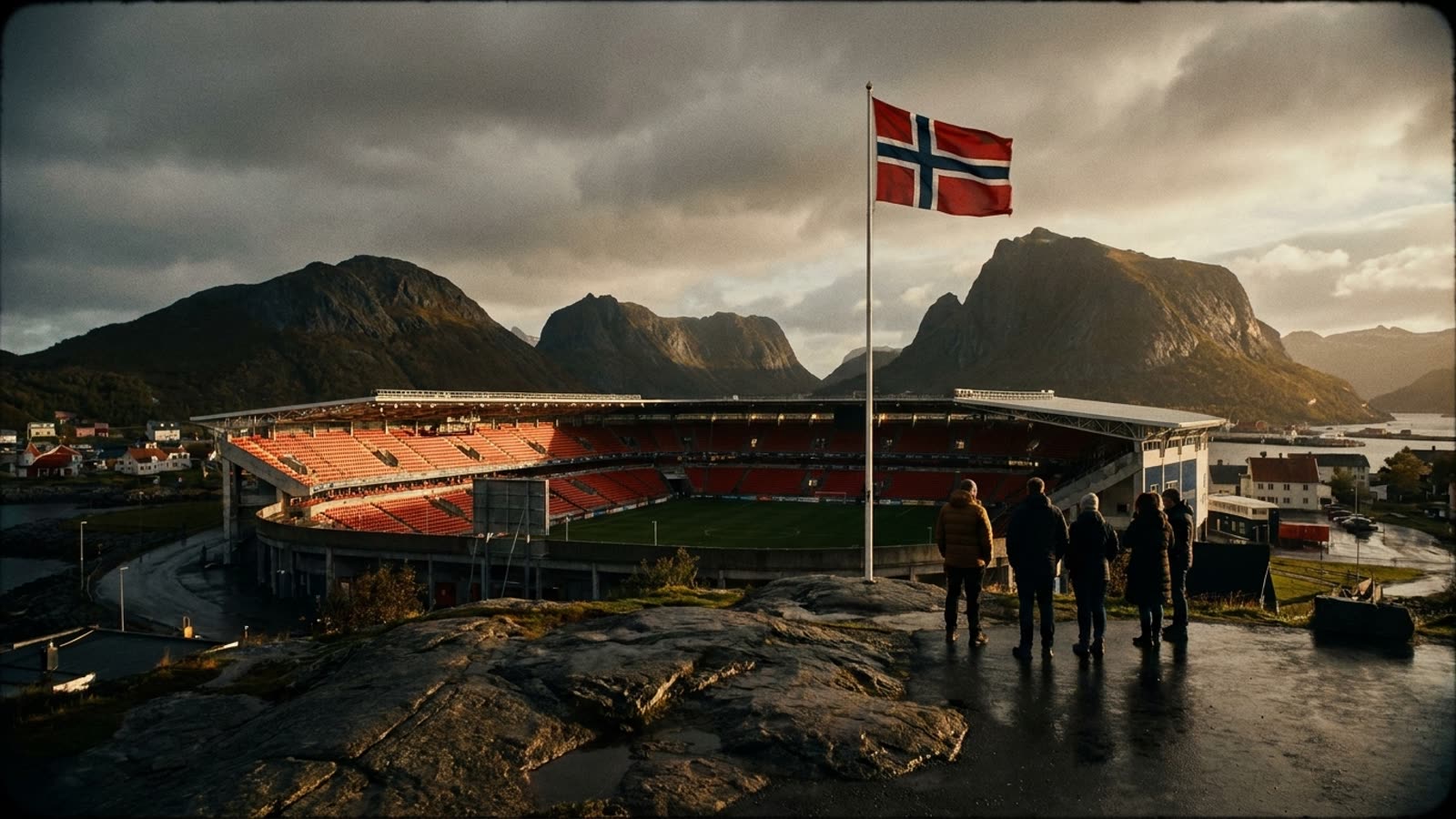
When Erling Braut Haaland lines up for Norway at this World Cup, he carries more than his nation's goal-scoring hopes. He carries a surname that last appeared on a Norwegian World Cup roster thirty-two years ago, when his father Alfie anchored the midfield in the United States. He is not alone in this inheritance.
Three players in Norway's 2026 squad are sons of men who represented the country at the 1994 World Cup: Haaland, Tobias Flo (son of Jostein), and Patrick Berg (son of Ørjan). This is not coincidence, nor is it mere nepotism. It is the product of a small footballing nation's concentrated talent pool, exceptional genetics, and the particular way Norway structures its youth development around established football families.
The 1994 generation's unfinished business
Norway's 1994 World Cup campaign was respectable but ultimately forgettable—a group-stage exit after a creditable draw with Mexico and a loss to Italy. For a nation that had waited twenty years between World Cup appearances, it was progress without glory. The players from that squad dispersed into club careers across Europe, but many settled back in Norway, raised families, and watched their sons enter the same academies they once attended.
Alfie Haaland's career was cut short by a knee injury famously caused by Roy Keane's tackle in 2001, but by then his son was already showing the physical gifts that would make him the most prolific striker of his generation. Jostein Flo, part of the towering Flo footballing clan, saw his nephew Tore André reach greater heights than he did—and now watches his own son Tobias carve out a Premier League career. Ørjan Berg played over 100 times for Norway; his son Patrick has inherited his positional intelligence if not his exact playing style.
Why football dynasties are rarer than you'd think
In most sports, athletic lineage is common but rarely produces elite-level successors. The physical and mental demands shift between generations; training methods evolve; competition intensifies globally. Football, in particular, is brutal on legacy. For every Paolo Maldini following his father Cesare to the top, there are dozens of sons who never escape the shadow or simply lack the requisite talent.
What makes Norway's situation unusual is the concentration. Three players from one small squad, all reaching the senior national team, all appearing at the same World Cup their fathers played in—this requires either extraordinary luck or a system that actively cultivates football families. Norway has elements of both. Its population of five million means elite football talent is scarce and often clustered in the same regions. Sons of internationals receive early attention, better coaching, and the intangible advantage of growing up around professional football culture.
The weight of inherited expectations
For Haaland, the family connection is largely irrelevant to his standing—he would be Norway's talisman regardless of his surname. But for Flo and Berg, the dynamic is more complicated. They are solid professionals, not superstars, and their selection invites scrutiny about whether bloodlines opened doors that pure merit might not have. Both have addressed this in interviews with the weary patience of men tired of the question. Berg, in particular, has noted that his father's career ended before he was old enough to remember watching him play.
The truth is probably somewhere in the middle. Football families produce players who understand the game's demands earlier, who have access to informal coaching at home, and who grow up expecting professional careers as realistic rather than fantastical. This is an advantage, but it is not a guarantee.
Our take
There is something quietly moving about Norway's generational project, even if it emerged organically rather than by design. The 1994 squad represented a nation's brief moment of relevance in world football; their sons now have a chance to write a more memorable chapter. Whether Haaland's goals, Flo's grit, or Berg's composure can carry Norway deep into this tournament remains uncertain. What is certain is that when these three men take the pitch, they are playing for more than a country. They are playing for their fathers' unfinished story.