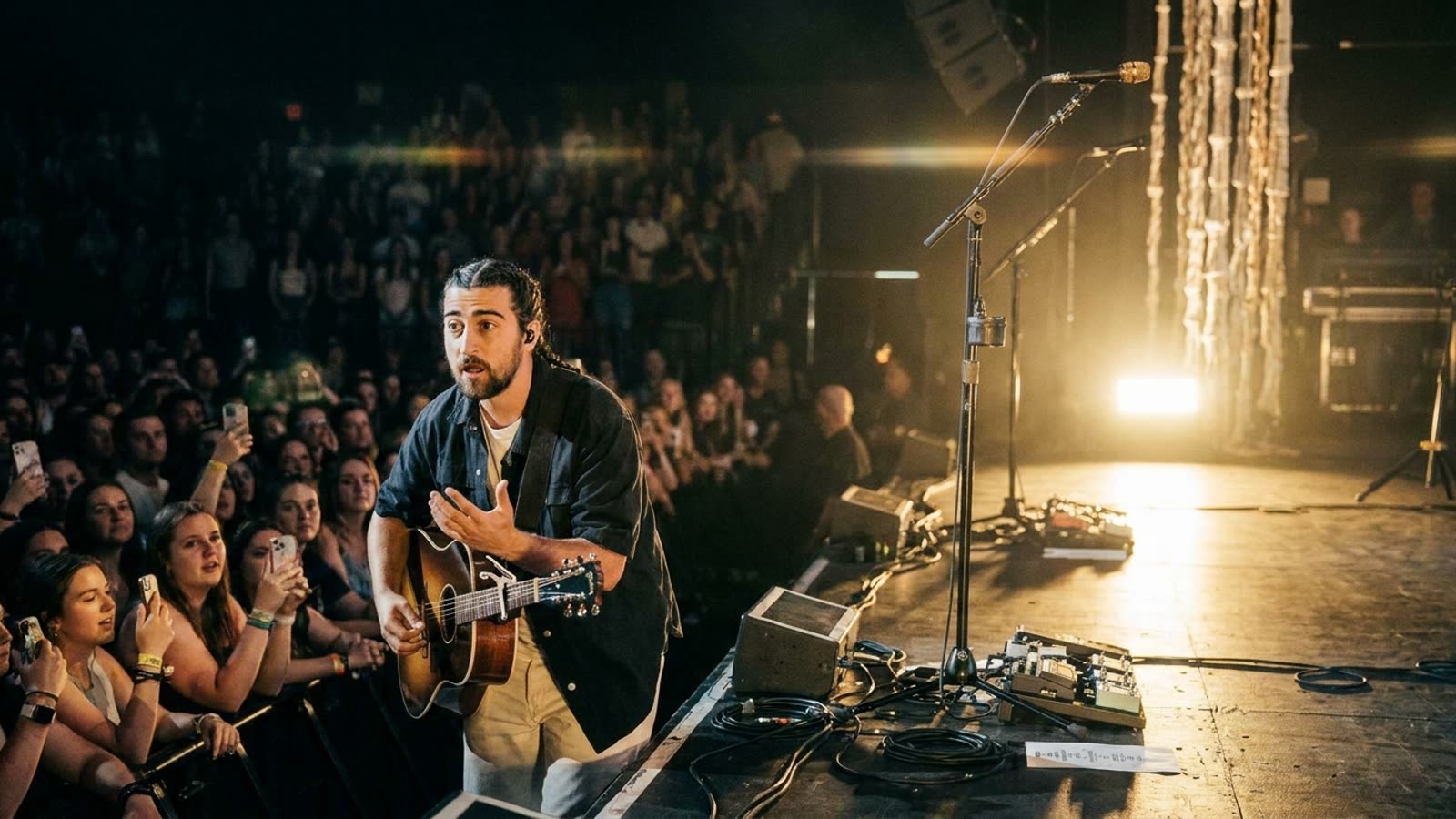
When Noah Kahan took to social media this week to implore his fanbase not to relieve themselves in their seats during his shows, the request landed somewhere between absurdist comedy and genuine despair. The folk-pop singer, whose earnest anthems about mental health and small-town longing have made him one of the most successful touring acts of the mid-2020s, was responding to a viral video that documented exactly the kind of behavior one hopes never to witness at a concert venue—or anywhere else in civilized society.
The incident itself is too grim to detail at length. What matters is what it represents: the apparent evaporation of baseline social contracts in live entertainment spaces, a phenomenon that has plagued the industry since venues reopened after pandemic shutdowns and has only intensified as ticket prices have climbed into the stratosphere.
The economics of entitlement
When a fan pays upward of three hundred dollars for a concert ticket—routine now for artists of Kahan's caliber—a certain psychological transformation occurs. The transaction begins to feel less like purchasing access to a shared cultural experience and more like buying temporary ownership of a physical space. The seat becomes territory. The artist becomes a service provider. Fellow attendees become obstacles.
This transactional mindset has manifested in countless ways over the past few years: fans screaming requests over acoustic ballads, recording entire shows on phones held aloft, arriving intoxicated beyond the point of coherence, and now, apparently, treating venue seating as a personal restroom. Each incident reflects the same underlying belief that the ticket price entitles the holder to behave however they wish.
The venue's impossible position
Live Nation and AEG, the duopoly controlling most major concert venues, have responded to the etiquette crisis with characteristic corporate timidity. Security protocols remain focused on contraband and crowd safety rather than behavioral standards. Staff are undertrained and underpaid. The companies have calculated, perhaps correctly, that ejecting paying customers creates more liability than tolerating their misconduct.
This leaves artists like Kahan in an impossible position: personally responsible for policing audience behavior while simultaneously dependent on those same audiences for their livelihood. His social media plea was equal parts genuine frustration and savvy brand management—acknowledging the problem while maintaining the parasocial intimacy his fanbase expects.
Our take
There is something darkly comic about a singer known for lyrics about anxiety and authenticity being forced to issue public service announcements about basic bodily functions. But Kahan's predicament illuminates a genuine cultural rot. Live music was supposed to be the antidote to algorithmic isolation, the last space where strangers gathered in good faith around shared aesthetic experience. Instead, it has become another arena for the aggressive individualism that defines contemporary American life. The solution is not more security guards or stricter venue policies. It is a collective recognition that attending a concert is a social act requiring social consideration—a recognition that appears, at the moment, to be in catastrophically short supply.