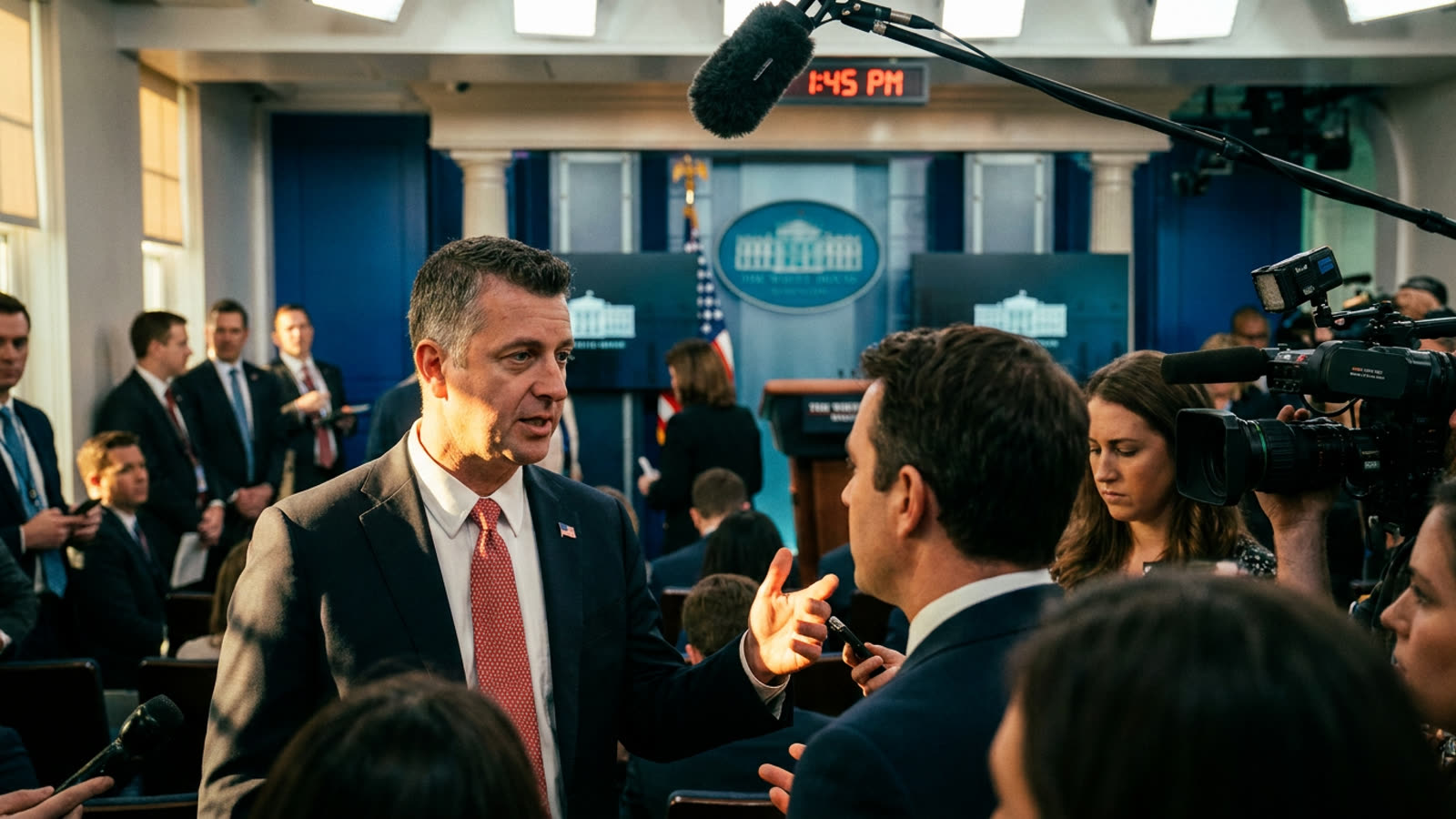
The appointment of Mike Needham as deputy national security adviser is the clearest indication yet that Marco Rubio has won the internal contest to define Trump's second-term foreign policy. Needham, who served as Rubio's chief of staff at the State Department and before that ran Heritage Action for America, will now oversee the National Security Council's day-to-day machinery—a role that historically determines which options reach the president's desk and which quietly disappear.
The move matters less for what Needham believes (hawkish on China, skeptical of multilateral institutions, doctrinaire on immigration) than for what it reveals about bureaucratic gravity in this White House. Rubio has spent eighteen months building a shadow foreign-policy apparatus that operates in parallel to, and often in tension with, the more transactional instincts of Trump himself.
The Heritage pipeline
Needham's career arc traces the rightward migration of Republican foreign policy. At Heritage Action, he pioneered the pressure campaigns that turned think-tank white papers into litmus tests for GOP primaries. Critics called it obstruction; allies called it accountability. Either way, Needham learned how to move policy by controlling personnel—a skill now deployed at the highest level.
His promotion comes amid delicate ceasefire negotiations with Iran, where Rubio's maximalist instincts have clashed with Trump's deal-making reflexes. Installing a loyalist at the NSC ensures that any softening of terms will face institutional resistance before it reaches the Oval Office.
What it means for the Iran file
Tehran has already accused Washington of violating the fragile ceasefire with recent strikes. Needham's elevation will be read in Iranian capitals as a signal that the administration's hawkish wing is ascendant—potentially complicating efforts to convert the current pause into a durable agreement. Diplomats familiar with the talks say Rubio's team has consistently pushed for stricter verification protocols and broader sanctions snapback provisions than Trump's economic advisers prefer.
The Rubio doctrine, institutionalized
Beyond Iran, Needham's fingerprints will appear on Taiwan policy, immigration enforcement coordination with foreign governments, and the administration's posture toward international organizations. He is expected to accelerate the NSC's shift away from process-heavy deliberation toward rapid, ideologically coherent action—a change that delights movement conservatives and alarms career national-security professionals in roughly equal measure.
Our take
Personnel is policy, and this personnel decision is a policy statement. Trump may still be the unpredictable variable in American foreign relations, but the bureaucratic infrastructure around him now tilts decisively toward Rubio's worldview. Whether that produces coherence or collision depends on how long Trump tolerates a national-security apparatus that sometimes seems more interested in constraining his instincts than executing them. For now, the Heritage wing is ascendant—and the rest of the world will adjust its calculations accordingly.