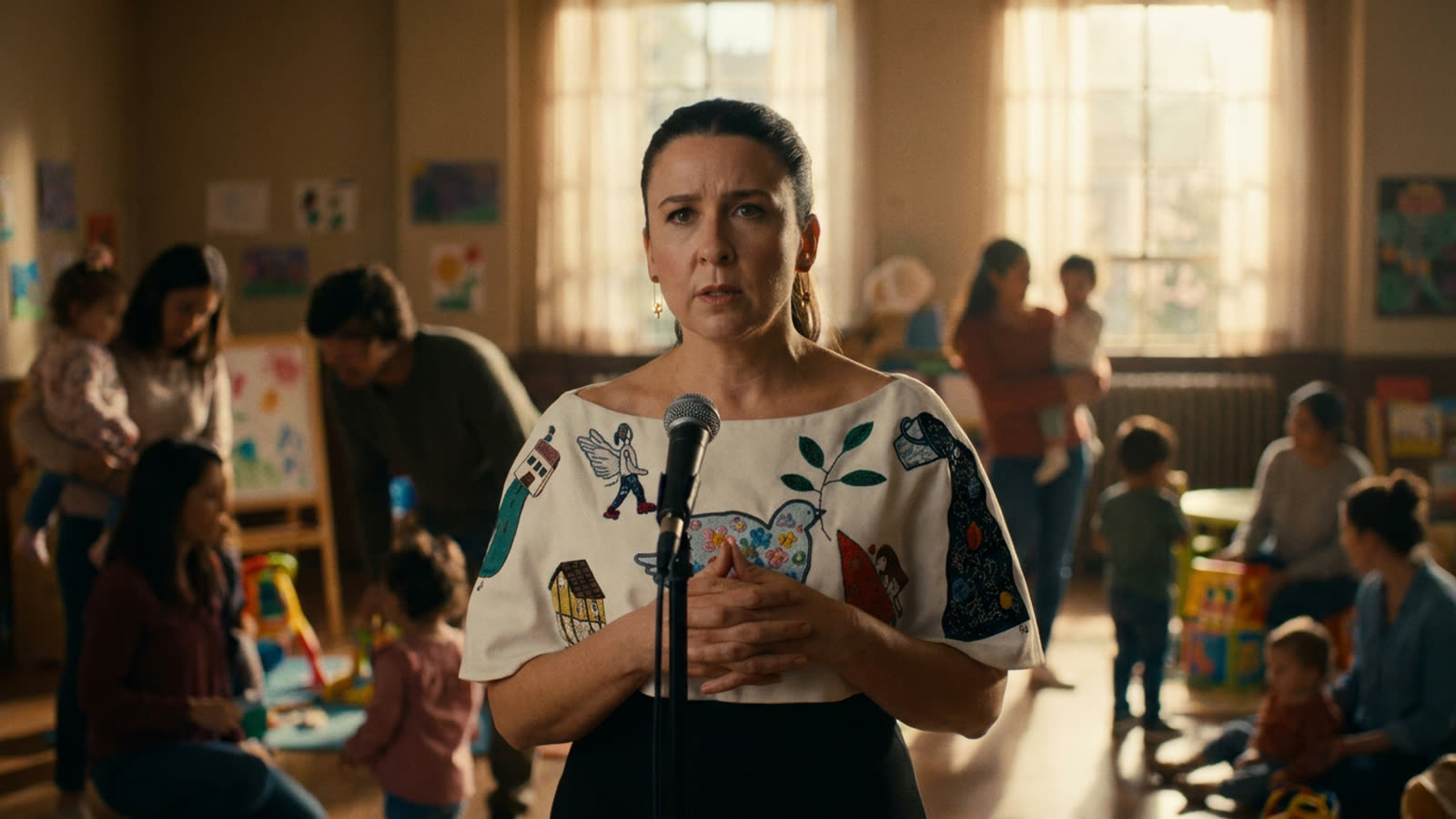
The woman who has spent a decade teaching preschoolers to enunciate their feelings is now modeling something harder: how to sit with someone else's pain.
Ms. Rachel — née Rachel Griffin Accurso, whose "Songs for Littles" channel commands north of ten million subscribers and the undivided attention of toddlers across six continents — posted a message this week urging her audience to send support to Danny Go, a fellow children's YouTube creator whose young son recently died. The appeal was gentle, direct, and entirely in character: the same warm cadence she uses to explain the letter Q, now deployed for collective mourning.
The new village elders
Children's entertainment has always manufactured intimacy. Mister Rogers spoke to the camera as though each child were the only one watching. But the economics of YouTube have industrialised that intimacy at scale. Ms. Rachel's videos are free, algorithmically omnipresent, and — crucially — consumed during the most chaotic hours of parenting, when a screen buys twenty minutes of silence. The result is a parasocial bond that runs in two directions: children who believe Ms. Rachel is their friend, and parents who feel genuine gratitude toward a stranger who helped them survive the toddler years.
Danny Go operates in the same ecosystem — high-energy, primary-coloured, relentlessly wholesome. His audience skews slightly older, his vibe more kinetic, but the underlying contract is identical: I will be safe, predictable, and present for your child. When tragedy punctures that bubble, the community doesn't know quite what to do. Ms. Rachel's post functions as permission: you are allowed to feel something about this person you have never met.
Grief in the algorithm
The request itself is telling. She did not link a GoFundMe or suggest a hashtag campaign. She asked for "love" — the vaguest possible currency, and therefore the only one that makes sense. What can a viewer actually offer? A comment, perhaps. A prayer, if they pray. The gesture is symbolic, but symbols matter when the alternative is silence.
There is something faintly absurd about millions of adults being prompted to emotionally support a man they know only through videos of him jumping around in a green screen studio. There is also something quietly moving about it. The parasocial relationship is often derided as a poor substitute for real community, but in moments like this it reveals its own strange utility: a distributed network of low-stakes affection that can be activated, briefly, when someone needs it.
Our take
Ms. Rachel's appeal is a small thing, easily scrolled past. But it marks a shift worth noting. The people who raise our children — or at least occupy them while we make dinner — are no longer distant television personalities insulated by networks and publicists. They are YouTubers with comment sections, and when their lives fracture, their audiences feel it. Whether that represents a richer form of community or merely a more efficient extraction of emotional labour is a question for another day. For now, Danny Go has the prayers of several million toddler households, and that is not nothing.